Bulk Dihydromyricetin Powder Supplier — 98% HPLC, Vine Tea Extract, B2B Wholesale
Valeherb supplies dihydromyricetin (DHM) powder bulk wholesale at 98% purity by HPLC, extracted from vine tea — Ampelopsis grossedentata (Hand.-Mazz.) W.T. Wang, also known as Teng Cha (藤茶) or Mei Cha (莓茶) — native to southern China, where it has been consumed as a traditional herbal tea for over 1,200 years. DHM (also called ampelopsin) is the dominant flavanonol in vine tea leaves, typically comprising 20–40% of dry leaf weight — a concentration far exceeding any other known plant source.[4] DHM’s activity spans antioxidant, anti-inflammatory, and melanogenesis-inhibitory mechanisms, with a growing published research base supporting cosmeceutical and nutraceutical applications.
On this page: vine tea vs other DHM sources, product specifications, research background, formulation applications, sourcing criteria, and regulatory guidance.
Vine Tea vs Other DHM Sources: The Procurement Distinction
DHM is not unique to vine tea — it also occurs in Hovenia dulcis (Japanese raisin tree) and, at lower levels, in Cedrus deodara. This matters for procurement because the source plant affects both the DHM concentration achievable and the accompanying compound profile.
| Property | Ampelopsis grossedentata (Vine Tea) | Hovenia dulcis (Raisin Tree) |
|---|---|---|
| Plant part used | Leaf | Fruit peduncle / seed |
| DHM content | 20–40% of dry leaf weight — the highest known natural concentration[4] | Substantially lower per unit weight; typically requires more raw material per unit DHM output |
| Co-occurring compound | Myricetin (1.5–3.0% w/w) — present at much lower levels than DHM[4] | Different flavonoid and saponin profile |
| Traditional use | Herbal tea for pharyngitis, fever, cough — over 1,200 years of documented use in southwest China | Traditional use in fruit/liqueur context and TCM |
| Commercial extraction viability | High — vine tea’s exceptional DHM density makes it the industry-standard commercial source | Lower yield efficiency per unit raw material processed |
Product Specifications
| Parameter | Specification |
|---|---|
| CAS Number | 27200-12-0 |
| Molecular Formula | C₁₅H₁₂O₈ |
| Molecular Weight | 320.25 g/mol |
| Purity | ≥98% by HPLC |
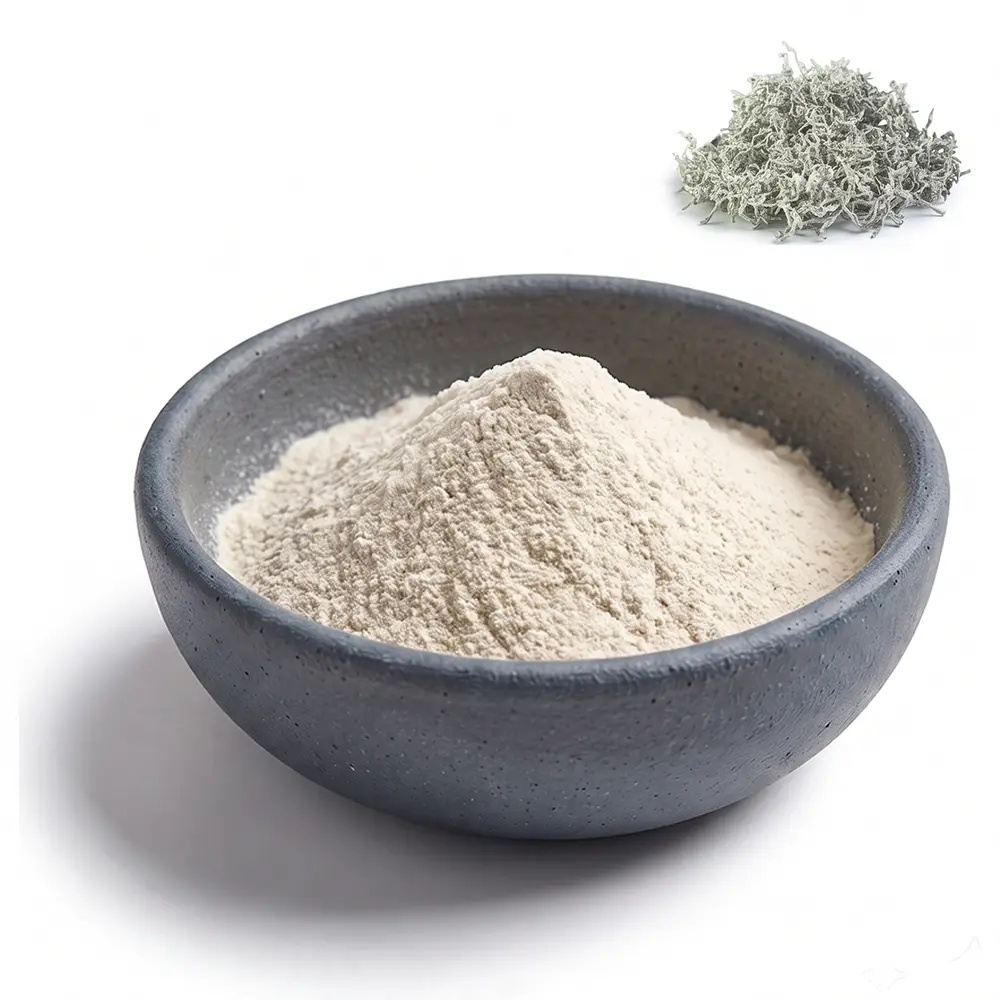
| Appearance | White to off-white crystalline powder |
| Source | Ampelopsis grossedentata leaf (Vine Tea / 藤茶) |
| Solubility | Poorly water-soluble at room temperature (~0.2 mg/mL at 25°C); improves with temperature (~0.9 mg/mL at 37°C); freely soluble in ethanol, DMSO[3] |
| MOQ | 1 kg — pricing and lead time on inquiry |
Research Background
Provided as scientific context for formulators, not as claims for any Valeherb product.
Melanogenesis Inhibition — Skin-Brightening Mechanism
Huang et al. (2016, Chemico-Biological Interactions) investigated DHM’s effects on melanogenesis in B16F10 melanoma cells, finding that DHM effectively suppressed intracellular tyrosinase activity and reduced melanin content. Mechanistic analysis showed DHM downregulated the expression of MC1R, MITF, and TRP-1 — key proteins in the melanogenesis pathway — via inhibition of the MAPK, PKA, and PKC signalling pathways, alongside a direct reduction in intracellular reactive oxygen species (ROS). The authors concluded that DHM has potential for development as a depigmentation skin-care ingredient.[1] These are in vitro cell model findings described here as research context.
Antioxidant Mechanism
Zhang et al. (2003) investigated the antioxidative properties of DHM purified from Ampelopsis grossedentata, measuring DPPH radical scavenging and lipid peroxidation inhibition in a linoleic acid model system. DHM reduced DPPH radical absorption by 73.3–91.5% across a concentration range of 0.01–0.04%, and effectively inhibited lipid peroxidation values in the FeSO₄-EDTA-catalysed system, with iron-chelating activity identified as a contributing mechanism.[2]
Anti-Inflammatory Activity
Hou et al. (2015, Journal of Natural Products) investigated DHM’s anti-inflammatory activity in LPS-induced mouse and macrophage models, documenting suppressed levels of pro-inflammatory cytokines (TNF-α, IL-1β, IL-6) alongside increased anti-inflammatory IL-10, and reduced expression of iNOS and COX-2 in macrophage cells.[3] These are preclinical findings described here as research context, relevant to formulators developing anti-inflammatory cosmeceutical and nutraceutical products.
Formulation Applications
- Skin-brightening and anti-pigmentation cosmetics: DHM’s documented tyrosinase-inhibitory and MITF-downregulating activity supports formulation in brightening serums and even-tone products. Pairs with vitamin C and niacinamide in multi-mechanism brightening formulas. INCI name: Dihydromyricetin
- Antioxidant cosmeceutical actives: DHM’s radical-scavenging and iron-chelating activity supports inclusion in antioxidant serums and anti-aging formulations, typically alongside other flavonoid antioxidants
- Hair care applications: DHM is referenced in patent literature for shampoo, conditioner, and hair-treatment formulations at purities of 90–99%, reflecting industry formulation precedent for hair-care use[5]
- Antioxidant nutraceutical capsules: 98% grade in antioxidant and flavonoid-blend supplement formulas; note poor room-temperature water solubility — lipid-based delivery systems or warm-water dispersion improve practical formulation performance
Sourcing Criteria
| Criterion | What to Require |
|---|---|
| Species Confirmation | Ampelopsis grossedentata leaf confirmed on COA — distinguish from Hovenia dulcis-sourced material, which has a different compound profile and yield economics |
| Purity Verification | ≥98% DHM by HPLC. Request residual myricetin content separately quantified — myricetin is the natural co-occurring flavonoid in vine tea and is a normal, expected trace compound at this purity grade |
| Solubility Documentation | Confirm particle size and any micronization or formulation-aid processing, given DHM’s inherently low room-temperature water solubility — relevant for buyers developing aqueous formulations |
| Third-Party COA | DHM purity (HPLC), residual myricetin, heavy metals (USP <232>), pesticide residues, microbial limits (USP <2021>), moisture — per production batch from accredited laboratory |
Regulatory Guidance
- US (Cosmetics): DHM is used as a cosmetic ingredient under standard FDA cosmetic regulations — no pre-market approval required. Antioxidant and skin-brightening structure/appearance claims should stay within cosmetic (not drug) claim territory
- US (DSHEA supplements): Antioxidant structure/function claims require self-substantiation and FDA disclaimer. Claims beyond antioxidant/general wellness positioning require independent regulatory review
- EU (Cosmetics): Confirm current Cosing database listing status and safety assessment requirements under EU Cosmetics Regulation 1223/2009 for your specific formulation and concentration
- China: Vine tea (藤茶) has GB-recognised status as a food ingredient in several provinces; DHM extract is used in both food and cosmetic applications — confirm current approved use categories for your specific application