

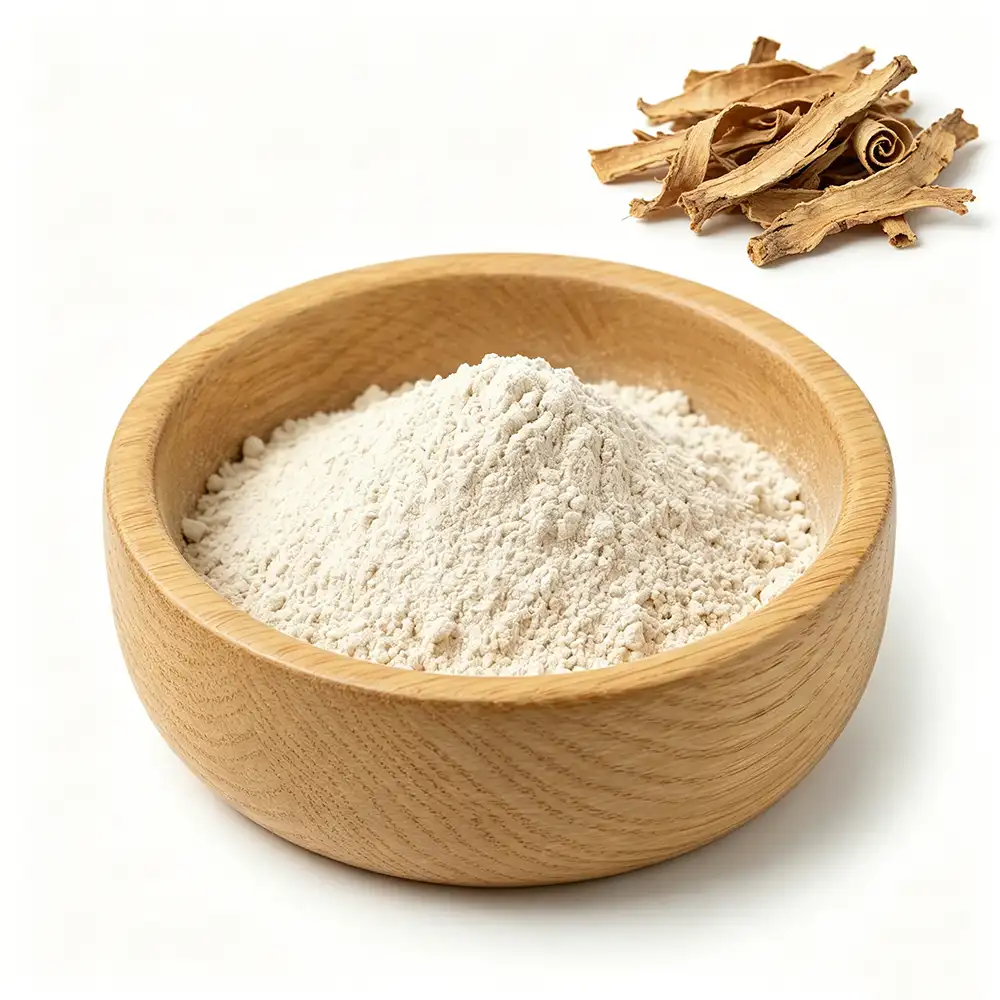
Bulk Phlorizin Powder Supplier — Apple Root Bark Extract, 80% & 98% HPLC, B2B Wholesale
Valeherb supplies phlorizin powder bulk wholesale — derived primarily from apple root bark (Malus domestica) — at 80% and 98% purity by HPLC. Phlorizin (CAS 60-81-1, MW 436.4 g/mol, phloretin 2′-O-glucoside) is a water-soluble dihydrochalcone and the most extensively studied natural SGLT inhibitor compound in published biochemical research. Apple root bark is the classical and highest-concentration commercial source; phlorizin also occurs naturally in Lithocarpus litseifolius alongside trilobatin and other dihydrochalcones — see our Lithocarpus litseifolius sweet tea extract page for that full compound profile. For phlorizin’s chemical structure, plant distribution, and extraction methods, see Phlorizin: Structure, Natural Sources, and Industrial Extraction.
On this page: grades and specifications, source-specific impurity profiles, research background, phlorizin vs phloretin, formulation applications, sourcing criteria, and regulatory guidance.
Available Grades
| Grade | Phlorizin | Typical Application |
|---|---|---|
| Standard | ≥80% HPLC | Cosmeceutical actives, antioxidant supplement blends, functional food — cost-efficient with acceptable co-compound profile |
| High-Purity | ≥98% HPLC | Research reference compound, pharmaceutical-adjacent, precision cosmetic formulations requiring minimal co-compound interference |
What Is the Remaining 2% (or 20%)? Source-Specific Impurity Profiles
The minor compound profile differs significantly by source — and matters more than most COAs reveal. Both sources yield phlorizin as the primary compound, but their co-compounds are structurally distinct dihydrochalcone isomers with their own biological activity.
| Property | Apple Root Bark (Malus domestica) | Lithocarpus litseifolius |
|---|---|---|
| Main co-compounds | Phloretin (aglycone), nothofagin (3′-C-glucoside), trace apple polyphenols (chlorogenic acid, epicatechin) | Trilobatin (4′-O-glucoside) — phlorizin isomer with ~300× sucrose sweetness; phloretin (aglycone) |
| Sensory impact | Neutral at typical doses | Trilobatin is intensely sweet — detectable in sensitive assays or unflavoured aqueous systems even at trace levels |
| Best for | Research applications requiring minimal co-compound interference; neutral-taste formulas | Cosmeceutical and supplement applications where trilobatin co-presence is acceptable; cost-competitive |
Research Background
Provided as scientific context for formulators and researchers, not as claims for any Valeherb product.
SGLT Inhibition: Phlorizin as a Research Reference Compound
Phlorizin is the original non-selective SGLT inhibitor, used for over a century as a tool compound to study renal glucose reabsorption. Published binding affinity data reports Ki values of 39 nM (SGLT2) and 300 nM (SGLT1) — giving preferential but non-selective SGLT2 activity.[4] The entire gliflozin drug class was structurally derived from phlorizin; phlorizin itself cannot be used as an oral pharmaceutical because it is rapidly hydrolysed by intestinal glucosidases to phloretin and glucose. Its role in published research is as a reference inhibitor compound, not as a pharmaceutical or supplement ingredient for glycaemic management.
Antioxidant, Anti-inflammatory and Skin Research
Ni et al. (2024, Molecules) reviewed phlorizin’s biological activity, documenting antioxidant effects via NF-κB signalling modulation, increased SOD and CAT antioxidant enzyme activity, and anti-inflammatory activity across multiple preclinical models.[1] In published skin research, phlorizin inhibited UVB-induced erythema and epidermal thickening in a nude mouse model, and reduced HaCaT keratinocyte apoptosis via ROS and COX-2 suppression.[1] Li et al. (2025) documented protective effects at 0.01–0.1 μM against oxidative stress in retinal pigmented epithelial cells via MAPK/NF-κB pathway modulation.[3]
Phlorizin vs Phloretin: Which Form to Specify
Phlorizin is the glycoside (water-soluble); phloretin is the aglycone (lipophilic). The glucose unit on phlorizin makes it aqueous-compatible but blocks the 2′-OH group — reducing anti-tyrosinase potency and skin penetration compared to the free aglycone. Choose based on your formulation matrix.
| Criterion | Phlorizin Powder | Phloretin Powder |
|---|---|---|
| Solubility | Water-soluble | Lipophilic — ethanol, DMSO, oil phase |
| Best matrix | Aqueous serums, toners, supplements, functional beverages | Oil-phase serums, anhydrous formulas, alcohol-based systems |
| Skin penetration | Limited | Documented — increases co-active permeation up to 3.2× in published studies |
| Anti-tyrosinase | Lower — 2′-OH blocked by glucose | Higher — free 2′-OH directly available |
For full technical comparison, see the Valeherb phloretin powder product page.
Formulation Applications
- Cosmeceutical antioxidant actives: 80% grade in aqueous serums, brightening toners, and skin-care water phases. Pairs with niacinamide and vitamin C in brightening formulas
- Research reference compound: 98% grade for SGLT inhibition assays and biochemical studies requiring high compound identity. Specify source (apple vs Lithocarpus) and request full co-compound COA
- Nutraceutical and supplement blends: 80% grade in antioxidant polyphenol formulas and functional food fortification. Apple-sourced preferred for clean “apple polyphenol” ingredient positioning
- Functional beverages: 80% aqueous-soluble grade for antioxidant fortification. Note: Lithocarpus-sourced material contains residual trilobatin — may contribute sweetness at higher inclusion rates
Sourcing Criteria
| Criterion | What to Require |
|---|---|
| Compound Identity | Phlorizin (phloretin 2′-O-glucoside), CAS 60-81-1, confirmed by HPLC and MS/MS — distinguish from trilobatin (4′-O-glucoside) and nothofagin (3′-C-glucoside) |
| Source Declaration | Apple root bark (Malus domestica) OR Lithocarpus litseifolius — specify at order; co-compound profiles differ significantly |
| Co-compound Profile | Full dihydrochalcone breakdown by UHPLC-ESI-MS/MS per batch — not single-marker HPLC purity alone |
| Third-Party COA | Phlorizin purity (HPLC), compound identity (MS), heavy metals (USP <232>), pesticide residues, microbial limits (USP <2021>), moisture |
Regulatory Guidance
- US (DSHEA / Cosmetics): Antioxidant structure/function claims require self-substantiation and FDA disclaimer. Glycaemic management claims are drug claims requiring NDA — not permitted for supplement positioning
- EU (Cosmetics): INCI name Malus Domestica Root Extract. Confirm safety assessment under EU Cosmetics Regulation 1223/2009 at your specific concentration
- Research use: Buyers using phlorizin as a reference compound are responsible for confirming suitability for their specific application


