

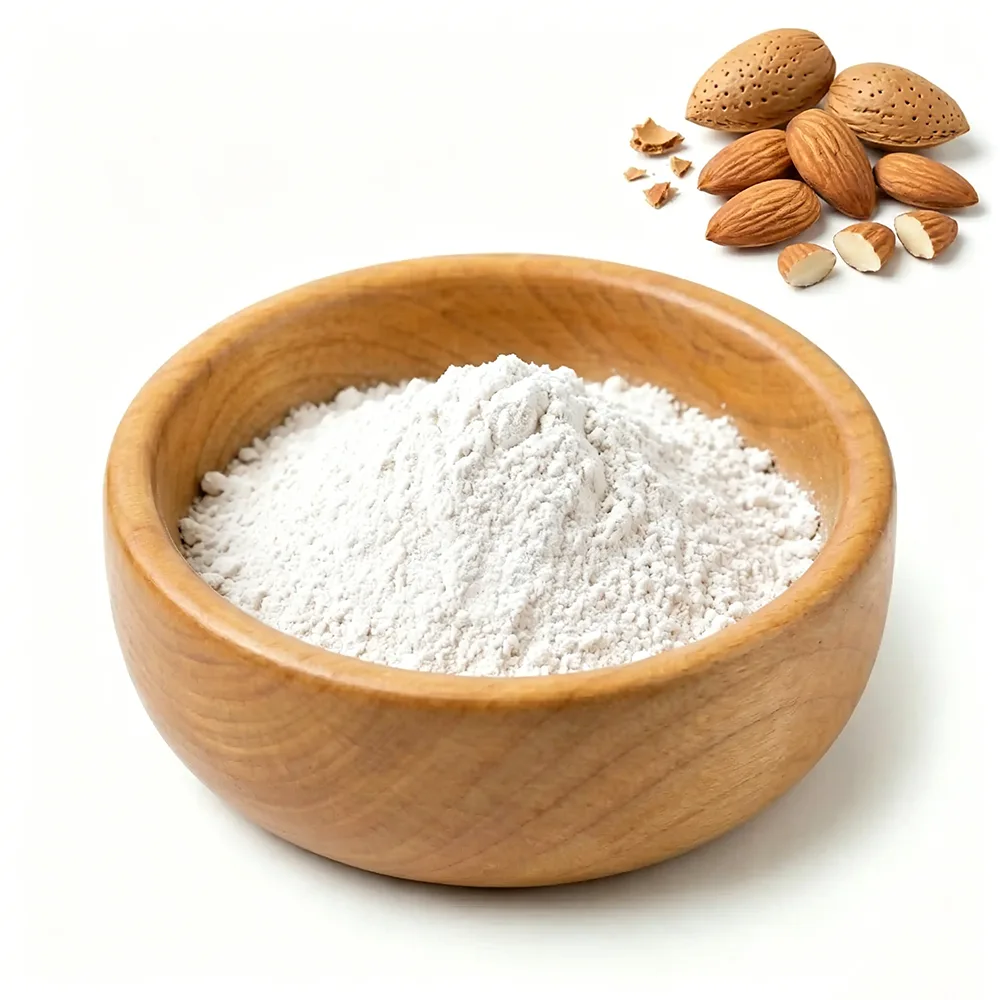
Bulk Amygdalin Supplier — Bitter Apricot Kernel Extract, Standardized 50% / 80% / 98%, B2B Wholesale
Valeherb supplies standardized bitter apricot kernel extract (Prunus armeniaca L., seed-derived) in bulk, with amygdalin standardized by HPLC at three purities — 50%, 80%, and 98% — for pharmaceutical research, analytical reference, and TCM-aligned formulation programs. The defining commercial and regulatory characteristic of this ingredient is that amygdalin is a cyanogenic glycoside: precise, batch-verified standardization and hydrogen-cyanide (HCN) testing are non-negotiable for any oral-delivery context. Whether you are sourcing high-purity isolate for pharmaceutical research and reference-standard use, or a standardized extract for TCM-aligned product development, Valeherb supplies the purity grade, COA documentation, and safety testing your production line requires.
Active Compound and Research Profile
Bitter apricot kernel extract is defined by amygdalin (D-mandelonitrile-β-gentiobioside), the primary cyanogenic glycoside and the standardization marker for this ingredient. Upon enzymatic hydrolysis — triggered by gut microbiota or tissue-level β-glucosidases — amygdalin releases benzaldehyde, glucose, and hydrogen cyanide (HCN). This chemistry underpins both its studied bioactivity and its dose-dependent toxicity, which is precisely why batch-level standardization against a certified reference standard is commercially and regulatorily essential rather than optional.[1][2] A minor related glycoside, prunasin (the monoglucoside in the amygdalin hydrolysis pathway), may be reported alongside amygdalin in compound profiling.
In published research, amygdalin has been characterized for its interaction with inflammatory-signaling pathways — including arachidonic-acid / COX-2 pathway activity and modulation of inflammatory mediators such as TNF-α — in preclinical in vitro and in vivo models. A 2021 review in Molecules (Figurová et al.) consolidated this inflammatory-pathway research and emphasized that dose-dependent HCN release remains the primary safety parameter requiring control in any formulation context.[3] These are descriptions of published research on the compound, provided for informational purposes, and are not claims for any finished product.
Available Grades and Specifications
| Grade | Amygdalin Content (HPLC) | Form | Typical Downstream Application |
|---|---|---|---|
| Standardized Extract 50% | 50% amygdalin | Off-white powder | TCM-aligned standardized extracts; multi-ingredient research formulations |
| Standardized Extract 80% | 80% amygdalin | Off-white to white powder | Higher-purity research formulations; standardized ingredient development |
| High-Purity Isolate 98% | ≥98% amygdalin | White crystalline powder | Pharmaceutical research intermediates; analytical reference standards; specialized R&D |
All grades are standardized to amygdalin by HPLC and supplied with a per-batch COA reporting marker content, HCN release, heavy metals, and residue testing. Custom purities and packaging are available on request.
Research and Formulation Applications
- Pharmaceutical research intermediates: High-purity amygdalin isolate (≥98%) supports pharmaceutical R&D programs studying the compound’s hydrolysis pathway and cellular-signaling characteristics. Supply includes full chain-of-custody documentation, HPLC certificates, and reference-grade purity verification required for research-grade procurement
- Analytical reference standards: The 98% crystalline grade serves as a characterization and calibration reference for laboratories developing or validating amygdalin assay methods, supported by HPLC purity data against a certified standard
- TCM-aligned standardized extracts: The 50% grade supports traditional-Chinese-medicine-aligned product development where Xing Ren (苦杏仁, Semen Armeniacae Amarum) is a specified ingredient. References to traditional use describe historical context within the relevant pharmacopoeial framework and are not statements of efficacy for any finished product
- Regulated nutraceutical research — handle with documented dose control: Any oral-format application requires batch-verified amygdalin content, HCN release testing, and dose levels kept within established safety parameters. This ingredient is not appropriate for uncontrolled consumer-direct applications, and no cancer-treatment or disease claims are permissible (see Regulatory Guidance)
Sourcing Criteria for B2B Buyers
| Criterion | What to Require |
|---|---|
| Amygdalin Standardization | HPLC-verified amygdalin % per batch against a certified reference standard. Extract ratio (e.g. 10:1) is an insufficient specification for regulated or pharmaceutical applications — it indicates raw-material concentration, not guaranteed marker content |
| Variety Confirmation | Bitter-variety Prunus armeniaca kernel confirmed. Sweet-variety kernels have significantly lower cyanogenic glycoside content and cannot substitute in standardized applications. Botanical ID and variety documentation required |
| HCN Safety Testing | Hydrogen cyanide release testing per batch is non-negotiable for any oral-delivery format — a different measurement from the marker percentage, with different regulatory implications. Require both |
| Heavy Metal Testing | Full ICP-MS panel: lead, arsenic, cadmium, mercury — per USP <232> or EU Pharmacopoeia limits. Kernel-derived extracts carry soil-bioaccumulation risk |
| Pesticide Residues | Multi-residue pesticide screen per batch. Primary cultivation regions (China, Turkey, Iran) require residue verification for EU, US, and Japanese market entry |
| Third-Party COA | Amygdalin % (HPLC), HCN release, heavy metals (ICP-MS), pesticide residues, microbial limits, moisture, ash — per production batch from an accredited third-party laboratory |
| Certifications | Non-GMO; Kosher/Halal for relevant markets; FDA-registered facility for US supply chains; ISO 22000 or equivalent |
Regulatory Guidance
United States
Amygdalin (marketed historically as “laetrile”) has a specific FDA regulatory history: it is not approved as a drug, and the FDA has taken enforcement action against products marketed with cancer-treatment claims. No disease, cancer-treatment, or therapeutic claims are permissible. As a botanical ingredient supplied for research or regulated formulation, documentation must include verified marker content per batch and HCN testing; any supplement application is the marketer’s responsibility under DSHEA, with appropriate labeling, structure/function-claim substantiation, and an FDA-registered facility (21 CFR Part 111).
European Union
Apricot kernel extracts standardized for cyanogenic glycoside content may fall under Novel Food Regulation (EU) 2015/2283 depending on format and amygdalin level; EFSA has assessed cyanogenic-glycoside exposure from apricot kernels. Buyers should confirm Novel Food status for their specific product format before market entry. INCI name for cosmetic use: Prunus Armeniaca Kernel Extract.
China
Xing Ren (苦杏仁, Semen Armeniacae Amarum) is listed in the Chinese Pharmacopoeia (ChP) as a regulated TCM ingredient with defined quality standards. Domestic TCM product applications are governed by NMPA regulations; ChP-compliant documentation is available from Valeherb for China-market supply.
References
[1] Akhone MA, Bains A, Tosif MM, Chawla P, Fogarasi M, Fogarasi S. (2022). Apricot Kernel: Bioactivity, Characterization, Applications, and Health Attributes. Foods, 11(15), 2184. doi:10.3390/foods11152184
[2] Barakat H, Aljutaily T, Almujaydil MS, et al. (2022). Amygdalin: A Review on Its Characteristics, Antioxidant Potential, Gastrointestinal Microbiota Intervention, Anticancer Therapeutic and Mechanisms, Toxicity, and Encapsulation. Biomolecules, 12(10), 1514. doi:10.3390/biom12101514
[3] Figurová D, Tokárová K, Greifová H, Knížatová N, Kolesárová A, Lukáč N. (2021). Inflammation, Its Regulation and Antiphlogistic Effect of the Cyanogenic Glycoside Amygdalin. Molecules, 26(19), 5972. doi:10.3390/molecules26195972
[4] Jaszczak-Wilke E, Polkowska Ż, Koprowski M, Owsianik K, Mitchell AE, Bałczewski P. (2021). Amygdalin: Toxicity, Anticancer Activity and Analytical Procedures for Its Determination in Plant Seeds. Molecules, 26(8), 2253. doi:10.3390/molecules26082253


