
Written and reviewed by Dr. Xiaoyan Qiu · May 16, 2026
Lithocarpus litseifolius extract — more commonly encountered in trade as sweet tea extract — is one of the least-appreciated botanical ingredients in the current natural sweetener market. Despite a centuries-long history of use as an herbal tea in southern China, the plant and its extract remain unfamiliar to many ingredient buyers outside the region, often overshadowed by stevia and monk fruit. That gap is narrowing. As B2B formulators seek alternatives with cleaner sensory profiles and meaningful functional chemistry, sweet tea extract is drawing serious attention from R&D teams in functional foods, nutraceuticals, and dietary supplements.
This article covers what Lithocarpus litseifolius extract actually is, how it relates to the naming confusion in the market, what its phytochemical profile delivers beyond simple sweetness, and what procurement teams need to verify before sourcing it at scale.
Botanical Identity: One Plant, Multiple Names
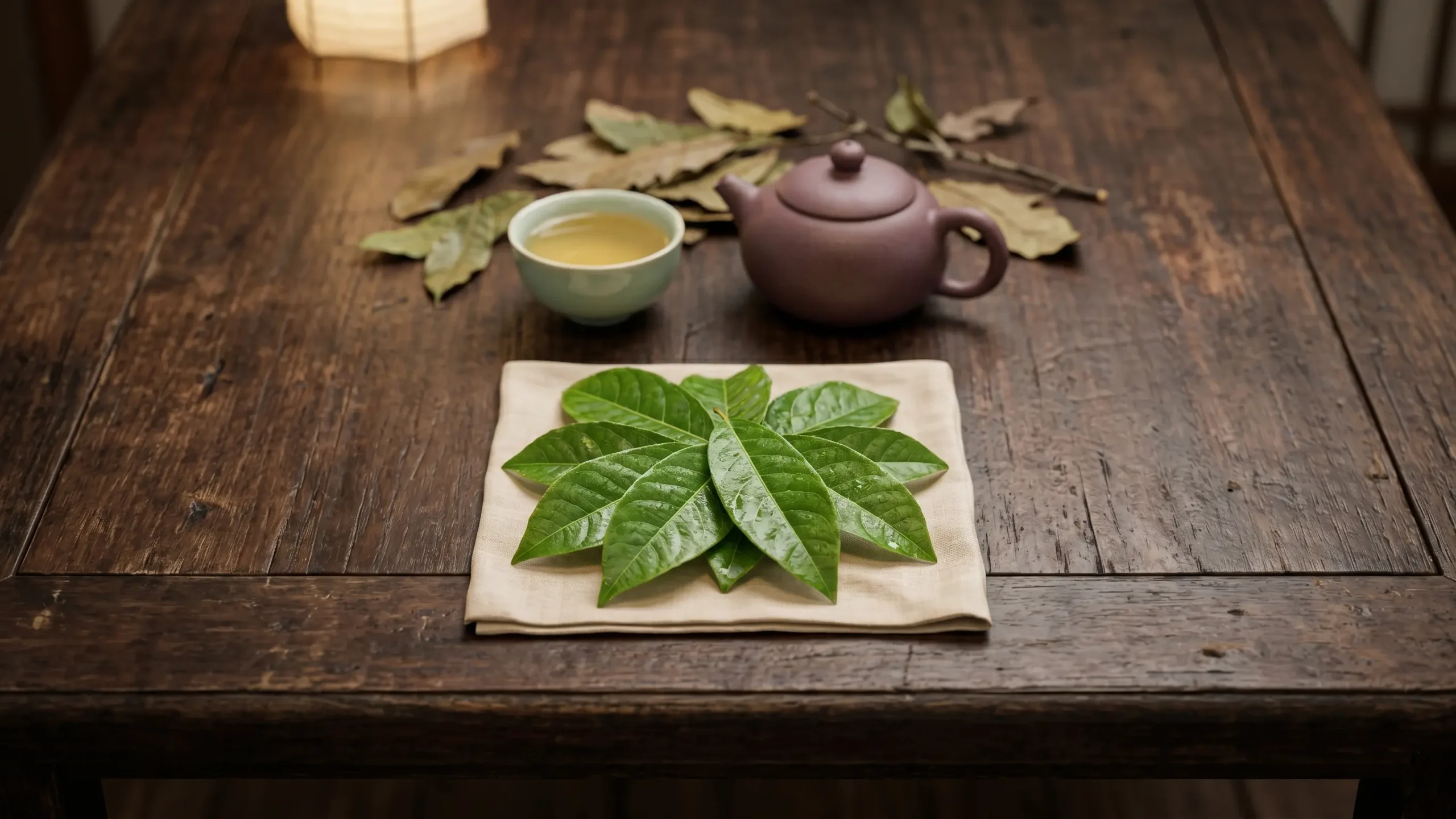
Before discussing the extract, it is worth resolving the naming confusion that affects nearly every supplier invoice and regulatory filing in this category. Lithocarpus litseifolius (Hance) Chun is an evergreen tree of the Fagaceae family, widely distributed across the mountainous regions of southern China — Hunan, Yunnan, Guizhou, Guangxi, and adjacent Southeast Asian countries. Its tender leaves have been brewed as “sweet tea” (甜茶, tián chá) by local populations for generations, used both as a refreshing drink and as a traditional remedy for managing blood sugar.
In the scientific literature, you will encounter both Lithocarpus litseifolius and Lithocarpus polystachyus Rehder used to describe the same plant. Genomic research published in Scientific Data confirms that L. polystachyus Rehder is formally synonymous with L. litseifolius (Hance) Chun — the two names describe the same species, with L. litseifolius representing the currently accepted botanical designation.[1] Supplier documentation and Chinese regulatory filings frequently use L. polystachyus, particularly those following older pharmacopoeia conventions. For procurement purposes, both names are acceptable, provided the plant material is authenticated by LC-MS/MS profiling or DNA verification.
A third name adds further complexity: Rubus suavissimus, a completely different plant (Chinese sweet leaf, family Rosaceae), is sometimes sold under the same “sweet tea extract” trade name. The two plants share overlapping dihydrochalcone chemistry but are botanically distinct. Any credible supplier should be able to confirm species identity through documented analytical methods — relying on the trade name alone is insufficient.
Phytochemical Profile: What the Extract Actually Contains
The functional interest in Lithocarpus litseifolius extract derives from its unusually rich dihydrochalcone content — a class of minor flavonoids not widely found in commercial botanical ingredients. Understanding this profile is essential for any formulator evaluating the ingredient.
Trilobatin
Trilobatin is the primary sweetness-active compound in sweet tea extract and the marker ingredient by which standardized commercial grades are most often characterized. It is estimated at roughly 300 times sweeter than sucrose on a weight basis, with a clean, sugar-like taste and minimal bitterness or lingering aftertaste — a sensory profile that distinguishes it clearly from steviosides. Trilobatin is a dihydrochalcone glycoside, concentrated predominantly in young, tender leaves. Research indicates that trilobatin concentrations in fresh young leaves can reach 10% or more on a dry-weight basis, while older leaves show significantly reduced levels — a fact with direct implications for harvest timing and raw material sourcing standards.
Beyond sweetness, trilobatin contributes meaningful antioxidant activity. A recent LC-ECD and LC-MS/MS quality assessment study confirmed that among the phenolic compounds identified in Lithocarpus polystachyus sweet tea, trilobatin showed the highest correlation with antioxidant activity, reaching a grey relational coefficient of 0.9.[2]
Phlorizin
Phlorizin is the second major dihydrochalcone in L. litseifolius extract, present alongside trilobatin in standardized whole-leaf extracts. While phlorizin is also found in apple peels and other botanical sources, the concentrations achievable from sweet tea leaf extraction are commercially significant. Structurally, phlorizin is a trilobatin isomer — they share the same dihydrochalcone backbone but differ in glycosidic linkage position, which accounts for their different functional profiles.
Phlorizin has been the subject of substantial pharmacological research in the context of glucose metabolism. A 2024 study in Phytomedicine demonstrated that phlorizin isolated from Lithocarpus litseifolius ameliorated free fatty acid-induced insulin resistance in HepG2 hepatocytes by activating the AMPK/PI3K/AKT signaling pathway, reducing lipid accumulation and oxidative stress.[3] For formulators developing metabolic health products, this positions phlorizin as a meaningful contributor to the extract’s functional claim landscape — distinct from, and complementary to, trilobatin’s sweetness function.
Supporting Flavonoids
Complete phytochemical characterization of L. litseifolius extract reveals a broader flavonoid matrix beyond the two primary dihydrochalcones. HPLC analysis identifies additional compounds including phloretin (the aglycone metabolite of both trilobatin and phlorizin), isoquercitrin, quercitrin, quercetin, luteolin, and protocatechuic acid.[2] These supporting compounds contribute to the extract’s overall antioxidant capacity and broaden the functional chemistry available to formulators positioning the ingredient in premium botanical blends.
| Compound | Class | Primary Function | Relative Concentration in Young Leaves |
|---|---|---|---|
| Trilobatin | Dihydrochalcone glycoside | High-intensity sweetness, antioxidant | High (up to ~13% dry weight) |
| Phlorizin | Dihydrochalcone glycoside | Glucose metabolism support, antioxidant | Low(But 8-9% in old leaves) |
| Phloretin | Dihydrochalcone aglycone | Anti-inflammatory, antioxidant | Low (metabolite) |
| Isoquercitrin | Flavonol glycoside | Antioxidant, anti-inflammatory | Trace–Low |
| Quercetin | Flavonol | Antioxidant, anti-allergic | Trace |
Functional Benefits Supported by the Research
The phytochemical complexity of Lithocarpus litseifolius extract translates into a functional profile that extends well beyond caloric reduction. For ingredient buyers evaluating positioning, the documented activity falls across several commercially relevant areas.
Metabolic and Glycemic Health
The metabolic health research on sweet tea extract is the most developed area of the scientific literature. Multiple pathways have been investigated: alpha-glucosidase inhibition (reducing the rate of carbohydrate digestion), SGLT inhibition via phlorizin’s structural similarity to established pharmaceutical compounds, and AMPK pathway activation improving insulin sensitivity at the cellular level.[3] For nutraceutical formulators, this creates a defensible positioning around glycemic support that draws on compound-level mechanistic evidence rather than crude extract folklore.
Gut Microbiota Modulation
A 2022 study in Nutrients investigated the preventive effect of sweet tea extract (Lithocarpus litseifolius) against DSS-induced ulcerative colitis in mice. The extract modulated gut microbiota composition and promoted butyric acid production, supporting intestinal barrier integrity through anti-inflammatory signaling.[4] This butyrate-mediated mechanism is of particular relevance to functional food and supplement formulators targeting the growing gut health segment — a positioning that moves well beyond the simple “natural sweetener” category.
Antioxidant Activity
The dihydrochalcone and flavonoid matrix of L. litseifolius extract demonstrates consistent antioxidant activity across DPPH, ABTS, and FRAP assay systems. A comparative study on instant sweet tea powders produced by freeze-drying and spray-drying confirmed that freeze-dried preparations from young leaves retained the highest total phenolic content and antioxidant capacity, establishing a clear hierarchy for ingredient specification when antioxidant positioning is a priority.[5]
Safety Profile
A 90-day repeated oral toxicity study published in Frontiers in Pharmacology evaluated the safety of a water extract of Lithocarpus litseifolius in rats, finding no observable adverse effects at the doses tested and supporting the ingredient’s established food-safe status.[6] This toxicological data, alongside China’s 2017 novel food resource listing, provides a regulatory foundation relevant to markets where documented safety is required for health claim positioning.
Processing and Standardization: What Grade Specifications Mean
Commercial Lithocarpus litseifolius extract is available in several standardized forms, primarily differentiated by their trilobatin and total dihydrochalcone content. Understanding what these specifications mean in practice is important for avoiding mismatch between label claims and actual ingredient performance.
Crude spray-dried leaf extracts with minimal standardization are the lowest-cost option but carry batch-to-batch variability in both sweetness intensity and functional compound concentrations. Standardized powders verified by HPLC against defined trilobatin and phlorizin thresholds provide the consistency required for functional products making specific claims. The analytical gold standard for authentication and quantification is LC-ECD combined with LC-MS/MS, which can differentiate the dihydrochalcone fingerprint of genuine L. litseifolius from adulterants and confirm geographic origin-related quality differences.[2]
Harvest timing also directly affects extract quality in ways that laboratory specifications alone cannot fully capture. Trilobatin concentrations are highest in tender young leaves harvested in early spring before full leaf expansion. Operations sourcing from suppliers without controlled harvest protocols will see seasonal variation reflected in inconsistent extract performance, even against a nominally fixed specification.
Formulation Considerations for B2B Buyers
Lithocarpus litseifolius extract performs well across a range of application formats, though formulation parameters need to match the extract’s physicochemical properties to preserve both sensory quality and bioactive compound integrity.
In aqueous beverage applications, trilobatin’s water solubility is an advantage, though stability is pH-dependent. The dihydrochalcone compounds show optimal stability in neutral-to-mildly-acidic conditions, with accelerated degradation in alkaline environments above pH 7.5. Processing temperatures should be kept below 80°C where possible to minimize thermal degradation of heat-sensitive flavonoids.
In solid formats — capsules, tablets, and stick-pack powders — sweet tea extract blends well with complementary metabolic-support ingredients. Its dihydrochalcone chemistry is compatible with established functional pairings such as berberine and chromium in blood sugar support formulations, or with prebiotic fibers in gut health products where the microbiota-modulating data provides additional positioning rationale.
Inclusion rates for sweetening applications typically fall in the 0.1–0.3% range in beverages, where trilobatin provides measurable sweetness reduction of added sugar without flavor dominance. At higher standardized grades, lower inclusion rates achieve equivalent sweetness intensity while reducing the concentration of other flavonoid compounds that may affect the overall flavor profile of the finished product.
The complete formula can be found at Trilobatin Inclusion Rate: Dosage by Application and Blend Systems
Frequently Asked Questions
What is the difference between Lithocarpus litseifolius extract and sweet tea extract?
They refer to the same ingredient. Sweet tea extract is the common trade name for standardized powder derived from the leaves of Lithocarpus litseifolius (Hance) Chun, an evergreen tree in the Fagaceae family. In supplier documentation, you may also see the synonym Lithocarpus polystachyus Rehder, which refers to the same species under an older botanical designation. For procurement, confirming botanical identity through LC-MS/MS profiling rather than relying solely on the trade name is the recommended approach.
How does Lithocarpus litseifolius extract differ from stevia or monk fruit extract?
Lithocarpus litseifolius extract delivers sweetness through dihydrochalcone compounds — primarily trilobatin — rather than through steviol glycosides (stevia) or mogrosides (monk fruit). The sensory profile is generally described as cleaner and more sugar-like, with less bitterness and minimal lingering aftertaste. Beyond sweetness, the extract provides a documented functional chemistry around glucose metabolism and antioxidant activity that steviosides and mogrosides do not share. It is a botanically distinct ingredient with a different compound class, different regulatory history, and different application performance profile.
Is Lithocarpus litseifolius extract the same as Rubus suavissimus extract?
No. They are two distinct plant species sometimes marketed under the same “sweet tea extract” trade name. Lithocarpus litseifolius belongs to the Fagaceae family, while Rubus suavissimus is in the Rosaceae family. Both contain dihydrochalcone compounds and produce sweet-tasting extracts, but their phytochemical profiles, active compound ratios, and botanical identities are different. Species authentication through LC-MS/MS or DNA analysis is the only reliable way to confirm which plant material a supplier is providing.
What does trilobatin standardization mean for extract specifications?
Trilobatin standardization means the extract has been verified by HPLC to contain a defined minimum percentage of trilobatin — the primary sweetness-active and antioxidant compound. This ensures consistent performance across production batches, which is essential for any functional product where label claims depend on compound-level activity. Crude extracts without standardization may carry significant batch-to-batch variation in both sweetness intensity and functional chemistry. When requesting a certificate of analysis, confirm the analytical method: LC-MS/MS or LC-ECD provide more reliable quantification than colorimetric alternatives.
References
[1] Chen, W. et al. Chromosome-scale genome assembly of sweet tea (Lithocarpus polystachyus Rehder). Scientific Data, 10, 873 (2023). https://doi.org/10.1038/s41597-023-02791-y
[2] Zheng, J. et al. Antioxidant profiling and quality assessment of Lithocarpus polystachyus sweet tea using LC-ECD and LC-MS/MS. Scientific Reports, 15, 13163 (2025). https://doi.org/10.1038/s41598-025-97875-7
[3] Zhao, H. et al. Phlorizin from Lithocarpus litseifolius [Hance] Chun ameliorates FFA-induced insulin resistance by regulating AMPK/PI3K/AKT signaling pathway. Phytomedicine, 130, 155743 (2024). https://doi.org/10.1016/j.phymed.2024.155743
[4] He, X.Q. et al. Prevention of Ulcerative Colitis in Mice by Sweet Tea (Lithocarpus litseifolius) via the Regulation of Gut Microbiota and Butyric-Acid-Mediated Anti-Inflammatory Signaling. Nutrients, 14(11), 2208 (2022). https://doi.org/10.3390/nu14112208
[5] Liu, H.Y. et al. Phenolic Content, Main Flavonoids, and Antioxidant Capacity of Instant Sweet Tea (Lithocarpus litseifolius [Hance] Chun) Prepared with Different Raw Materials and Drying Methods. Foods, 10(8), 1930 (2021). https://doi.org/10.3390/foods10081930
[6] Toxicological safety assessment of a water extract of Lithocarpus litseifolius by a 90-day repeated oral toxicity study in rats. Frontiers in Pharmacology, 15, 1385550 (2024). https://doi.org/10.3389/fphar.2024.1385550
Dr. Xiaoyan Qiu
Botanical Extract R&D Engineer · Associate Professor, Huaihua University. Research focus: Lithocarpus litseifolius (Yao tea), medicinal plant resource development, and botanical extraction processes.
These statements have not been evaluated by the Food and Drug Administration. This content is for informational and educational purposes only and is not intended to diagnose, treat, cure, or prevent any disease. Valeherb supplies raw botanical ingredients to B2B customers; it does not sell finished consumer products. © 2026 Valeherb