

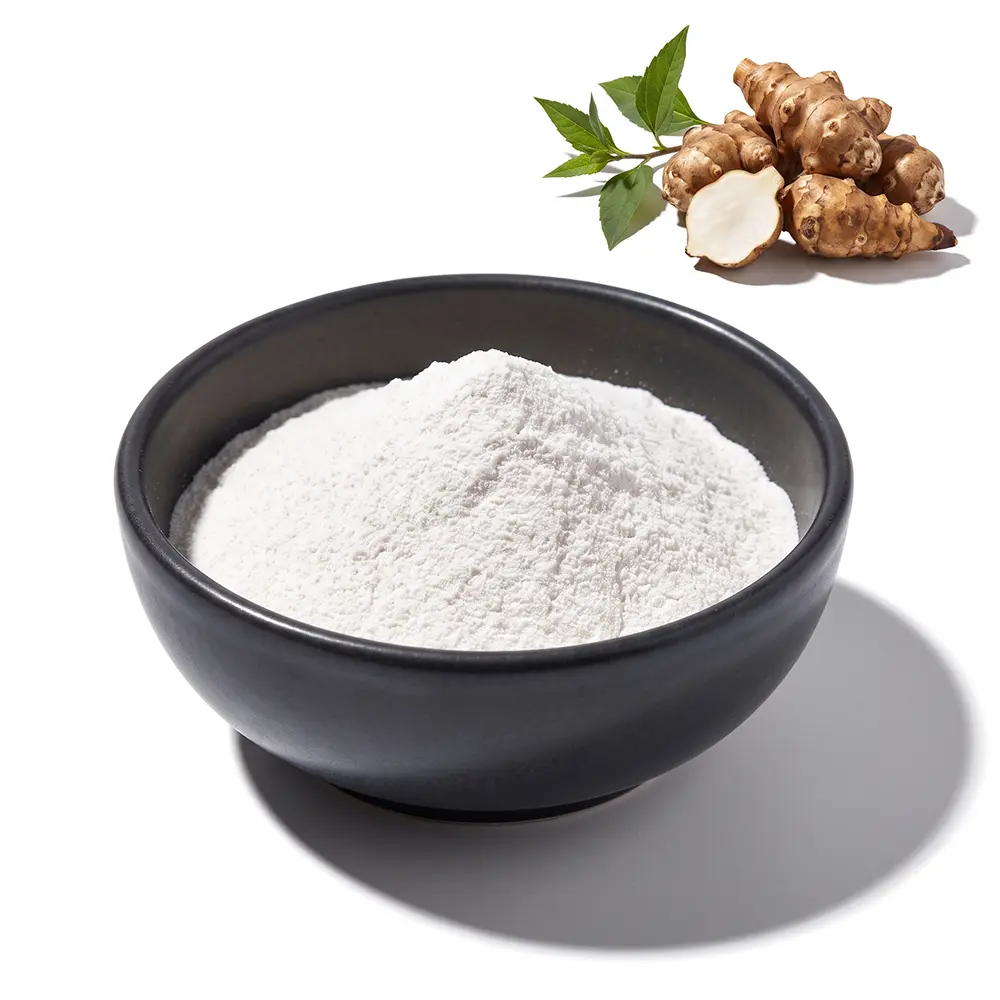
Bulk Inulin Powder Supplier — Jerusalem Artichoke Source, 90%+ Purity, Membrane-Filtered, B2B Wholesale
Valeherb supplies inulin powder bulk wholesale extracted from Jerusalem artichoke (Helianthus tuberosus L.) tubers, standardized to 90%+ purity by HPLC using a membrane filtration and membrane concentration process rather than the ion-exchange or solvent-based methods common elsewhere in the industry. Inulin is a fructan-type prebiotic fiber composed of fructose units linked by β(2→1) glycosidic bonds — one of the most extensively studied prebiotic fibers in published nutrition research, and a standard functional ingredient across food, beverage, and supplement manufacturing.
On this page: product specifications, why Jerusalem artichoke, membrane filtration process, research background, formulation applications, sourcing criteria, and regulatory guidance.
Product Specifications
| Parameter | Specification |
|---|---|
| CAS Number | 9005-80-5 |
| Purity | ≥90% by HPLC |
| Source | Helianthus tuberosus L. (Jerusalem artichoke) tuber |
| Extraction/Purification Method | Hot water extraction, membrane filtration, membrane concentration |
| Appearance | White to off-white powder |
| Solubility | Soluble in hot water; partially soluble in cold water depending on chain length |
| Degree of Polymerization (DP) | Native long-chain profile — reported per batch on COA |
| Storage | Cool, dry, sealed container away from moisture |
| MOQ | 1 kg — pricing and lead time on inquiry |
Why Jerusalem Artichoke
Most commercial inulin is extracted from chicory root (Cichorium intybus), which dominates the global supply chain and most published market content. Jerusalem artichoke is a well-established alternative commercial source, particularly common in Chinese inulin production, with inulin accounting for up to 80% of tuber dry weight.[4] The two sources yield the same fructan-type polymer but differ in native degree-of-polymerization distribution and in the accompanying non-inulin compound profile carried through extraction. For a full technical comparison of the two sources — including DP differences documented in published comparative research — see Jerusalem Artichoke vs Chicory Root Inulin: A Sourcing Comparison.
Membrane Filtration: How Purity Is Achieved
Rather than relying on ion-exchange resin desalination or solvent-based purification, Valeherb’s process uses ultra-filtration membrane technology to clarify Jerusalem artichoke extract, followed by membrane concentration to reach the finished purity grade. Published research on this specific method reports that a 50-kDa membrane, operated under optimized trans-membrane pressure and stirring conditions, removes approximately 99% of protein impurities from the raw extract and yields a filtrate with inulin purity around 98%.[1] Membrane-based purification avoids the residual solvent and ion-exchange byproduct considerations associated with some alternative purification routes. For a deeper look at how degree of polymerization and purity method affect functional performance, see Understanding Inulin Purity and Degree of Polymerization for Formulators.
Research Background
Provided as scientific context for formulators, not as claims for any Valeherb product.
Degree of Polymerization and Prebiotic Activity
Li et al. (2015) tracked inulin content and degree of polymerization (DP) across the growth cycle of Jerusalem artichoke tubers, finding DP reached a maximum of 19 at 50 days post-flowering before declining, and evaluated the prebiotic effect of inulin fractions of varying DP on probiotic growth in a yogurt fermentation model. Lower-DP inulin fractions showed higher probiotic-supporting activity in this model system.[2] These are preclinical/model-system findings described here as research context.
Fructan Classification and Compositional Background
Published compositional research classifies inulin-type fructans by chain length into short (DP 3–5), medium (DP 6–10), and long-chain (DP 11–60) fractions, noting that DP is determined by genotype, environmental conditions, harvest timing, and storage — and that DP is a primary driver of both functional properties and commercial grading.[4] Extraction and purification methodology research on Jerusalem artichoke inulin, including membrane- and resin-based approaches, has been an active area of published food science research.[1],[3]
Formulation Applications
- Prebiotic fiber fortification: Functional foods, beverages, and supplement capsules/powders positioned on prebiotic fiber content, based on inulin’s well-established published research base as a fermentable dietary fiber
- Fat and sugar replacement: Texture and mouthfeel modifier in reduced-fat dairy, baked goods, and spreads, leveraging inulin’s gel-forming properties at higher DP
- Fiber-fortified functional beverages: Water-soluble at appropriate concentration for beverage fortification; confirm target solubility against your process temperature
- Synbiotic formulations: Commonly paired with probiotic strains in combination supplement formats, based on inulin’s role as a fermentable substrate for select gut bacteria.Some synbiotic formulas also incorporate FOS alongside or instead of inulin for its faster, more proximal-colon fermentation profile — see Inulin vs FOS: What’s the Difference Between These Two Prebiotic Fibers for how the two compare.
Sourcing Criteria
| Criterion | What to Require |
|---|---|
| Source Confirmation | Helianthus tuberosus (Jerusalem artichoke) confirmed on COA — distinguish from chicory-root-sourced inulin, which has a different native DP profile |
| Purity Verification | ≥90% inulin content by HPLC per batch. Confirm assay method and whether short-chain fructooligosaccharide content is included or reported separately |
| Extraction/Purification Method | Confirm membrane filtration vs ion-exchange vs solvent-based purification — relevant to residual processing aid documentation for some regulatory submissions |
| Third-Party COA | Inulin purity (HPLC), heavy metals (USP <232>), pesticide residues, microbial limits (USP <2021>), moisture — per production batch from accredited laboratory |
Regulatory Guidance
- US (FDA): Inulin is GRAS (Generally Recognized as Safe) for use as a food ingredient and dietary fiber source. Inulin-type fructans meeting FDA’s dietary fiber definition may be counted toward “Dietary Fiber” on the Nutrition Facts label — confirm current FDA guidance for your specific product category and labelling claims
- EU: Inulin is an authorised food ingredient under EU novel food and food additive frameworks with established use history; confirm current labelling requirements (e.g., fiber content declarations) for your target EU market
- China: Inulin from Jerusalem artichoke has established status as a food ingredient under Chinese food safety standards (GB standards); export documentation available
- General: Prebiotic fiber and digestive-health structure/function claims are supportable with published research under DSHEA/EU frameworks with appropriate self-substantiation; disease treatment claims (including diabetes management) require drug-level approval and are not supported by current supplement/food ingredient positioning


