Bulk Aloe-Emodin Supplier — 50% / 95% / 98% HPLC, Curaçao Aloe Leaf Extract, B2B Wholesale
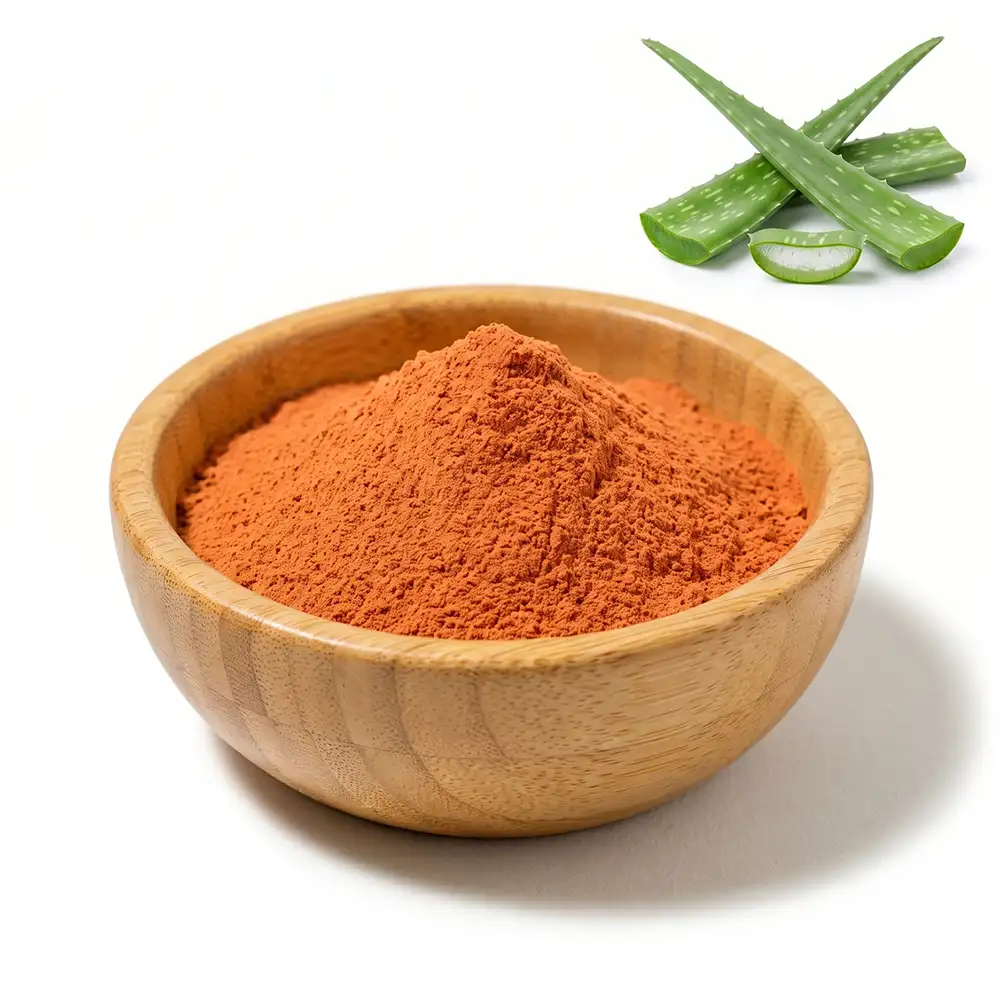
Valeherb supplies aloe-emodin bulk wholesale at 50%, 95%, and 98% purity by HPLC, extracted from Curaçao aloe leaf — Aloe barbadensis Miller, botanically synonymous with Aloe vera (L.) Burm.f. The species carries the trade name “Curaçao aloe” from its 19th-century commercial cultivation history on the Dutch Caribbean islands of Curaçao, Aruba, and Bonaire, after earlier cultivation in Barbados — it remains the standard commercial source species for anthraquinone extraction today. Aloe-emodin (1,8-dihydroxy-3-hydroxymethyl-anthraquinone, CAS 481-72-1) is concentrated in the leaf exudate, distinct from the clear inner gel used in most cosmetic aloe products, and is one of the most extensively studied anthraquinones in published pharmacological research.
On this page: available grades, active compound profile, research background, formulation applications, sourcing criteria, and regulatory guidance.
Available Grades
| Grade | Aloe-Emodin Content | Typical Application |
|---|---|---|
| Standard | 50% (HPLC) | Research applications; industrial and TCM raw material use where cost efficiency matters |
| High-Purity | 95% (HPLC) | Precision research applications; reference standard use; specialised industrial formulations |
| Ultra-Purity | 98% (HPLC) | Analytical reference material; research requiring maximal compound purity and minimal co-anthraquinone interference |
Custom standardization levels available on request. MOQ, lead time, and current pricing available on inquiry.
Active Compound Profile
| Compound | Class | Notes |
|---|---|---|
| Aloe-Emodin | Anthraquinone — primary marker | 1,8-dihydroxy-3-hydroxymethyl-anthraquinone; CAS 481-72-1; concentrated in leaf exudate; antibacterial and photosensitising properties studied in published research[1] |
| Emodin | Anthraquinone — related compound | Structurally distinct from aloe-emodin (different substitution pattern); co-occurs at lower levels; also present in rhubarb, cascara, senna, and Polygonum multiflorum |
| Aloin (Barbaloin) | Anthrone C-glycoside | Precursor compound; hydrolyses to aloe-emodin anthrone under gut bacterial or processing conditions |
Research Background
Provided as scientific context for research and industrial buyers, not as claims for any Valeherb product.
Antibacterial Mechanism Research
Li et al. (2021, Frontiers in Microbiology) investigated aloe-emodin’s antibacterial activity and membrane-targeting mechanism against Staphylococcus epidermidis, a clinically relevant biofilm-forming organism. The study documented aloe-emodin’s disruption of bacterial membrane integrity as a proposed antimicrobial mechanism, building on prior published research describing aloe-emodin’s inhibition of S. aureus biofilm formation and interference with bacterial toxin oligomerization.[1] These are in vitro antimicrobial mechanism findings described here as research context, relevant to industrial and research applications.
Photodynamic and Antimicrobial Photosensitiser Research
Published research has investigated aloe-emodin’s photosensitising properties, documenting phototoxic activity against dermatophyte fungi under controlled photodynamic therapy conditions in preclinical models. Aloe-emodin’s antimicrobial spectrum in published research includes activity against gram-positive bacteria and specific fungal pathogens, distinct from and in addition to its anthraquinone-class chemical properties.[4]
Formulation Applications
- Research and analytical reference standards: 95% or 98% grade for use as a reference compound in HPLC method development, structure-activity research, and academic/industrial research applications
- Traditional Chinese Medicine raw material: Aloe-emodin-containing material is used as a component of TCM formulations; ChP documentation available for China domestic market and TCM-positioned export products
- Industrial and dye applications: Anthraquinone compounds including aloe-emodin have documented use as natural dye and industrial chemical intermediates
- Topical/cosmetic research: Aloe-emodin’s antimicrobial and photosensitising properties are under active research investigation for topical applications; formulators should confirm current regulatory status for their specific target market before finalizing product concentration and claims
Sourcing Criteria
| Criterion | What to Require |
|---|---|
| Compound Identity | Aloe-emodin (CAS 481-72-1) individually quantified by HPLC — distinguish from emodin (CAS 518-82-1) and total anthraquinone colorimetric figures |
| Species Confirmation | Aloe barbadensis Miller (Curaçao/Barbados aloe) confirmed on COA — the standard commercial source species for this compound |
| Third-Party COA | Aloe-emodin purity (HPLC), heavy metals, pesticide residues, microbial limits, moisture — per production batch from accredited laboratory |
| Certifications | Non-GMO, FDA-registered facility, ChP documentation for China domestic market — available on request |
Regulatory Guidance
- US (FDA): In 2002, FDA ruled that aloe (including whole leaf and flower extract) is not generally recognized as safe and effective for use in OTC stimulant laxative drug products, citing inadequate carcinogenicity and genotoxicity data. Non-decolorized whole-leaf Aloe vera extract has been classified by IARC as possibly carcinogenic to humans (Group 2B)
- EU: In 2021, EU Commission Regulation 2021/468 added Aloe leaf preparations containing hydroxyanthracene derivatives (including aloe-emodin) to Annex III of Regulation (EC) No 1925/2006, based on an EFSA assessment identifying genotoxicity and carcinogenicity concerns. On 13 November 2024, the EU General Court annulled this regulation on procedural grounds (the Commission had banned “preparations” rather than individually defined substances) — this is a procedural annulment, not a reversal of the underlying EFSA scientific findings. Buyers targeting EU markets should confirm current status with regulatory counsel, as this area remains active[3]
- China (ChP): Aloe-emodin-containing material has established use as a TCM raw material component under the Chinese Pharmacopoeia framework; ChP compliance documentation available for domestic China market and TCM-positioned export
- General: Given the documented genotoxicity data, Valeherb recommends independent regulatory and legal review before incorporating aloe-emodin into any consumer-facing formulation in any market