Bulk Green Tea Extract Powder Supplier — 30%–98% EGCG, Decaffeinated Grades Available, B2B Wholesale
Valeherb supplies green tea extract powder (Camellia sinensis (L.) Kuntze, leaf) bulk wholesale across the full EGCG potency range — 30% to 98% EGCG (HPLC) — with decaffeinated grades available at all standardization levels. Epigallocatechin gallate (EGCG, CAS 989-51-5) is the primary bioactive marker, accounting for 50–80% of total catechin content in standardized extract and carrying the most extensively documented research background of any tea polyphenol.[1] Every batch ships with a full HPLC COA covering EGCG %, total catechin profile, and caffeine content.
On this page: the catechin compound profile, available EGCG grades and decaffeination options, research background, formulation applications, and regulatory notes including the hepatotoxicity disclosure requirement.
Active Compounds: The Catechin Profile
The bioactive fraction of Camellia sinensis leaf extract is its catechin polyphenols. EGCG is the dominant and most studied catechin; the remaining three (ECG, EGC, EC) contribute antioxidant and anti-inflammatory activity and are retained or concentrated differently depending on extraction grade.[1]
| Compound | CAS | Studied Activity | Formulation Relevance |
|---|---|---|---|
| EGCG (Epigallocatechin-3-gallate) | 989-51-5 | COMT inhibition, AMPK activation, antioxidant and inflammatory-pathway research; studied extensively for metabolic, cardiovascular, and skin-protective endpoints[4] | Metabolic supplements, cosmetic actives, functional foods — primary standardization marker |
| ECG (Epicatechin-3-gallate) | 1257-08-5 | Antioxidant, LDL oxidation inhibition studied in vitro | Antioxidant formulations, cardiovascular blends |
| EGC (Epigallocatechin) | 970-74-1 | Antioxidant, antimicrobial, inflammatory-pathway research | Multi-catechin immune and antioxidant formulations |
| EC (Epicatechin) | 490-46-0 | Endothelial function and vascular health endpoints studied in clinical research | Cardiovascular nutraceuticals, sports nutrition |
Higher EGCG grades (50%+) concentrate the catechin fraction progressively; at 98%, the product is near-pure EGCG. Lower grades (30–50%) retain a broader catechin matrix alongside EGCG and are the standard choice for multi-ingredient formulations where a full-spectrum tea polyphenol profile is preferred over single-marker purity.
Available Grades and Specifications
All grades are HPLC-verified per batch for EGCG %, total catechin profile, and caffeine %. Decaffeinated grades use CO₂ supercritical or water-process decaffeination, which preserves the catechin profile more completely than solvent-based methods.
| Grade | EGCG (HPLC) | Caffeine | Appearance | Typical Application |
|---|---|---|---|---|
| Standard Extract | 30% | Standard or decaf | Green to light brown powder | Multi-ingredient antioxidant blends, functional food fortification, cost-sensitive nutraceutical SKUs |
| Mid-Potency Extract | 50% | Standard or decaf | Light green powder | Mainstream metabolic and antioxidant supplement capsules; functional beverages |
| High-Potency Extract | 70–80% | Standard or decaf | Off-white to light green powder | Premium supplement SKUs, cardiovascular and metabolic nutraceuticals, label-forward EGCG positioning |
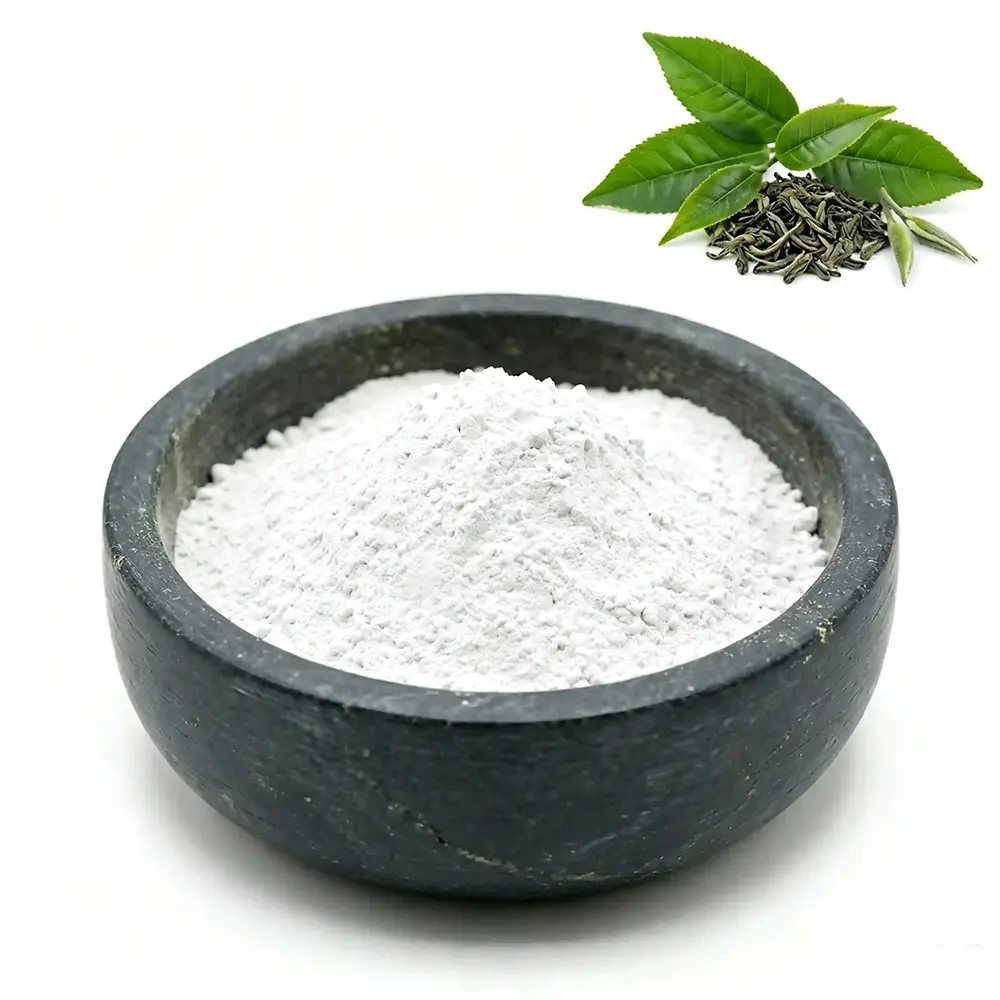
| EGCG Isolate | 98% | Decaffeinated | White to off-white powder | Cosmetic actives, pharmaceutical & nutraceutical ingredient applications, analytical reference, high-precision formulations |
Research Background
The activity described below is reported in published research on Camellia sinensis extract and isolated EGCG. It is provided as scientific context for formulators, not as claims for any Valeherb product.
Mokra et al. (2022) reviewed EGCG’s interactions with cell surface receptors, intracellular signaling pathways, and nuclear transcription factors — covering anti-inflammatory, antioxidant, and tissue-protective activity across metabolic, cardiovascular, respiratory, and neurological research contexts, with NF-κB and MAPK pathway modulation identified as primary mechanisms.[4]
In a systematic review and meta-analysis, Zamani et al. (2022) aggregated randomized clinical trial data on green tea supplementation and cardiovascular risk markers — finding significant improvements in LDL cholesterol, total cholesterol, fasting blood glucose, and systolic blood pressure across diverse study populations.[2]
Huang et al. (2018) conducted a randomized, double-blind, crossover RCT in 73 overweight women with elevated LDL-C: green tea extract supplementation over 6 weeks produced significant LDL-C reductions alongside improvements in BMI and leptin levels versus placebo — one of the more directly applicable population-specific trials for cardiovascular and metabolic supplement positioning.[3]
Formulation Applications
- Metabolic supplement capsules and powders: 300–500 mg per serving at 50–80% EGCG (HPLC) is the standard nutraceutical format. COMT inhibition and AMPK activation provide a recognized mechanistic basis for thermogenesis and fat oxidation positioning in the supplement literature. Compatible with L-carnitine, berberine, and chromium in comprehensive metabolic blends
- Cardiovascular nutraceuticals: EGCG’s published profile on LDL oxidation, endothelial function, and lipid metabolism markers supports heart health and lipid management formulations. Compatible with CoQ10, olive leaf extract, and plant sterols in multi-mechanism blends
- Decaffeinated formulations: Decaffeinated grades at 30–80% EGCG suit evening-use products, caffeine-sensitive supplement lines, and blood-pressure-aware formulations where stimulant avoidance is part of the product positioning. 98% isolate is always decaffeinated by nature of the concentration process
- Cosmetic actives (anti-aging, photoprotection): 98% EGCG isolate at 0.1–0.5% in leave-on formulations for antioxidant and skin-protective applications. Water-soluble at high purity grades. INCI: Camellia Sinensis Leaf Extract
- Functional beverages and RTD applications: Standardized extract integrates into RTD beverages and powdered drink mixes. Decaffeinated grades at 30–50% EGCG suit daytime and evening formats without stimulant labeling
What to Confirm Before You Buy
| Criterion | What to Require |
|---|---|
| EGCG Content | HPLC-verified EGCG % per batch against a certified reference standard — separately from total polyphenol (UV). For precision applications, request the full catechin profile (EGCG, ECG, EGC, EC) individually |
| Caffeine Content | Caffeine % per batch (HPLC). For decaffeinated grades: confirm ≤0.5% per batch, and request decaffeination method — CO₂ supercritical or water process preserves the catechin profile; solvent-based methods introduce residue testing requirements |
| Solvent Residues | Residual solvent certificate per ICH Q3C. Ethanol and water extraction are preferred; ethyl acetate or methanol require residual limits testing for food and cosmetic applications |
| Heavy Metals & Pesticides | ICP-MS heavy metals (Pb, As, Cd, Hg) per batch to EU Cosmetics Regulation or USP <232> limits. Multi-residue pesticide screen against EU MRL or US EPA tolerance limits — tea leaf crops from major cultivation regions (China, India, Japan) have different agricultural chemical profiles |
| Complete COA | EGCG % (HPLC), total polyphenols (UV), caffeine %, catechin profile, heavy metals, pesticide residues, microbial limits, moisture — per batch from accredited laboratory |
Regulatory Notes
- United States (DSHEA): Dietary supplement ingredient with extensive use history. Follow USP Green Tea Extract monograph guidance for hepatotoxicity disclosure. Structure/function claims require marketer substantiation. FDA-registered facility (21 CFR Part 111 cGMP)
- European Union: EFSA 2018 scientific opinion establishes 800 mg/day EGCG from supplements as the safety threshold — formulate and label accordingly. INCI for cosmetics: Camellia Sinensis Leaf Extract; no EU Cosmetics Regulation restriction at standard cosmetic use concentrations
- China: Listed in the NMPA Cosmetic Ingredient Inventory (IECIC); established use as a food ingredient. Export documentation included with bulk wholesale shipments