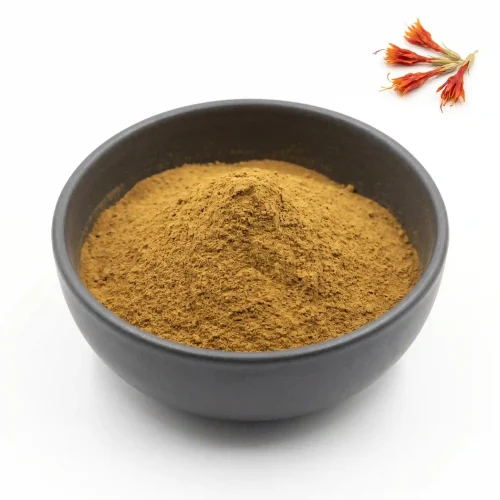
Bulk Valerian Root Extract Supplier — Valerenic Acids 0.8% GC & 10:1 Ratio Extract, B2B Wholesale
Valeherb supplies valerian root extract bulk wholesale — Valeriana officinalis L. root extract — in two product lines: a 0.8% valerenic acids extract (GC-verified) and a 10:1 concentration ratio extract. Valerian root is one of the most widely used botanical sleep-support ingredients in the global supplement market, with a documented history of traditional use dating to ancient Greece and Rome, and one of the most extensively studied mechanism profiles of any botanical sedative — centred on valerenic acid’s interaction with GABA-A receptors.
On this page: available grades, active compound profile, research background, formulation applications, sourcing criteria, and regulatory guidance.
Available Grades
| Grade | Specification | Assay Method | Typical Application |
|---|---|---|---|
| Standardized | 0.8% valerenic acids | GC (Gas Chromatography) | Sleep-support and relaxation supplement capsules where a guaranteed valerenic acid marker level is required |
| Ratio Extract | 10:1 | — | Full-spectrum traditional formulations, tea-format products, and blends where whole-root character is preferred |
GC is the pharmacopoeia-standard assay method for valerenic acids, historically preferred over HPLC for this compound class due to its established resolution of the sesquiterpenic acid fraction. Custom standardization levels available on request. MOQ, lead time, and current pricing available on inquiry.
Active Compound Profile
| Compound | Class | Notes |
|---|---|---|
| Valerenic Acid | Sesquiterpenic acid — primary marker | The compound identified as the subunit-specific allosteric modulator responsible for valerian’s documented GABA-A receptor activity; the standard ChP/USP quality marker[1],[2] |
| Acetoxyvalerenic Acid | Sesquiterpenic acid | Co-occurs with valerenic acid; contributes to the overall sesquiterpenic acid profile quantified in standardization |
| Valepotriates | Iridoid esters | Present in fresh root; largely degrade during drying and processing — more relevant to fresh extract characterisation than dried standardized material |
| Valerenol & essential oil fraction | Sesquiterpene alcohols, monoterpenes | Contributes to the characteristic aroma; studied alongside valerenic acid for GABA-A receptor binding activity[2] |
Research Background
Provided as scientific context for formulators, not as claims for any Valeherb product.
Mechanism: Valerenic Acid and GABA-A Receptors
Trauner et al. (2008, Planta Medica) investigated the relationship between valerian extract GABA-A receptor modulation and sesquiterpenic acid content. Using Xenopus oocyte-expressed GABA-A receptors, the study found that extracts with higher valerenic and acetoxyvalerenic acid content produced significantly stronger enhancement of GABA-induced chloride currents, and that removing the sesquiterpenic acid fraction from an active extract eliminated this receptor-modulating activity — directly establishing valerenic acid as the key driver of valerian’s GABAergic activity.[1]
Benke et al. (2009, Neuropharmacology) identified a specific nanomolar-affinity binding site for valerenic acid and valerenol on GABA-A receptors, with a point mutation in the β2/β3 receptor subunit substantially reducing the compound’s activity — confirming a defined molecular mechanism. In vivo testing in mice showed valerenic acid produced anxiolytic activity with high potency in standard behavioural models (elevated plus maze, light/dark choice test).[2] This receptor-level mechanism is considered analogous in effect to the GABA-A pathway targeted by benzodiazepine-class medications, though acting through a distinct, non-benzodiazepine binding site.
Sleep Quality Research
Shinjyo et al. (2020, Journal of Evidence-Based Integrative Medicine) conducted a systematic review and meta-analysis of 60 studies (n=6,894) evaluating valerian for sleep problems and associated disorders. Meta-analysis of 10 studies (n=1,065) found valerian was associated with improvement in subjective sleep quality. The review also noted that the relatively unstable nature of some active constituents makes standardization and quality control — including GC-verified valerenic acid content — particularly important for consistent product performance.[3]
Formulation Applications
- Sleep-support and relaxation capsules: 0.8% valerenic acid grade at 300–600 mg per serving (delivering ~2.4–4.8 mg valerenic acid) — a range consistent with published research dosing. Pairs with passionflower, lemon balm, and L-theanine in multi-mechanism relaxation formulas
- Traditional and full-spectrum formulations: 10:1 ratio extract for tea-format products, tincture bases, and formulations where whole-root character and traditional positioning are preferred over single-marker standardization
- Combination sedative-botanical blends: Both grades combine with hops, chamomile, and California poppy in evening/bedtime formula categories, based on the shared GABAergic research background across these botanicals
- Functional beverage and gummy applications: 10:1 extract for lower-dose relaxation-positioned functional products where valerian’s characteristic aroma profile is manageable within the flavour system
Sourcing Criteria
| Criterion | What to Require |
|---|---|
| Species Confirmation | Valeriana officinalis L. root confirmed on COA — the primary commercial and research species |
| Valerenic Acid Content | GC-verified valerenic acid percentage per batch for standardized grade (0.8%). For the 10:1 ratio grade, content reported as-tested |
| Odour/Quality Consistency | Valerian’s characteristic aroma intensifies with age and improper storage — request fresh-batch documentation and confirm storage conditions, as aged material can affect finished-product sensory acceptance |
| Third-Party COA | Valerenic acids content (GC), heavy metals (USP <232>), pesticide residues, microbial limits (USP <2021>), moisture — per production batch from accredited laboratory |
Regulatory Guidance
- US (DSHEA): Sleep support, relaxation, and calm-related structure/function claims are supportable with published research — each requires marketer self-substantiation and the required FDA disclaimer. Disease treatment claims (including “treats insomnia”) require drug approval and are not supported by current structure/function claim frameworks
- EU: Valerian root preparations are recognised under HMPC monographs as traditional herbal medicinal products in several EU member states, permitting specific traditional-use claim language under registered herbal medicine frameworks — distinct from food supplement claim rules
- China (ChP): Valeriana officinalis is documented in Chinese herbal pharmacology references; confirm current ChP status and documentation requirements for your specific application
- General: Given valerian’s CNS-active mechanism, Valeherb recommends finished-product formulators confirm current claim substantiation standards and interaction disclosure requirements for their specific target market before finalizing product positioning