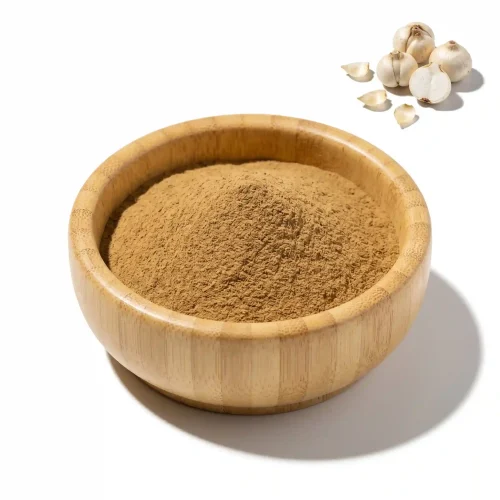
Bulk Panax notoginseng Extract Supplier — Sanqi (三七), PNS Saponins, 4:1 / 10:1 / 20:1 Ratio Extracts, B2B Wholesale
Valeherb supplies Panax notoginseng extract bulk wholesale — Sanqi (三七), also known as Tianqi or Tienchi ginseng — in 4:1, 10:1, and 20:1 concentration ratio extracts, with custom specifications available for circulation support, antioxidant, and adaptogenic supplement formulation. Its primary bioactive fraction — Panax notoginseng saponins (PNS), principally notoginsenoside R1, ginsenoside Rg1, and ginsenoside Rb1 — is the ChP 2020 HPLC quality marker set for Notoginseng Radix et Rhizoma (三七).[1]
Panax notoginseng vs. Panax ginseng: The Procurement Distinction
These are two distinct species in the same genus with different saponin profiles, different traditional applications, and different pharmacological evidence bases. The distinction matters for label compliance and formulation positioning.
| Property | Panax notoginseng (三七 Sanqi) | Panax ginseng (人参 Renshen) |
|---|---|---|
| Primary saponins | Notoginsenoside R1 (unique to P. notoginseng), ginsenoside Rg1, Rb1, Rd, Re | Ginsenosides Rg1, Rb1, Rc, Rd, Re — no notoginsenoside R1 |
| Unique marker | Notoginsenoside R1 — the species-specific ChP identity marker | Absent in P. notoginseng |
| TCM category | Circulation-activating, blood-stasis-resolving herb | Qi-tonifying adaptogen |
| Primary research focus | Vascular biology, antioxidant, anti-inflammatory activity in published research[2] | Adaptogenic, immune-modulating, anti-fatigue activity |
| ChP 2020 monograph | Notoginseng Radix et Rhizoma (三七) — separate monograph | Ginseng Radix et Rhizoma (人参) — separate monograph |
Available Grades and Specifications
All three ratio grades are derived from the dried root of Panax notoginseng. Total saponin (PNS) content and individual marker compounds (notoginsenoside R1, ginsenoside Rg1, ginsenoside Rb1) are reported as-tested by HPLC per batch COA.
| Grade (Ratio) | Extraction Format | Concentration Profile | Typical Application |
|---|---|---|---|
| 4:1 | Aqueous / Ethanol | Full-spectrum — PNS + polysaccharides + dencichine + flavonoids | TCM tonic blends, traditional Sanqi supplements, entry-level circulation-support formulas |
| 10:1 | Aqueous / Ethanol | Concentrated PNS fraction; higher notoginsenoside + ginsenoside density per gram | Mainstream circulation-support and antioxidant capsules; Sanqi-based adaptogen blends |
| 20:1 | Ethanol (preferred) | High PNS density per gram; concentrated notoginsenoside R1 + Rg1 + Rb1 | Premium antioxidant stacks, high-potency circulation-support formulas, compact dosing formats |
Custom ratios and PNS-standardized grades (total saponins % by HPLC) available on request. MOQ, lead time, and current pricing available on inquiry.
Active Compounds: PNS-Led Saponin Profile
The pharmacological activity of Panax notoginseng root extract is attributed to its triterpenoid saponin fraction — Panax notoginseng saponins (PNS) — one of the most extensively characterised compound classes in the TCM botanical library.[1]
| Compound | Class | Notes |
|---|---|---|
| Notoginsenoside R1 | Triterpenoid saponin — species-specific ChP marker | Unique to P. notoginseng; ChP 2020 primary species identity marker; vascular biology activity studied in published preclinical research[1] |
| Ginsenoside Rg1 | Protopanaxatriol-type saponin — primary marker | ~25% of PNS composition; ChP 2020 quantification marker; antioxidant and anti-inflammatory activity studied in published research[2] |
| Ginsenoside Rb1 | Protopanaxadiol-type saponin — primary marker | ~30% of PNS composition; ChP 2020 quantification marker; studied alongside Rg1 as the dominant saponin pair in published vascular research[2] |
| Ginsenoside Rd, Re | Triterpenoid saponins — secondary markers | Contribute to total PNS profile; studied in published antioxidant and neuroprotective research |
| Dencichine | Amino acid derivative | Present in raw root; lower in concentrated saponin extracts — see CAUTION |
| Polysaccharides | Complex carbohydrate fraction | Immunomodulatory activity studied in published research; concentrated in aqueous extracts |
Research Background
The activity described below is reported in published research on Panax notoginseng extract and its constituent compounds. It is provided as scientific context for formulators, not as claims for any Valeherb product.
1. Comprehensive Review: Phytochemistry and Pharmacology
Wang et al. (2016, Journal of Ethnopharmacology) produced the most comprehensive published review of Panax notoginseng, covering botany, ethnopharmacology, phytochemistry, pharmacology, and toxicology. The review identified 27 saponins, with notoginsenoside R1, ginsenoside Rg1, and Rb1 as the primary quantified compounds. Pharmacological activities documented across the published literature include antioxidant, anti-inflammatory, neuroprotective, and vascular biology activity in preclinical models. The review also summarised toxicological data, noting that P. notoginseng is generally well-tolerated at conventional doses with hepatotoxic and reproductive toxicity documented at excessive doses in animal studies.[1]
2. Vascular Biology and Antioxidant Activity — PNS Saponins
Yin et al. (2014, Evidence-Based Complementary and Alternative Medicine) reviewed the vascular protective effects of PNS and its primary monomers (Rb1, Rg1, and notoginsenoside R1) across published experimental studies. The review documented multiple proposed mechanisms including antioxidant enzyme upregulation, inflammatory-pathway modulation, platelet function modulation, and vascular smooth muscle cell activity in preclinical models — providing the mechanistic research framework for circulation-support and antioxidant supplement positioning.[2] These are preclinical findings described here as research context.
3. Latest Evidence and Safety Profile
Zhao et al. (2025, Phytomedicine) summarised the latest evidence covering antioxidant, inflammatory-pathway, and vascular biology research endpoints. Multiple PNS pharmaceutical preparations are approved in China for clinical use — a regulatory status distinct from dietary supplement applications that does not transfer to supplement claim authority.[3] Mancuso (2024, Nutrients) reviewed pharmacological and toxicological properties, noting well-tolerated at standard doses; documented safety considerations include anticoagulant activity and hepatotoxic effects at excessive doses in animal models — both relevant to finished-product label disclosures.[4]
Formulation Applications
- Circulation-support and antioxidant supplements: 10:1 or 20:1 ethanol extract at 300–600 mg per serving. Pairs with danshen (Salvia miltiorrhiza), Carthamus tinctorius flower extract, and Poria cocos in TCM-positioned circulation and antioxidant formulas; or with grape seed OPC and coenzyme Q10 in modern antioxidant stacks
- Adaptogenic and tonic formulas: 4:1 full-spectrum extract in classical Sanqi tonic supplements; ChP 2020 Notoginseng Radix et Rhizoma compliance documentation available for TCM-positioned products
- Sports and post-exercise recovery: Antioxidant positioning in recovery blends based on published PNS antioxidant activity; pairs with Rhodiola and ashwagandha
- Cosmeceutical actives: 10:1 or 20:1 ethanol extract in antioxidant serums and anti-aging topicals. INCI: Panax Notoginseng Root Extract
Sourcing Criteria
| Criterion | What to Require |
|---|---|
| Species Confirmation & Identity | Notoginsenoside R1 individually quantified by HPLC on every batch COA — the species-specific marker that distinguishes P. notoginseng from P. ginseng and P. quinquefolius. Its presence confirms correct botanical identity |
| PNS Profile | HPLC quantification of notoginsenoside R1 + ginsenoside Rg1 + ginsenoside Rb1 per batch as the ChP 2020 three-marker set. Total saponin content (colorimetric) may supplement but does not replace individual marker HPLC data |
| Ratio & Extraction Format | Confirm stated ratio (4:1 / 10:1 / 20:1) against raw-to-finished input; specify aqueous (full-spectrum, polysaccharide-inclusive) or ethanol (PNS-concentrated) as appropriate for formulation target |
| Plant Part | Root (Radix) — the ChP-specified part with the highest saponin concentration. Leaves, stems, and flowers have different and lower saponin profiles; confirm plant part on COA |
| Third-Party COA | PNS markers (HPLC: R1 + Rg1 + Rb1), heavy metals (USP <232>), pesticide residues (multi-residue screen), microbial limits (USP <2021>), moisture — per production batch from accredited laboratory |
| Certifications | Non-GMO, Kosher/Halal for relevant markets; FDA-registered facility for US supply chains; ChP 2020 documentation for China domestic market |
Regulatory Guidance
- US (DSHEA): Antioxidant, circulation support, and adaptogenic structure/function claims are supportable with published research — each must be self-substantiated by the marketer and carry the required FDA disclaimer. Disease treatment claims require drug approval. FDA-registered facility (21 CFR Part 111)
- China (ChP 2020): Notoginseng Radix et Rhizoma (三七) is a listed medicinal herb with a standardized ChP 2020 monograph specifying notoginsenoside R1, ginsenoside Rg1, and ginsenoside Rb1 as HPLC quality markers. Multiple pharmaceutical preparations containing PNS are approved by China’s NMPA — these pharmaceutical approvals are separate from dietary supplement applications and do not confer supplement claim authority
- EU: Not currently on the EU authorized health claims register. Traditional use registration may apply in some member states — confirm with regulatory counsel before finalizing EU-market product claims
- Cosmetics (EU/US): INCI name is Panax Notoginseng Root Extract. Listed in EU Cosing database. Confirm safety assessment under EU Cosmetics Regulation 1223/2009 for your specific formulation and concentration
- Canada (NHPs): Notoginseng root (Sanqi) is recognized in Traditional Chinese Medicine under Natural Health Products Regulations — confirm permitted claim language with a qualified Canadian regulatory consultant