

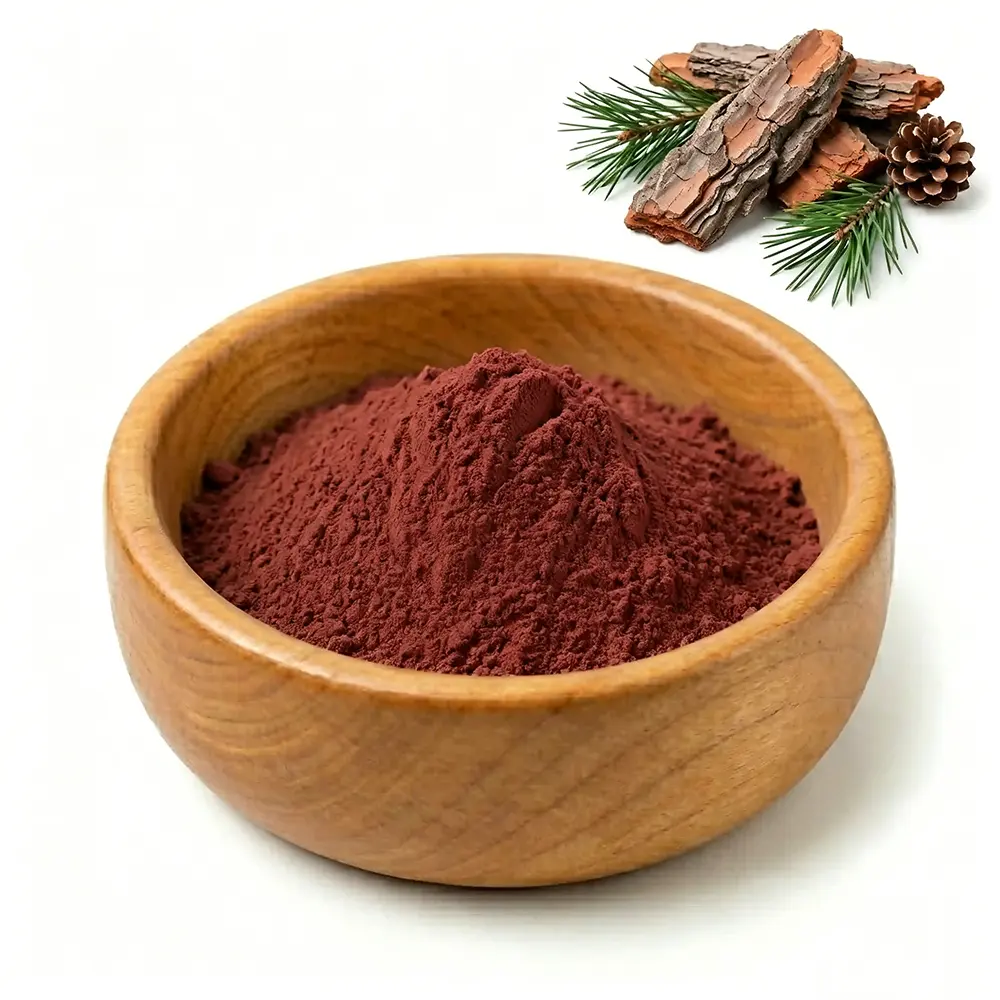
Pine Bark Extract Supplier (Pinus pinaster): 85–95% OPCs, Multi-System Research & B2B Sourcing Guide
Not all pine bark extracts are equivalent — the published research that makes this ingredient notable is built on a specific species and extraction standard. Standardized Pinus pinaster bark extract, sourced from French maritime pine and standardized to 85–95% oligomeric proanthocyanidins (OPCs), is one of the most extensively researched botanical ingredients in the supplement industry. With a large published literature base and research spanning cardiovascular, cognitive, dermatological, and metabolic pathways, it occupies a rare position: a single-origin botanical with a multi-system research base relevant to a broad range of formulation categories.
Active Compounds: OPCs and Why Standardization Matters
The bioactive fraction of pine bark extract is a class of polyphenols called Oligomeric Proanthocyanidins (OPCs) — flavonoid complexes comprising catechin, epicatechin, and their oligomeric forms. OPC concentration and structural integrity directly determine batch consistency: low-grade extracts with variable OPC content produce inconsistent results and cannot provide a defined, defensible specification.
| Compound Class | Standardization Target | Activity Studied in Research |
|---|---|---|
| Oligomeric Proanthocyanidins (OPCs) | 85–95% by HPLC[1] | Antioxidant activity (reported in published assays to exceed vitamin C and vitamin E in some measures); inflammatory-pathway (NF-κB) research; vascular endothelium research |
| Procyanidins (Catechin / Epicatechin oligomers) | Subset of OPC fraction | Studied for collagen cross-linking, MMP inhibition, and endothelial nitric oxide (NO) production[2] |
| Phenolic Acids (Ferulic, Caffeic) | Minor fraction | Synergistic antioxidant activity; UV-photoprotection research in topical applications |
Areas of Published Research
Pinus pinaster bark extract is one of the few botanical ingredients studied across multiple systems in peer-reviewed research:
| Research Area | Mechanism Studied | Reported in Research |
|---|---|---|
| Cardiovascular | Endothelial NO production; LDL-oxidation; platelet aggregation[2] | Reductions in LDL oxidation and modest changes in blood-pressure measures across study participants in multiple RCTs |
| Skin & Anti-Aging | MMP inhibition (collagen and elastin); UV-induced ROS scavenging[3] | Improved skin elasticity and hydration, reduced UV photoaging markers in controlled trials |
| Inflammatory-Pathway | NF-κB pathway; prostaglandin synthesis[5] | Reductions in CRP and inflammatory-marker levels in research |
| Cognitive | Cerebral microcirculation via NO-mediated vasodilation[4] | Measurable changes in attention and working memory in aging study populations |
| Glucose Metabolism | Alpha-glucosidase inhibition; insulin-receptor research | Effects on postprandial glucose markers in metabolic research |
| Joint Comfort | IL-1β and TNF-α modulation; cartilage research[1] | Improved mobility scores in joint-comfort research |
| Histamine Response | Mast-cell stabilization; histamine-release inhibition | Reductions in symptom-severity scores in seasonal histamine-response research |
Doses Used in Published Research
| Research Context | Dose Used in Trials | Basis |
|---|---|---|
| Antioxidant / general | 50 mg/day | Entry-level dose used in maintenance trials[1] |
| Cardiovascular / cognitive research | 100–150 mg/day | Most commonly used range in cardiovascular and cognitive RCTs[2] |
| Joint-comfort research | 150–200 mg/day | Dose range used in mobility trials[1] |
| Metabolic research | 200–300 mg/day | Higher-dose range from metabolic-research trials |
The figures above are doses used in published research, provided as a formulation reference only — not treatment recommendations or dosing instructions for any condition. Finished-product dosing and claims are the marketer’s responsibility under applicable regulations.
Formulation Applications
- Nutraceuticals (capsules/tablets): 50–200 mg standardized extract per serving covers the full research dose range. Pairs with vitamin C (OPC-vitamin C regeneration cycle), CoQ10, and resveratrol in cardiovascular and antioxidant formulations
- Cosmeceuticals (topical): MMP-inhibition and UV-photoprotection research are directly applicable to anti-aging serums and eye creams. Water-soluble OPC fraction required for aqueous emulsion systems; stable at standard cosmetic pH ranges
- Functional beverages: Water-soluble pine bark extract grades dissolve cleanly in RTD formats without sedimentation. Mild astringency at higher concentrations manageable with natural flavor masking; no significant color interference in clear formats
- Sports nutrition: Vascular and endothelial NO-production research supports the blood-flow and recovery category; non-stimulant, WADA-compliant ingredient for pre-workout and recovery formulas
- Women’s-health supplements: An emerging research area; pine bark extract is studied in women’s-health contexts and is used as an active in that formulation category
Sourcing Criteria: What Every B2B Buyer Should Require
| Criterion | What to Require |
|---|---|
| Species Specification | Pinus pinaster only — not generic “pine bark.” Request botanical identity documentation and origin certificate |
| OPC Standardization | 85–95% OPC content by HPLC per batch — the benchmark for clinical-trial-equivalent specifications |
| Extraction Method | Aqueous (water-based) extraction preferred to preserve OPC chain integrity without solvent residues. Confirm solvent-free status or solvent-residue testing on the COA |
| Third-Party COA | OPC content (HPLC), heavy metals (USP <232>), pesticide residues, microbial limits (USP <2021>), residual solvents, moisture — per production batch |
| USP / Ph. Eur. Compliance | Relevant for pharmaceutical-use supply chains. Request monograph compliance documentation if required by your regulatory pathway |
| Certifications | Non-GMO, Kosher/Halal for relevant markets. FDA-registered facility required for US supplement supply chains |
Regulatory Guidance
- US (DSHEA): Any structure/function claim on the finished product is the marketer’s responsibility to substantiate and must carry the FDA disclaimer; antioxidant claims are the most readily supported. Cardiovascular, cognitive, and joint claims sit closer to disease territory and need careful wording. Blood-sugar claims in particular require careful framing — “supports healthy blood glucose levels already within the normal range” is the appropriate structure/function wording. Disease treatment claims require drug (NDA) approval
- EU: OPCs are not currently on the EU authorized health claims register as a standalone ingredient. Antioxidant claims under EC 1924/2006 require specific substance authorization. Consult regulatory counsel for current status in target EU markets
- Canada (NHPs): Pine bark extract has a licensed Health Canada monograph supporting antioxidant and cardiovascular claims under Natural Health Products Regulations (regulatory background for buyers)
References
[1] Weichmann F & Rohdewald P. (2024). Pycnogenol® French maritime pine bark extract in randomized, double-blind, placebo-controlled human clinical studies. Frontiers in Nutrition, 11, 1389374. PMID: 38757130
[2] Enseleit F et al. (2012). Effects of Pycnogenol on endothelial function in patients with stable coronary artery disease: a double-blind, randomized, placebo-controlled, cross-over study. European Heart Journal, 33(13), 1589–1597. doi:10.1093/eurheartj/ehr482
[3] Marini A et al. (2012). Pycnogenol effects on skin elasticity and hydration coincide with increased gene expressions of collagen type I and hyaluronic acid synthase in women. Skin Pharmacology and Physiology, 25(2), 86–92. doi:10.1159/000335261
[4] Ryan J et al. (2008). An examination of the effects of the antioxidant Pycnogenol on cognitive performance, serum lipid profile, endocrinological and oxidative stress biomarkers in an elderly population. Journal of Psychopharmacology, 22(5), 553–562. PMID: 18701642
[5] Grimm T et al. (2006). Inhibition of NF-κB activation and MMP-9 secretion by plasma of human volunteers after ingestion of maritime pine bark extract (Pycnogenol). Journal of Inflammation, 3, 1. doi:10.1186/1476-9255-3-1


