

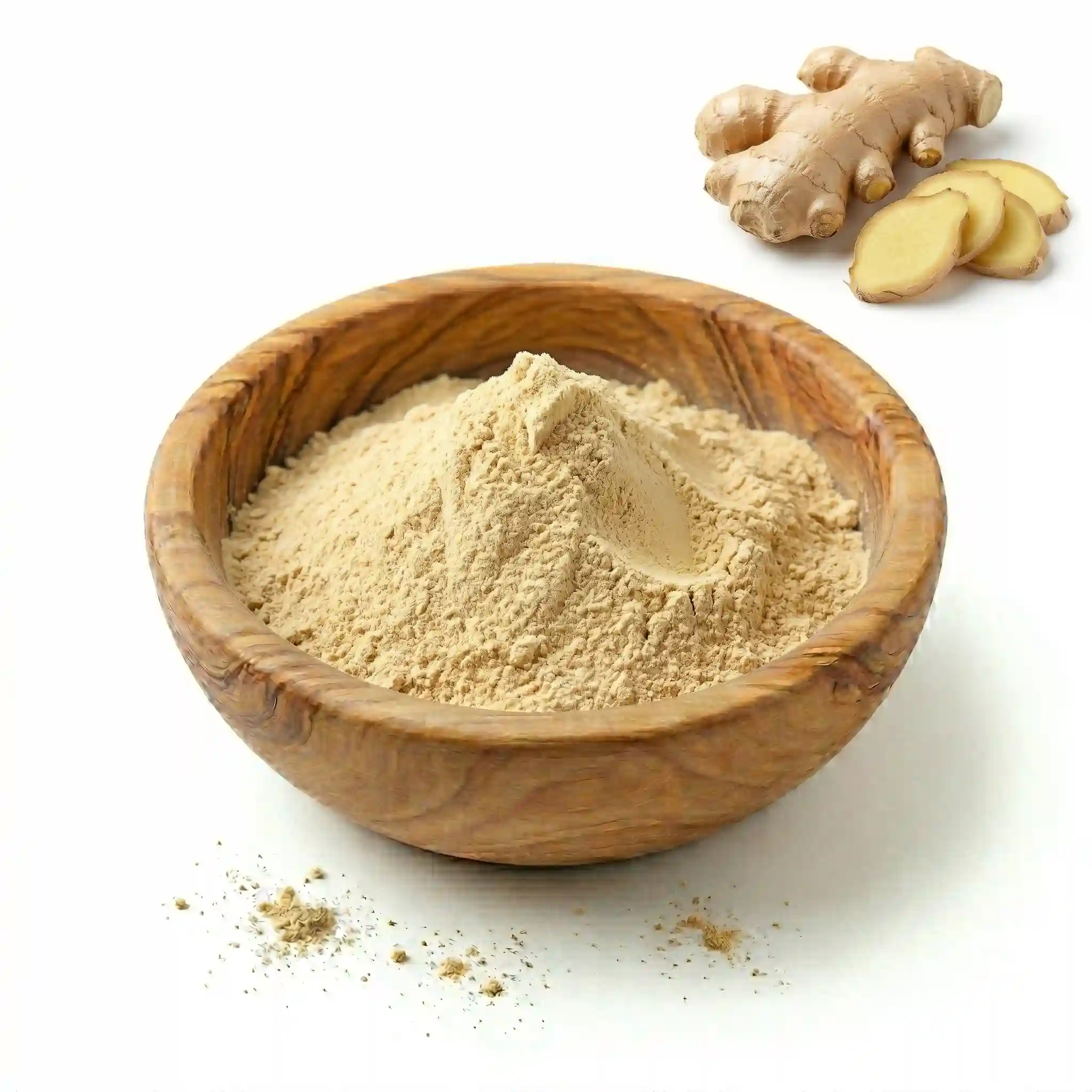
Gingerol Extract Supplier (Zingiber officinale): Gingerols 5–20% by HPLC, CAS 84696-15-1 | B2B Formulation Guide
Ginger has been used in traditional practice for thousands of years — but the distance between a culinary spice and a measurable functional ingredient comes down to standardization. Dried ginger powder typically delivers 1–3% gingerol content with no batch-to-batch consistency. Valeherb supplies standardized gingerol extract (CAS 84696-15-1), assay 5–20% gingerols by HPLC, with customization supported — concentrating the primary bioactive compounds into a measurable, reproducible form. For B2B buyers, a further consideration is solubility, since high-concentration gingerol material is oil-based and resists incorporation into aqueous systems. This guide covers the compound science, the published research, format considerations, and sourcing criteria for procurement.
Active Compounds: Gingerols, Shogaols, and Why the Ratio Matters
Zingiber officinale rhizome contains two primary bioactive compound families whose relative concentrations depend heavily on processing method:
| Compound | Source / Formation | Activity Studied in Research |
|---|---|---|
| Gingerols (6-, 8-, 10-gingerol) | Fresh rhizome; primary phenols in raw and minimally processed ginger | Studied for COX-1/COX-2 (inflammatory-pathway) activity, 5-HT3 receptor interaction, and TRPV1 (thermogenic) activation[2] |
| Shogaols (6-shogaol dominant) | Dehydration product of gingerols formed during drying or heat processing | Reported in research as more potent than the corresponding gingerols in inflammatory-pathway and related assays[2]; higher CNS penetration |
| Zingerone | Thermal degradation product; present in cooked/dried ginger | Antioxidant activity; contributes to characteristic cooked-ginger flavor profile |
| Paradols | Hydrogenation products of shogaols | Studied in emerging research for antioxidant and antimicrobial activity; minor fraction in standard extracts |
Published Research Across Four Areas
1. Nausea and Digestive Research
This is the most extensively studied area for ginger. A 2014 systematic review and meta-analysis by Viljoen et al. of six trials examined orally administered ginger for nausea and vomiting in pregnancy and reported potential benefit in reducing nausea symptoms — while noting the limited number of studies and the low quality of the available evidence; it found no significant effect on vomiting episodes.[3] In research, the proposed mechanism involves 5-HT3 receptor interaction, with gastric motility effects contributing to the overall digestive-research picture.
2. Inflammatory-Pathway Research
6-Gingerol and 6-shogaol are studied for inhibition of COX-1 and COX-2 (prostaglandin synthesis) and 5-LOX (the leukotriene pathway). This dual COX/LOX profile is a recurring focus of the published literature. A 2015 meta-analysis by Bartels et al. of five randomized controlled trials reported reductions in pain and disability scores in joint research compared to placebo.[1]
3. Glucose-Metabolism Research
Several RCTs have examined ginger extract in relation to insulin sensitivity and postprandial glucose markers. A 2019 meta-analysis by Huang et al. of eight trials reported reductions in fasting blood glucose, HbA1c, and insulin-resistance indices versus placebo in study participants.[4] The proposed mechanism involves PPAR-γ activation and GLUT-4 translocation in adipose and muscle tissue — a pathway distinct from gingerol’s inflammatory-pathway activity.
4. Lipid and Vascular Research
Gingerols have been studied for effects on LDL oxidation and platelet aggregation, with some published trials reporting modest changes in total cholesterol and triglyceride measures.[2] These are research areas relevant to the cardiovascular and metabolic-wellness formulation categories.
Extract vs. Dried Powder: How the Standardized Grade Compares
Valeherb supplies standardized gingerol extract as a dry powder at 5–20% gingerols by HPLC (CAS 84696-15-1), with assay customization supported. We do not supply water-soluble or liquid grades. The comparison below shows where the standardized dry extract sits relative to plain dried powder.
| Format | Gingerol Content | Solubility | Best Applications |
|---|---|---|---|
| Dried Ginger Powder | 1–3% (variable, no guarantee) | Poor in water; dispersible in fat | Food flavoring; not suitable for functional specifications |
| Standardized Gingerol Extract | 5–20% gingerols by HPLC (CAS 84696-15-1) | Limited in water; suitable for capsules/tablets | Dietary supplements, capsules, tablets, functional food fortification |
A standardized dry extract gives a defined gingerol percentage and batch-to-batch consistency that plain dried powder cannot. Note that gingerol material is oil-associated and has limited water solubility, so it is best suited to capsule, tablet, and dry functional-food formats rather than clear aqueous systems.
Formulation Applications
- Digestive-wellness supplements: Capsules at 250–500 mg standardized extract per serving. The most established application; pairs with probiotics, digestive enzymes, and peppermint in GI-wellness product lines
- Functional foods and dry mixes: Standardized dry extract for powdered drink mixes, stick packs, and food fortification. Ginger integrates naturally with lemon, turmeric, and black pepper (piperine); piperine co-formulation is commonly used to support gingerol bioavailability
- Nausea & pregnancy-wellness category: One of the few botanicals with RCT evidence in pregnancy study populations. Label language requires careful regulatory navigation; see the regulatory section
- Sports nutrition and recovery: Inflammatory-pathway research supports the post-exercise recovery category; non-stimulant, WADA-compliant ingredient for recovery formulas
- Metabolic-wellness formulas: PPAR-γ and glucose-marker research pairs with berberine, cinnamon extract, and chromium in the blood-sugar-wellness category
Doses Used in Published Research
| Research Context | Dose Used in Trials | Basis |
|---|---|---|
| Pregnancy nausea research | up to ~1,000 mg/day (doses used in trials)[3] | Viljoen et al. 2014, pregnancy NVP (no dose–response relationship found) |
| Inflammatory-pathway / joint research | 500–1,000 mg/day | Bartels et al. 2015 joint research[1] |
| Glucose-metabolism research | 1,000–2,000 mg/day standardized extract[4] | Huang et al. 2019 meta-analysis |
| General digestive wellness | 250–500 mg/day | Maintenance dosing in published trials |
The figures above are doses used in published research, provided as a formulation reference only — not treatment recommendations or dosing instructions for any condition. Finished-product dosing and claims are the marketer’s responsibility under applicable regulations.
Sourcing Criteria: What to Require from Any Supplier
| Criterion | What to Require |
|---|---|
| Gingerol Standardization | Total gingerols by HPLC, specified assay (Valeherb: 5–20%, CAS 84696-15-1, customizable). Request individual breakdown (6-, 8-, 10-gingerol) where specific compound ratios matter |
| Shogaol Quantification | Specify whether shogaols are included in the gingerol figure or quantified separately — relevant where shogaol content is the target fraction |
| Solubility / Format | Gingerol extract is oil-associated with limited water solubility — suited to capsule, tablet, and dry functional-food formats, not clear aqueous systems |
| Third-Party COA | Gingerol content (HPLC), heavy metals (USP <232>), pesticide residues, microbial limits (USP <2021>), moisture, residual solvents — per batch |
| Origin & Harvest Documentation | Compound profiles vary by geographic origin (India, China, Nigeria, Peru) and harvest season. Request origin documentation; Indian-origin rhizome generally produces the highest 6-gingerol concentration |
| Certifications | Non-GMO, Kosher/Halal for relevant markets. FDA-registered facility required for US supplement supply chains |
Regulatory Guidance
- US (DSHEA): Any structure/function claim on the finished product is the marketer’s responsibility to substantiate and must carry the FDA disclaimer; digestive-comfort and antioxidant claims are among the more readily supported. Anti-nausea and inflammatory claims sit closer to disease territory and need careful wording. Pregnancy-related wording in particular should use structure/function framing such as “supports digestive comfort during pregnancy” rather than disease-treatment language. Disease treatment claims require drug (NDA) approval
- EU: Ginger root has a well-established-use monograph under the European Medicines Agency (EMA/HMPC/577855/2010)[5] for symptomatic relief of nausea and digestive discomfort; traditional-use claims are available under EU Directive 2004/24/EC. This is the herbal-medicinal-product status, not a claim for a supplement
- Germany (Commission E): Approved for dyspeptic complaints and prevention of motion sickness — among the more established phytomedicine approvals for ginger (regulatory background)
References
[1] Bartels EM et al. (2015). Efficacy and safety of ginger in osteoarthritis patients: a meta-analysis of randomized placebo-controlled trials. Osteoarthritis and Cartilage, 23(1), 13–21. PMID: 25300574
[2] Semwal RB et al. (2015). Gingerols and shogaols: important nutraceutical principles from ginger. Phytochemistry, 117, 554–568. doi:10.1016/j.phytochem.2015.07.012
[3] Viljoen E et al. (2014). A systematic review and meta-analysis of the effect and safety of ginger in the treatment of pregnancy-associated nausea and vomiting. Nutrition Journal, 13, 20. doi:10.1186/1475-2891-13-20
[4] Huang FY et al. (2019). Dietary ginger as a traditional therapy for blood sugar control in patients with type 2 diabetes mellitus: a systematic review and meta-analysis. Medicine (Baltimore), 98(13), e15054. PMID: 30921234
[5] European Medicines Agency. (2012). Assessment report on Zingiber officinale Roscoe, rhizoma. EMA/HMPC/577855/2010. ema.europa.eu


