

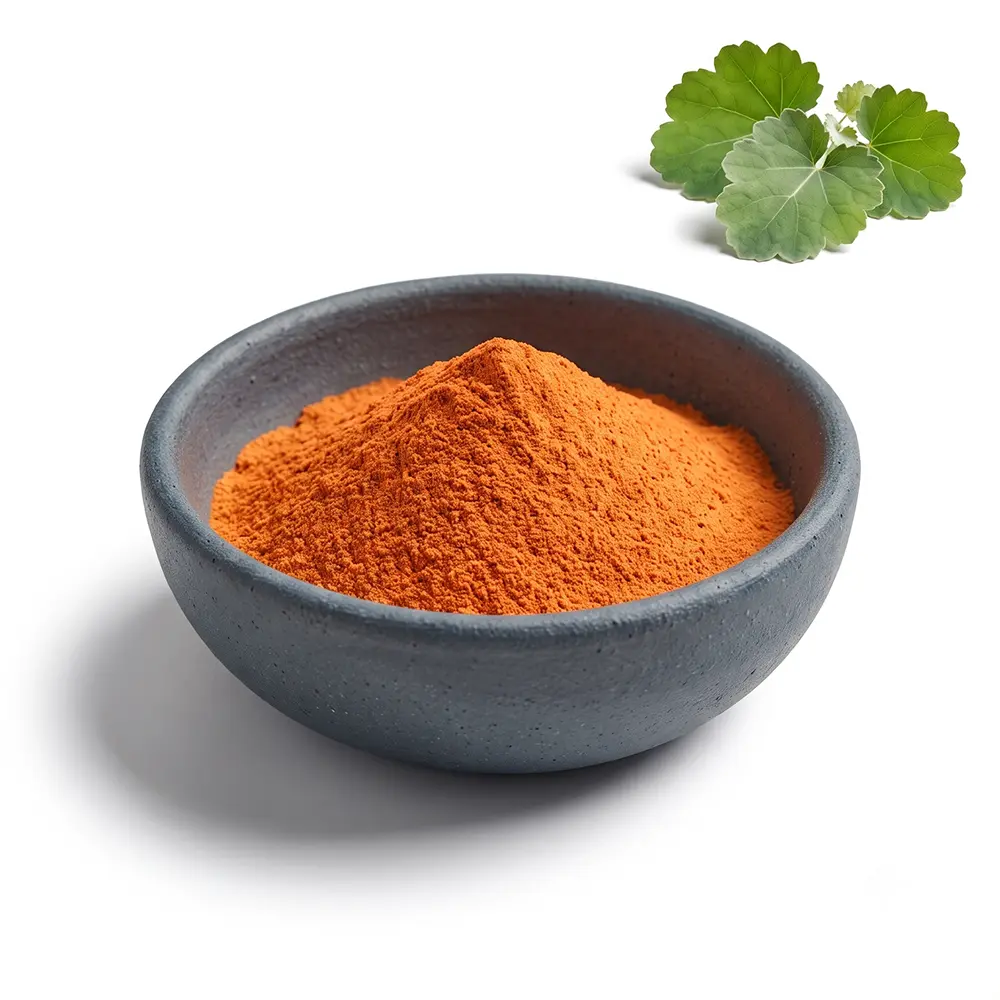
Bulk Macleaya cordata Extract Supplier — Sanguinarine 0.5%–40% HPLC, Animal Feed & Veterinary Grade, B2B Wholesale
Valeherb supplies Macleaya cordata extract bulk wholesale for the animal feed and veterinary sectors, standardized to sanguinarine at 0.5%, 1%, or 40% by HPLC (with custom intermediate grades at 2–3% or 5% available on request), with the full isoquinoline alkaloid profile (sanguinarine, chelerythrine, protopine, allocryptopine) quantifiable on request. Derived from the aerial parts of Macleaya cordata (Willd.) R. Br. (Papaveraceae), this extract is an established phytogenic feed additive in poultry and swine production, functioning as a non-antibiotic growth performance and gut health support ingredient. Sanguinarine-standardized Macleaya extract (marketed globally under names including Sangrovit®) is registered as a zootechnical feed additive in the EU, with a substantial published research base in production animal nutrition.
This product is formulated and supplied exclusively for animal feed and veterinary applications — not for human dietary supplement, food, or cosmetic use.
On this page: available grades, active alkaloid profile, research background in livestock nutrition, formulation guidance, safety and genotoxicity data, sourcing criteria, and regulatory guidance.
Available Grades
| Grade | Sanguinarine Content | Total Alkaloids (Typical) | Typical Application |
|---|---|---|---|
| Standard | 0.5% (HPLC) | ≥0.66% | Baseline specification matching established commercial reference standards; entry point for premix dilution and first-time sourcing |
| Standard+ | 1% (HPLC) | ≥1.5% | Premix dilution base at double active density; large-scale feed manufacturing where further dilution into complete feed is standard practice |
| High-Purity | 40% (HPLC) | ≥60% | Concentrated master batch for premix manufacturers; significantly reduced carrier volume per unit of active alkaloid; precision-dosed veterinary formulations |
| Custom (2–3%, 5%) | 2–3% or 5% (HPLC) — quote on request | Confirmed per formulation at inquiry | Custom intermediate concentrations for specific premix or veterinary product formulations — total alkaloid ratio calibrated to your target application |
Total alkaloid content (sanguinarine + chelerythrine + protopine + allocryptopine combined) is reported alongside sanguinarine on every batch COA. The 2–3% and 5% sanguinarine grades are supplied as custom specifications — contact Valeherb with your target sanguinarine-to-total-alkaloid ratio and intended application for a quote.
Active Alkaloid Profile
| Compound | Class | Notes |
|---|---|---|
| Sanguinarine | Benzophenanthridine alkaloid — primary marker | Principal bioactive; DNA-intercalating benzo[c]phenanthridine alkaloid; studied for antimicrobial and anti-inflammatory activity in published livestock research[1] |
| Chelerythrine | Benzophenanthridine alkaloid | Structurally related to sanguinarine; co-occurs at significant levels; also a DNA intercalator studied alongside sanguinarine in EFSA safety assessments[2] |
| Protopine | Protopine-type alkaloid | Secondary alkaloid; anti-inflammatory and antibacterial activity documented in published research, distinct mechanism from sanguinarine/chelerythrine |
| Allocryptopine | Protopine-type alkaloid | Co-occurs with protopine; hepatoprotective activity studied in published preclinical models |
Research Background in Livestock Production
Provided as scientific context for feed formulators and veterinary product manufacturers, not as claims for any Valeherb product.
Growth Performance and Gut Health
Published production animal research has evaluated Macleaya cordata extract (MCE) as a dietary supplement across swine and poultry. In weaned piglets, dietary MCE supplementation has been studied for effects on growth performance, gut barrier function, and diarrhoea incidence. In broiler chickens, MCE supplementation as an alternative to antibiotic growth promoters (AGP) has been evaluated for effects on growth performance and liver health, with published research documenting co-regulation of TLR4/MyD88/NF-κB and Nrf2 signalling pathways in intestinal epithelium under LPS-induced challenge models.[3] Lin et al. (2018) reviewed the broader phytochemistry, pharmacology, and toxicology of the Macleaya genus, documenting antimicrobial, anti-inflammatory, and insecticidal activity across published research, alongside noting the plant’s well-documented severe oral toxicity in humans, historically restricting it to external and veterinary use.[1]
Mechanism of Action
Sanguinarine and chelerythrine are documented DNA-intercalating agents with antimicrobial activity against gram-positive bacteria relevant to gut microbiota modulation. Published research proposes anti-inflammatory activity via NF-κB pathway inhibition and Nrf2 pathway activation, alongside direct antibacterial mechanisms, as the basis for the growth performance effects observed in production animal studies. This dual antimicrobial/anti-inflammatory mechanism is the reason MCE has been positioned as a phytogenic alternative to antibiotic growth promoters in regions where AGP use is restricted or prohibited.
Formulation Guidance
- Premix and feed manufacturing: 1% grade is the standard specification for large-volume premix dilution, where inclusion rate is calculated to deliver target sanguinarine mg/kg in complete feed. Follow the recommended inclusion levels established by regulatory approval in your target market (EU EFSA opinions specify defined mg sanguinarine/kg complete feed by species and production stage)
- Concentrated premix and veterinary formulations: 2–5% grades reduce carrier/excipient volume needed per unit of active alkaloid, useful for manufacturers producing their own standardized intermediate products
- Species-specific dosing: Recommended sanguinarine inclusion rates differ by species, production stage, and regulatory jurisdiction. EFSA opinions for poultry and for suckling/weaned piglets specify defined maximum levels — confirm current guidance for your target species and market before finalizing formulation
- Stability: Sanguinarine and related alkaloids are generally stable under standard feed processing conditions (pelleting, extrusion) at typical temperatures; confirm stability under your specific processing parameters with accelerated testing
Safety Data: Genotoxicity and Regulatory Risk Assessment
Sanguinarine and chelerythrine are documented DNA intercalators, and genotoxicity is an identified concern in official regulatory safety assessments. This is a standard consideration in the approved use of this ingredient class, not a reason for concealment — EFSA’s own opinions on Sangrovit-type products explicitly document this.
Macleaya cordata has documented severe oral toxicity in humans when improperly used — historical use in China was restricted to external application due to this toxicity profile.[1] This product is intended exclusively for animal feed and veterinary manufacturing use by qualified formulators, in compliance with applicable feed additive regulations. It is not intended for human consumption, dietary supplement use, or direct animal administration outside of a properly formulated and regulatory-compliant feed or veterinary product.
Sourcing Criteria
| Criterion | What to Require |
|---|---|
| Alkaloid Profile | Sanguinarine content by HPLC per batch; full four-alkaloid quantification (sanguinarine, chelerythrine, protopine, allocryptopine) available on request to match regulatory reference standards |
| Plant Part & Species | Macleaya cordata (Willd.) R. Br. aerial parts confirmed on COA. Distinguish from Macleaya microcarpa, a related species with an overlapping but distinct alkaloid profile |
| Intended Use Declaration | Confirm with your supplier that material is supplied and documented for animal feed/veterinary use — sourcing documentation should reflect this end-use classification, not food or dietary supplement categories |
| Third-Party COA | Sanguinarine content (HPLC), heavy metals (per feed additive regulatory limits), pesticide residues, microbial limits, moisture — per production batch from accredited laboratory |
| Regulatory Documentation | Confirm current approval status and permitted use levels in your target market — EU zootechnical feed additive approvals specify species, production stage, and maximum inclusion levels that are periodically reviewed and updated by EFSA |
Regulatory Guidance
- EU: Macleaya cordata extract standardized to sanguinarine/chelerythrine/protopine/allocryptopine is authorised as a zootechnical feed additive for defined species and production stages under EU feed additive regulation, subject to EFSA FEEDAP Panel opinions. Approved use levels and target species are periodically reviewed — confirm current status before formulation
- US: Feed ingredient status should be confirmed against current AAFCO definitions and FDA Center for Veterinary Medicine guidance for your specific intended use and target species
- China: Macleaya cordata extract is used in veterinary drug and feed additive applications in China, where the plant has a long history of external and veterinary use; confirm current NRA/MOA registration status for your specific product category
- General: Due to the documented genotoxicity profile of sanguinarine and chelerythrine, formulators are responsible for confirming current maximum permitted levels, target species restrictions, and any withdrawal period requirements in their specific regulatory jurisdiction before manufacturing finished feed or veterinary products


