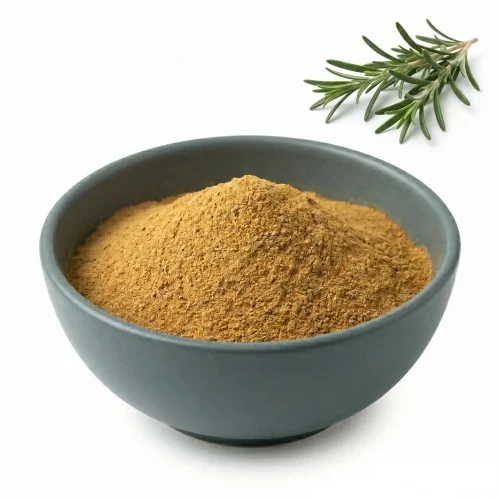
Bulk Lion’s Mane Extract Supplier — Polysaccharides 30/40/50% (UV), Hericium erinaceus, B2B Wholesale
Valeherb supplies lion’s mane extract bulk wholesale — Hericium erinaceus fruiting body — standardized to total polysaccharides at 30%, 40%, and 50% by UV, with custom specifications available for cognitive-support supplement, functional mushroom blend, and functional beverage applications. Lion’s mane is among the most-researched functional mushrooms in the cognitive and nerve-growth-factor (NGF) literature; that research sits at the compound level — hericenones, erinacines, and beta-glucan polysaccharides — and is summarised below as ingredient background, not as a claim for any finished product. For procurement, the decisions that matter are polysaccharide grade, source part, and extraction method.
Active Compounds: Hericenones, Erinacines, and Polysaccharides
Lion’s mane contains compounds that originate from different parts of the mushroom, which is why source part is an important procurement specification:
| Compound Class | Source Part | Activity Studied in Research | Notes |
|---|---|---|---|
| Hericenones (C–H) | Fruiting body | Studied for NGF-synthesis-stimulating activity in cell and animal models[1] | Lipid-soluble; captured by alcohol extraction, not hot water |
| Erinacines (A–I) | Mycelium | Small diterpenoids studied for NGF-related activity in the CNS in animal models[1][4] | Mycelium-source; not present in fruiting body extract |
| Beta-Glucan Polysaccharides | Both fruiting body and mycelium | Studied for immune-modulating (dectin-1) and inflammatory-pathway activity | Water-soluble; the basis of total-polysaccharide standardization in most commercial extracts, including Valeherb’s UV grades |
Available Grades and Specifications
We supply Hericium erinaceus fruiting body extract standardized to total polysaccharides by UV. Custom ratios, particle sizes, and formats available on request:
| Grade | Polysaccharide Content | Source / Extraction | Typical Application Category |
|---|---|---|---|
| 30% Polysaccharides | 30% total polysaccharides by UV | Fruiting body; hot-water | Functional mushroom blends, functional food fortification, entry-level supplement capsules |
| 40% Polysaccharides | 40% total polysaccharides by UV | Fruiting body; hot-water | Standardized supplement capsules, cognitive-support stacks, functional beverages |
| 50% Polysaccharides | 50% total polysaccharides by UV | Fruiting body; hot-water | High-standardization supplement formulations, premium mushroom SKUs |
Published Research
Cognitive Research
The most-cited human study, Mori et al. (2009), was a small double-blind, placebo-controlled trial in 30 Japanese adults aged 50–80 with mild cognitive impairment, who took Hericium erinaceus dry powder (~3 g/day) for 16 weeks. The active group showed improvement on a cognitive-function scale versus placebo, and scores declined after intake stopped.[2] A 2025 acute, randomized, placebo-controlled crossover study in 18 healthy younger adults (Surendran et al.) examined a single 3 g dose of a 10:1 fruiting body extract on cognition and mood at 90 minutes, reporting mixed effects across measures.[5] The human evidence base remains small and preliminary.
NGF and Compound Mechanism Research
Nerve growth factor (NGF) is a neuropeptide involved in neuron maintenance and regeneration. In cell and animal research, hericenones (from fruiting body) and erinacines (from mycelium) have been studied for NGF-related activity, with erinacines characterised in CNS-focused animal work.[1][4] These are compound-level research mechanisms, not demonstrated finished-product effects.
Mood Research
A small study by Nagano et al. (2010) in 30 women over 4 weeks reported reductions in self-rated questionnaire scores for low mood and anxiety versus placebo, with the authors suggesting a mechanism distinct from NGF stimulation.[3] This is a small, preliminary finding and is reported as research, not as a product claim.
Extraction Methods: What Each Method Captures
| Extraction Method | Compounds Captured | Compounds Not Captured | Typical Use |
|---|---|---|---|
| Hot-Water Extraction | Beta-glucan and other water-soluble polysaccharides | Hericenones (lipid-soluble) | Polysaccharide-standardized extracts (Valeherb’s UV grades) |
| Ethanol / Alcohol Extraction | Hericenones, erinacines, terpenoids | Most beta-glucans (water-soluble) | Extracts targeting the alcohol-soluble compound fraction |
| Dual Extraction (Hot-Water + Ethanol) | Polysaccharides plus alcohol-soluble compounds | — | Broad-profile extracts |
Valeherb’s standard lion’s mane grades are hot-water, polysaccharide-standardized fruiting body extracts. If your formulation requires the alcohol-soluble compound fraction (hericenones/erinacines) in addition to polysaccharides, specify that so the correct extraction method and verification can be quoted.
Application Categories
- Cognitive- and nootropic-support supplements: 40% or 50% polysaccharide fruiting body extract in capsule/tablet formats, often combined with Bacopa monnieri or phosphatidylserine in cognitive-support formulations.
- Functional mushroom blends: 30–50% polysaccharide extract alongside reishi, turkey tail, and cordyceps for broad mushroom-complex products.
- Functional beverages and RTD coffee: water-soluble fruiting body extract for mushroom-coffee and functional-drink formats.
- Functional food fortification: lower-grade polysaccharide extract for bars, powders, and blends.
Sourcing Criteria: What to Require from Any Supplier
| Criterion | What to Require |
|---|---|
| Source Part Specification | Fruiting body, mycelium, or dual-source — each carries different compounds. “Hericium erinaceus extract” without source part is an incomplete specification |
| Extraction Method | Hot-water, ethanol, or dual — determines which compound classes are present. Request extraction documentation |
| Polysaccharide Assay Basis | Confirm whether the value is UV total polysaccharide or a beta-glucan-specific assay; for mycelium-on-grain products, total polysaccharide can include residual substrate starch |
| Hericenone / Erinacine Verification | If your formulation references these compounds specifically, require separate HPLC quantification — they are not part of a standard UV polysaccharide spec |
| Third-Party COA | Polysaccharide content (UV), heavy metals (USP <232>), pesticide residues, microbial limits (USP <2021>), moisture — per production batch |
| Certifications | Non-GMO, Kosher/Halal for relevant markets. FDA-registered facility for US supplement supply chains |
Regulatory Background
- US (DSHEA): immune-function and antioxidant structure/function claims are the more defensible categories; cognitive and NGF wording is sensitive and must be substantiated by the marketer and carry the FDA disclaimer (e.g., “supports healthy nerve growth factor levels” is structure/function language, not a treatment claim). Disease treatment claims (e.g., Alzheimer’s, dementia) are prohibited without drug approval.
- EU / UK (Novel Food): Hericium erinaceus fruiting body and its aqueous extract are treated as not novel and are permitted in food supplements. Dehydrated mycelium powder/preparations are an unauthorised novel food (including in food supplements) under Regulation (EU) 2015/2283 — formulators for these markets must use fruiting body source only. No authorized health claims under Regulation (EC) 1924/2006 as of 2026.
- Canada (NHPs): lion’s mane has a Health Canada NHP monograph; permitted claims are defined within that monograph.
References
[1] Kawagishi H & Zhuang C. (2008). Compounds for dementia from Hericium erinaceum. Drugs of the Future, 33(2), 149–155. doi:10.1358/dof.2008.033.02.1173290
[2] Mori K, Inatomi S, Ouchi K, Azumi Y, Tuchida T. (2009). Improving effects of the mushroom Yamabushitake (Hericium erinaceus) on mild cognitive impairment: a double-blind placebo-controlled clinical trial. Phytotherapy Research, 23(3), 367–372. doi:10.1002/ptr.2634
[3] Nagano M, Shimizu K, Kondo R, et al. (2010). Reduction of depression and anxiety by 4 weeks Hericium erinaceus intake. Biomedical Research, 31(4), 231–237. doi:10.2220/biomedres.31.231
[4] Li IC, Lee LY, Tzeng TT, et al. (2018). Neurohealth properties of Hericium erinaceus mycelia enriched with erinacines. Behavioural Neurology, 2018, 5802634. doi:10.1155/2018/5802634
[5] Surendran G, Saye J, Binti Mohd Jalil S, et al. (2025). Acute effects of a standardised extract of Hericium erinaceus (Lion’s Mane mushroom) on cognition and mood in healthy younger adults: a double-blind randomised placebo-controlled study. Frontiers in Nutrition, 12, 1405796. doi:10.3389/fnut.2025.1405796