

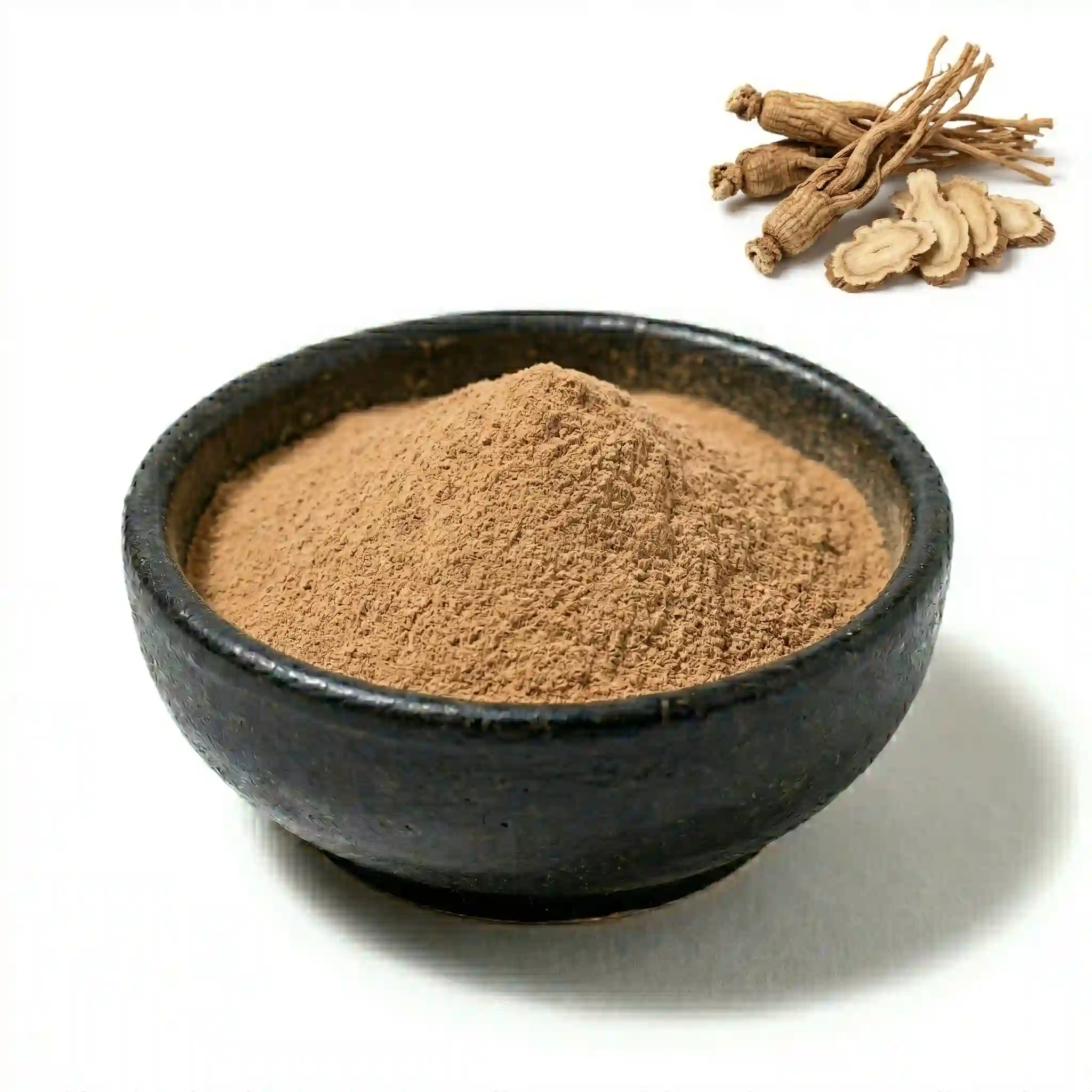
Bulk Angelica Sinensis Extract Supplier — Z-Ligustilide & Ferulic Acid Standardized, B2B Wholesale (Dong Quai)
Valeherb supplies Angelica sinensis extract (Angelica sinensis (Oliv.) Diels, Radix, Dong Quai / 当归) bulk wholesale in standardized and ratio extract grades. Angelica sinensis is the authenticated pharmacopeial Dong Quai species — distinct from Angelica archangelica (European angelica) and other Angelica species, which carry different bioactive profiles and regulatory standing. The extract’s functional activity is anchored in two compound classes: phthalides (primarily Z-ligustilide, the volatile active studied for circulatory and smooth muscle activity) and phenolic acids (primarily ferulic acid, the stable water-soluble marker studied for antioxidant and anti-inflammatory activity).[1] These two fractions require different extraction approaches and are not interchangeable as quality markers. Every batch ships with HPLC-verified Z-ligustilide and ferulic acid content, full COA, and species authentication.
On this page: the phthalide and phenolic acid compound profile, available grades, research background, formulation applications, sourcing criteria, and regulatory notes.
Active Compounds: Two Fractions, Two Extraction Approaches
Angelica sinensis bioactivity is defined by its phthalide and phenolic acid fractions, which have distinct mechanisms and respond differently to extraction conditions and heat.[2]
| Compound | Function in Formulation | Processing Sensitivity |
|---|---|---|
| Z-ligustilide (phthalide) | Primary phthalide marker; vascular smooth muscle relaxation studied via calcium channel modulation; platelet aggregation inhibition studied in vivo;[1] circulatory health and women’s health supplement positioning | High — volatile above 60–80°C; lost under standard drying conditions without temperature control. Alcohol extraction preferred; aqueous extraction does not reliably deliver meaningful Z-ligustilide concentrations |
| Ferulic acid (phenolic acid) | Anti-inflammatory and antioxidant activity studied across COX-2, NF-κB, and radical-scavenging pathways;[2] neuroprotective co-activity; UV-protective co-claim in cosmetic formulations | Low — thermally stable; water-soluble; concentrated in aqueous extract grades |
| Angelica polysaccharides (APS) | Immunomodulatory co-activity; concentrated in aqueous extract grades; immune support co-positioning | Low — thermally stable; primarily in aqueous fraction; absent in alcohol-only extracts |
| Senkyunolide A/I (minor phthalides) | Minor phthalide co-activity; species authentication markers alongside Z-ligustilide | Moderate — less volatile than Z-ligustilide; retained in low-temperature extracts |
Available Grades and Specifications
All grades are HPLC-verified for Z-ligustilide and ferulic acid per batch.
| Grade | Extract Type | Z-Ligustilide | Ferulic Acid | Ratio | Typical Application |
|---|---|---|---|---|---|
| Standard Extract 10:1 | Aqueous-alcohol | ≥0.5% HPLC | ≥0.1% HPLC | 10:1 | General women’s health supplements; TCM-positioned formulas; broad-spectrum Dong Quai positioning |
| Z-Ligustilide Standardized | Alcohol (ethanol) | ≥1.0% HPLC | ≥0.1% HPLC | 10:1 or 20:1 | Circulatory health supplements; menstrual support formulations; phthalide-positioned premium products; label-declared Z-ligustilide content |
| Ferulic Acid Standardized | Aqueous | Trace | ≥0.3% HPLC | 10:1 | Anti-inflammatory supplement blends; cosmetic ingredient for UV protection and skin brightening; ferulic acid co-delivery formulations |
| High-Potency Extract | Alcohol-aqueous | ≥1.5% HPLC | ≥0.2% HPLC | 20:1 | Premium women’s health capsules; menopausal support formulas; high-specification nutraceutical applications |
Research Background
The activity described below is reported in published research for Angelica sinensis constituents and related preparations. It is provided as scientific context for formulators, not as claims for any Valeherb product.
Zhang et al. (2009) studied the antithrombotic activity of Z-ligustilide isolated from Radix Angelica sinensis in a rat model, reporting dose-dependent reduction of arterial thrombus weight in an arterio-venous shunt model and inhibition of ADP-induced platelet aggregation ex vivo, without prolonging coagulation time — in vivo pharmacological evidence for circulatory health positioning of the phthalide fraction.[1]
Stompor-Gorący and Machaczka (2021) reviewed the biological activities of ferulic acid, covering antioxidant and anti-inflammatory properties (including COX-2 and NF-κB pathway modulation), neuroprotective, cardioprotective, hepatoprotective, and photoprotective effects documented across preclinical research — providing a broad mechanistic basis for the phenolic acid fraction’s formulation relevance in antioxidant, anti-inflammatory, and cosmetic applications.[2]
Kotani et al. (1997) conducted a randomized, double-blind, placebo-controlled trial of Toki-shakuyaku-san (TSS) — a traditional Japanese Kampo formula containing Angelica sinensis alongside five other herbs — in women with primary dysmenorrhea, reporting significant pain reduction versus placebo. The trial supports menstrual support positioning of Dong Quai-containing formulas in the clinical literature; it does not constitute evidence for isolated Angelica sinensis extract alone.[3]
Formulation Applications
Women’s Health & Menstrual Support Supplements
- Z-ligustilide standardized extract in women’s health capsules for menstrual support positioning — smooth muscle relaxation mechanism documented in published pharmacological research
- Menopausal support formulas combining Angelica sinensis extract with black cohosh or red clover for multi-mechanism phytoestrogenic blends
- Blood tonic and circulation support formulas in TCM-positioned supplement lines where Dong Quai is a core traditional herb; Chinese Pharmacopoeia (ChP 2020) Danggui (当归) monograph directly applicable for documentation
Anti-Inflammatory & Antioxidant Supplements
- Ferulic acid standardized extract in anti-inflammatory combination formulas alongside other polyphenol antioxidants; COX pathway and NF-κB modulation research provides mechanistic context
- Neuroprotective supplement blends where ferulic acid’s published neuroprotective activity contributes to cognitive health co-positioning
Cosmetic & Skin Health Applications
- Ferulic acid fraction in anti-aging serums and topical antioxidant formulations; UV-protective co-activity and collagen synthesis research documented in preclinical models[2]
- Furanocoumarin content must be confirmed per batch — EU Cosmetics Regulation Annex II photosensitization limits apply to leave-on cosmetic applications; safety assessment required before use
Sourcing Criteria
| Parameter | What to Verify | Why It Matters |
|---|---|---|
| Species authentication | Confirm Angelica sinensis (Oliv.) Diels by botanical identity testing (TLC or DNA barcoding) | Different Angelica species have different phthalide and furanocoumarin profiles; species mismatch invalidates bioactive claims |
| Z-ligustilide (HPLC) | Z-ligustilide % per batch with COA testing date; confirm alcohol extraction for phthalide grades | Volatile compound — content declines with time and temperature; batch-specific dated data essential |
| Ferulic acid (HPLC) | Ferulic acid % per batch for anti-inflammatory and cosmetic grades | Primary phenolic marker; validates the aqueous/polar fraction |
| Extraction solvent | Alcohol (ethanol) or aqueous confirmed on COA | Solvent determines which fraction is concentrated — phthalides (alcohol) or ferulic acid/polysaccharides (aqueous) |
| Furanocoumarin content | Psoralen and related furanocoumarin levels for cosmetic applications | EU Cosmetics Regulation Annex II photosensitization limits apply to leave-on products |
| Heavy metals (ICP-MS) | Pb, As, Cd, Hg within USP <232> or EU pharmacopeial limits per batch | Standard botanical extract requirement; batch-level verification required for Chinese-sourced material |
| Pesticide residues | Multi-residue screen per EU 396/2005 or USP <561> per batch | Standard botanical extract requirement |
Regulatory Notes
- United States (DSHEA): Angelica sinensis root extract is a recognized dietary supplement ingredient with established use history. Z-ligustilide and ferulic acid content support structure/function claims for women’s health, circulatory support, and antioxidant activity. Finished-product labels should include contraindication language for estrogen-sensitive conditions, pregnancy, and anticoagulant/antiplatelet drug users
- European Union: EMA Community Herbal Monograph for Angelica sinensis radix covers traditional use in women’s health and mild digestive complaints — monograph compliance supports traditional herbal medicinal product (THMP) status in applicable markets. Furanocoumarin content must comply with EU Cosmetics Regulation Annex II for cosmetic applications. No Novel Food assessment required for root extract with documented EU traditional use
- China (ChP 2020): Danggui (当归, Angelica sinensis Radix) carries a standardized pharmacopeial monograph — directly relevant for domestic and export regulatory documentation. NMPA-registered pharmaceutical-grade material available on request


