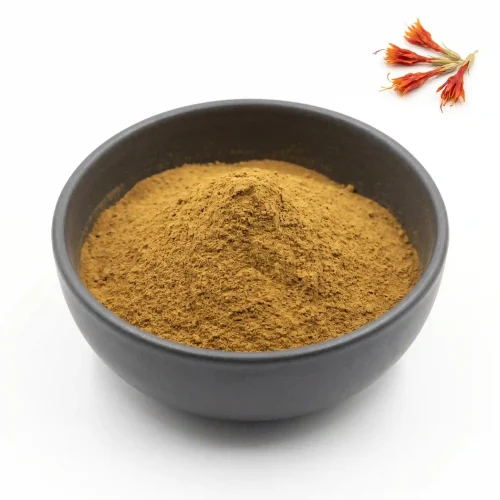
Cordyceps militaris Extract — Fruiting Body, 10:1 & Cordycepin 1%–5% HPLC, B2B Bulk Supply
Valeherb supplies Cordyceps militaris fruiting body extract in two product lines: a 10:1 concentration ratio extract and cordycepin-standardized grades from 1% to 5% verified by HPLC. All material is derived exclusively from the fruiting body — the fungal structure with the highest native concentration of cordycepin and adenosine. No mycelium-on-grain products are offered. Full COA documentation is provided per production batch, covering HPLC-verified cordycepin content, heavy metals, microbial limits, and pesticide residues.
On this page: species distinction, fruiting body vs mycelium, available grades, research background, formulation applications, regulatory guidance, and COA documentation.
Cordyceps militaris vs. Cordyceps sinensis: The Distinction Buyers Need to Know
These are two distinct fungal species that are frequently confused in sourcing conversations. Cordyceps militaris (蛹虫草, caterpillar mushroom) is cultivated commercially in controlled environments on grain or insect-based substrates — it is the practical, scalable source of standardized cordyceps ingredients for the supplement and functional food industries. Cordyceps sinensis (冬虫夏草, winter worm summer grass) is wild-harvested from high-altitude Tibetan grasslands and commands prices of $10,000–$40,000 per kilogram for authenticated material; it cannot be supplied at industrial supplement volumes.
Published research confirms that cultivated C. militaris contains the same primary bioactive compounds as C. sinensis — including cordycepin and adenosine — often at higher and more consistent concentrations than wild-harvested material.[1]

| Property | Cordyceps militaris (蛹虫草) | Cordyceps sinensis (冬虫夏草) |
|---|---|---|
| Source | Cultivated; controlled environment | Wild-harvested; Tibetan Plateau (3,500–5,000 m) |
| Primary active compound | Cordycepin — measurable, standardizable by HPLC | Cordycepin present but at low, inconsistent concentrations |
| Price range (bulk) | $15–$80/kg depending on cordycepin grade | $10,000–$40,000/kg for authenticated wild material |
| Supply consistency | Year-round; large-scale production possible | Seasonal; wild harvest only |
| Standardization | Reliable HPLC cordycepin quantification per batch | High batch-to-batch variability; difficult to standardize |
| China regulatory status | New resource food (新食品原料) — approved for food use | Additional restrictions under Chinese food law; not freely usable in general food |
Fruiting Body vs. Mycelium: Why the Source Part Determines Extract Quality
The cordyceps ingredient market is divided between two fundamentally different raw material types that are not equivalent in bioactive content. Fruiting body extract is derived from the above-substrate reproductive structure of the fungus — the visible orange-red growth that is the traditional medicinal part of C. militaris and the tissue with the highest concentration of cordycepin and adenosine.[1]
Mycelium-on-grain products present a different picture. Mycelium grown on rice or oat substrate frequently retains 30–60% unfermented grain starch after processing — a filler that dilutes bioactive content while still permitting high extraction ratio claims on the label. A product showing a 10:1 or 20:1 extraction ratio may contain only a fraction of the cordycepin a true fruiting body extract delivers at the same ratio. For supplement brands building formulations around verified cordycepin content per serving, the source part declaration is not a minor detail — it is the single most important specification to confirm before purchasing.
Available Grades and Specifications
| Grade | Cordycepin by HPLC | Typical Application |
|---|---|---|
| 10:1 Fruiting Body Extract | Natural concentration, HPLC-verified per batch | General supplement formulation, capsules, functional foods — “10:1 fruiting body” clean-label positioning |
| Cordycepin 1% | ≥1% by HPLC | Entry-level standardized supplements; verified minimum potency at accessible cost |
| Cordycepin 2% | ≥2% by HPLC | Sports nutrition, performance-focused formulations, mainstream premium positioning |
| Cordycepin 5% | ≥5% by HPLC | High-potency supplements, low-dose encapsulation, brands competing on cordycepin mg per serving |
Research Background
The activity described below is reported in published research on Cordyceps militaris and is provided as scientific context for formulators, not as claims for any Valeherb product.
1. Immunomodulatory Activity
Lee et al. (2020) published a comprehensive review of the immunomodulatory effects of C. militaris in Frontiers in Pharmacology, systematically cataloguing the effects of total extracts, polysaccharides, and cordycepin. The review found that aqueous and 50% ethanol extracts, and polysaccharides, tend to promote type 1 immunity responses, while 70–80% ethanol extracts and cordycepin were more associated with type 2 immunity responses.[1]
2. Antifatigue Activity — Animal Model
Xu (2016) investigated the effects of polysaccharide from C. militaris (PCM) on physical fatigue in a forced swimming mouse model. Mice receiving PCM over 28 days showed extended exhaustive swimming time and reduced serum fatigue biochemical markers compared to controls.[2] These are preclinical animal model findings described here as research context.
3. Exercise Tolerance — Human Study
Hirsch et al. (2017) conducted a randomized, double-blind, placebo-controlled trial in 28 healthy recreationally active individuals evaluating a multi-mushroom blend containing C. militaris (4 g/day). After 3 weeks, the mushroom blend group showed significant improvements in VO₂max (+4.8 ml·kg⁻¹·min⁻¹) and time to exhaustion compared to placebo; 1 week of supplementation did not produce significant results. Note that this study used a proprietary multi-mushroom blend — the individual contribution of C. militaris extract was not isolated from other blend components.[3]
Formulation Applications
| Application | Recommended Grade | Typical Serving Range | Positioning |
|---|---|---|---|
| Sports nutrition (capsules / powders) | Cordycepin 2–5% | 500–1,500 mg | Energy, endurance, recovery — compete on cordycepin mg per serving |
| General wellness supplements | 10:1 or Cordycepin 1% | 300–1,000 mg | Immune support, adaptogenic positioning |
| Functional beverages | 10:1 Fruiting Body | 200–500 mg | Adaptogen, energy — verify solubility in target matrix |
| Nootropic / adaptogen blends | Cordycepin 2–5% | 250–750 mg | Adenosine pathway modulation; stacks well with lion’s mane or rhodiola |
| Functional foods (gummies, bars) | 10:1 Fruiting Body | 100–300 mg | Adaptogen claim; “fruiting body extract” label-forward |
Regulatory Status
- United States: Permitted as a dietary supplement ingredient under DSHEA. GMP compliance and FDA facility registration required for US supply chain. Structure/function claims (immune support, energy support, adaptogenic) are permissible with self-substantiation and the required FDA disclaimer; disease claims require NDA
- European Union: C. militaris has a history of use in EU food supplements. Verify novel food status for specific standardized cordycepin preparations in your target market before finalizing specifications — some concentrated grades may require novel food authorization depending on format and concentration
- China: Cordyceps militaris (蛹虫草) is approved as a new resource food (新食品原料) for use in food products. Distinct from wild C. sinensis (冬虫夏草), which carries additional regulatory restrictions under Chinese food law — important distinction for China domestic market product registration
COA Documentation Per Batch
- Cordycepin content by HPLC (% w/w)
- Fruiting body source confirmed (not mycelium)
- Heavy metals: Pb, As, Cd, Hg per USP <232>
- Microbial: TPC, yeast & mould, E. coli, Salmonella per USP <2021>
- Pesticide residue screening
- Moisture, ash, particle size