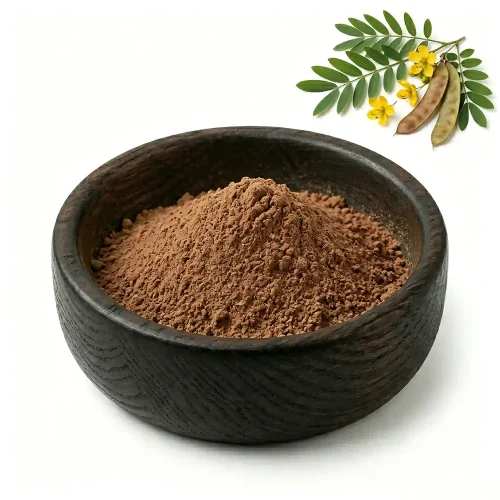
Bulk Cistanche Extract Supplier — Echinacoside & Phenylethanoid Glycosides, 10%–50% HPLC, B2B Wholesale
Valeherb supplies Cistanche extract bulk wholesale — standardized Herba Cistanche (肉苁蓉) — across the full potency spectrum, from 10% to 50% phenylethanoid glycosides (PhGs) by HPLC, with custom specifications available for cognitive supplement, anti-aging, male vitality, and adaptogen formulation. Known historically as the “Ginseng of the Deserts,” Cistanche extract is derived from Cistanche deserticola and Cistanche tubulosa — parasitic desert plants whose fleshy stems concentrate one of the most bioactive phenylethanoid glycoside profiles in commercial botanical supply. The Chinese Pharmacopoeia (ChP 2020) recognizes both species under the Herba Cistanche monograph. A comprehensive review by Lei et al. (2020) documented the phytochemistry and pharmacology of Herba Cistanche across its principal bioactive fractions.[4]
On this page: species comparison, active compound profile, available grades, research background across three benefit areas, formulation applications, and regulatory guidance.
Two Species, One Monograph: What ChP 2020 Requires
Both Cistanche deserticola Y.C.Ma and Cistanche tubulosa (Schenk) Wight are listed under the Herba Cistanche (肉苁蓉) monograph in ChP 2020 — but they have meaningfully different PhG profiles that affect active compound concentration and formulation performance:
| Species | Dominant PhG | Echinacoside Content | Notes |
|---|---|---|---|
| C. deserticola | Echinacoside + acteoside | Higher — typically 1–3% in raw stem; concentrated to 10–30% in extract | Primary species in traditional Mongolian desert regions; more extensively studied in classical TCM literature |
| C. tubulosa | Echinacoside dominant | Higher echinacoside than C. deserticola in some studies; acteoside lower | Widely cultivated in Xinjiang; primary commercial source for standardized extracts due to cultivation scalability |
Active Compounds: Phenylethanoid Glycosides
Herba Cistanche’s bioactivity is concentrated in its phenylethanoid glycoside (PhG) fraction — the primary standardization marker in ChP 2020.[4]
| Compound | Type | Studied Activity |
|---|---|---|
| Echinacoside | PhG — primary marker compound | Neuroprotective activity via inhibition of neuronal apoptosis studied in published research; antioxidant (ROS scavenging); anti-inflammatory via NF-κB inhibition; documented blood-brain barrier penetration in preclinical models[1] |
| Acteoside (Verbascoside) | PhG — secondary marker | Anti-inflammatory; hepatoprotective; antioxidant activity studied in published research; supports kidney and liver tonic positioning in TCM formulations[2] |
| Tubuloside B | PhG — present in C. tubulosa | Neuroprotective co-activity; cognitive function endpoints studied in preclinical research |
| Polysaccharides | Complex carbohydrate fraction | Immunomodulatory; prebiotic activity; gut microbiota modulation studied in published research[3] |
Available Grades and Specifications
| Grade | PhG Content | Typical Application |
|---|---|---|
| Standard Extract | 10–15% total PhGs by HPLC | Traditional TCM-format supplements, tonic blends, entry-level adaptogen formulas |
| Mid-Potency Extract | 20–30% total PhGs by HPLC | Mainstream cognitive, anti-aging, and male vitality capsules |
| High-Potency Extract | 40–50% total PhGs by HPLC | Premium nootropic stacks, longevity-positioned formulas, precision anti-aging actives |
Research Background
The activity described below is reported in published research. It is provided as scientific context for formulators, not as claims for any Valeherb product.
1. Neuroprotection and Cognitive Function
Echinacoside’s capacity to cross the blood-brain barrier in preclinical models makes it of interest in neuroprotection research. Chen et al. (2020) established a concurrent rat model of osteoporosis combined with cognitive decline and evaluated the dual effects of echinacoside and acteoside from Cistanche tubulosa. The study reported significant improvements in learning and memory performance markers, alongside bone parameter improvements, providing mechanistic evidence for the PhG fraction’s relevance to cognitive health supplement positioning.[1]
2. Anti-Aging and Antioxidant Activity
Herba Cistanche has been studied in published research for antioxidant enzyme upregulation, mitochondrial function preservation, and SIRT1 pathway activation — mechanisms of interest in healthy aging research. Xue et al. (2024) reviewed C. deserticola polysaccharides (CDPs), documenting significant anti-aging-associated bioactivities through antioxidant effects, immunomodulation, and gut microbiota regulation in published preclinical research — providing a mechanistic basis for the longevity-positioning of this ingredient fraction.[3]
3. Male Vitality and Kidney Yang Tonic
Cistanche extract is classified as a kidney yang-tonifying herb in TCM. Li et al. (2016) reviewed the traditional use and pharmacological evidence for Herba Cistanche, documenting its historical application as an aphrodisiac tonic and summarizing the published evidence for male vitality and kidney yang-tonifying properties — providing the primary reference for TCM-positioned men’s health formulation.[2]
Formulation Applications
- Cognitive and nootropic supplements: High-potency extract at 200–400 mg per serving. Pairs with lion’s mane extract, Bacopa monnieri, and phosphatidylserine for multi-mechanism neuroprotective stacks. Echinacoside’s BBB penetration in preclinical models provides a botanical cognitive active with a distinct mechanism from most common nootropic ingredients
- Anti-aging and longevity formulas: Mid-to-high potency extract in healthy-aging stacks alongside NMN, resveratrol, and CoQ10. Antioxidant enzyme and SIRT1 pathway mechanisms studied in preclinical research complement these established longevity-associated pathways
- Male vitality supplements: Traditional kidney yang tonic positioning with published mechanistic support. Pairs with Tribulus terrestris, Eucommia leaf extract, and zinc in men’s health formulas
- TCM-format practitioner supplements: Standard extract in traditional tonic formulas; ChP 2020 compliance documentation available for both C. deserticola and C. tubulosa
Sourcing Criteria
| Criterion | What to Require |
|---|---|
| PhG Standardization | HPLC-verified total PhG content per batch. For premium applications: individual echinacoside and acteoside quantification separately — not bundled “total PhGs” alone |
| Species Specification | C. deserticola or C. tubulosa — specify for ChP compliance documentation. Both valid under Herba Cistanche monograph; compound ratios differ |
| ChP 2020 Compliance | Required for China domestic market and preferred for export regulatory documentation. Verify current minimum echinacoside content requirement against ChP 2020 monograph |
| Third-Party COA | Total PhG content (HPLC), echinacoside (HPLC), acteoside (HPLC), heavy metals (USP <232>), pesticide residues, microbial limits (USP <2021>), moisture — per production batch from accredited laboratory |
| Certifications | Non-GMO, Kosher/Halal for relevant markets; FDA-registered facility for US supplement supply chains |
Regulatory Guidance
- US (DSHEA): Cognitive support, antioxidant, and adaptogenic structure/function claims supportable with published research — each must be self-substantiated by the marketer and carry the required FDA disclaimer. Male vitality claims require careful wording; disease treatment claims prohibited. FDA-registered facility (21 CFR Part 111)
- China (ChP 2020): Herba Cistanche (肉苁蓉) is a listed medicinal herb with standardized monograph — both C. deserticola and C. tubulosa accepted. Directly relevant for domestic China market and export documentation
- EU: Not on EU authorized health claims register. Novel food status may apply for concentrated extract preparations in some member states — confirm with regulatory counsel
- Canada (NHPs): Cistanche has a licensed Health Canada monograph supporting adaptogenic and tonic claims under Natural Health Products Regulations