

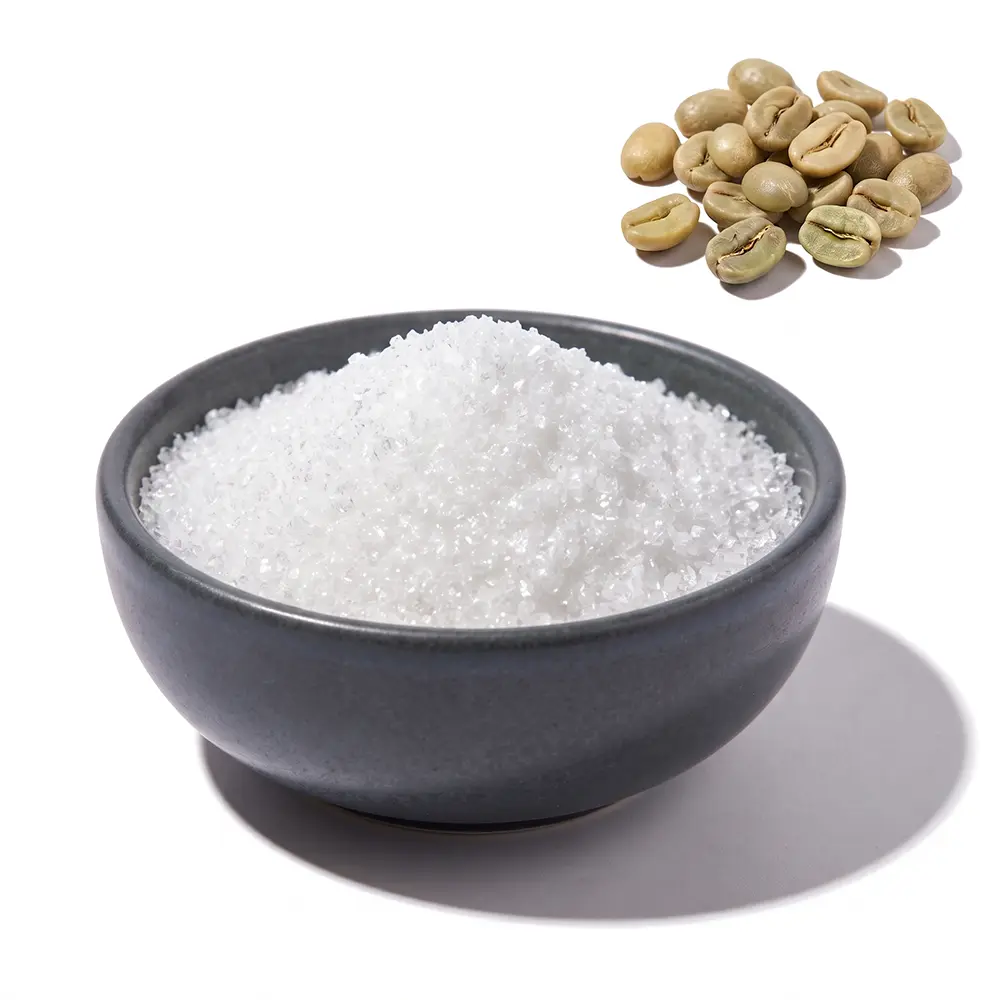
Bulk Green Coffee Bean Extract Supplier — 98% Caffeine & 50% Chlorogenic Acids, Coffea arabica, B2B Wholesale
Valeherb supplies green coffee bean extract bulk wholesale from Coffea arabica in two distinct product lines: 98% caffeine (HPLC) and 50% chlorogenic acids (HPLC). These are two different specifications serving two different formulation purposes — the 98% caffeine grade is a natural, plant-derived caffeine source, while the 50% chlorogenic acid grade is an antioxidant-positioned ingredient standardized to the compound class that distinguishes unroasted (green) coffee bean from its roasted counterpart, since roasting substantially degrades chlorogenic acid content.[1]
On this page: available grades, chlorogenic acid vs caffeine, research background, formulation applications, sourcing criteria, and regulatory guidance.
Available Grades
| Grade | Marker Compound | Typical Application |
|---|---|---|
| Caffeine Standardized | 98% caffeine (HPLC) | Natural caffeine source for functional beverages, energy and sports nutrition capsules, alternative to synthetic caffeine anhydrous |
| Chlorogenic Acid Standardized | 50% chlorogenic acids (HPLC) | Antioxidant-positioned supplement capsules and functional food fortification |
MOQ, lead time, and current pricing available on inquiry. Custom standardization and low-caffeine chlorogenic acid grades available on request.
Chlorogenic Acid vs Caffeine: Two Different Ingredients from One Bean
Green (unroasted) coffee beans naturally contain both caffeine and a family of polyphenolic compounds called chlorogenic acids (CGAs), principally 5-caffeoylquinic acid. Roasting — the process that produces conventional coffee — degrades a substantial portion of the chlorogenic acid content while caffeine remains largely stable, which is why green (unroasted) bean is specifically required as the source material for CGA-standardized extract, and why “green coffee bean extract” and “regular coffee extract” are not interchangeable specifications.[1],[2]
Research Background
Provided as scientific context for formulators, not as claims for any Valeherb product.
Chlorogenic Acid Content and Antioxidant Activity
Comparative chemical analysis of green and roasted Coffea arabica beans found higher chlorogenic acid content in green (unroasted) beans (up to 55 mg/g in some varieties) compared to roasted beans, while caffeine content increased somewhat with roasting level. The antioxidant activity of coffee extracts was demonstrated to correlate directly with chlorogenic acid content in published DPPH and reducing-power assays.[1],[2] These are in vitro chemical analysis findings described here as research context.
Caffeine Metabolism and Pharmacokinetics
Caffeine is metabolised almost exclusively in the liver via cytochrome P450 enzymes, with CYP1A2 responsible for approximately 90% of caffeine metabolism to its primary metabolite, paraxanthine. Published pharmacokinetic research documents substantial inter-individual variability in caffeine metabolism rate, driven by CYP1A2 genetic polymorphisms and factors including smoking status, pregnancy, and concurrent medications that modulate CYP1A2 activity — relevant context for finished-product formulators considering dosing and consumer variability.[3] A general safety threshold of up to 400 mg caffeine per day for healthy adults is widely referenced in the published literature, though individual tolerance varies considerably based on the metabolic factors above.[3]
Formulation Applications
- Functional beverages and energy formulations: 98% caffeine grade as a natural alternative to synthetic caffeine anhydrous, at standard caffeine-equivalent dosing for the target beverage category
- Sports nutrition and pre-workout capsules: 98% caffeine grade at typical 100–200 mg caffeine per serving, matched to standard sports nutrition caffeine dosing conventions
- Antioxidant supplement capsules: 50% chlorogenic acid grade at 200–400 mg per serving, positioned on the published antioxidant research base for the CGA compound class. Pairs with green tea extract and resveratrol in multi-mechanism antioxidant formulas
- Functional food fortification: Both grades used in functional food and beverage fortification depending on whether caffeine content or CGA/antioxidant positioning is the formulation goal
Sourcing Criteria
| Criterion | What to Require |
|---|---|
| Species Confirmation | Coffea arabica confirmed on COA — distinguish from Coffea canephora (Robusta), which has a substantially different caffeine-to-CGA ratio (typically higher caffeine, variable CGA) |
| Marker Compound | Specify caffeine OR chlorogenic acids as the standardized marker — request HPLC-verified content per batch for whichever your formulation requires |
| Roast Status | Confirm unroasted (green) bean source for CGA-standardized grades, since roasting significantly reduces chlorogenic acid content |
| Third-Party COA | Caffeine or CGA content (HPLC), heavy metals (USP <232>), pesticide residues, microbial limits (USP <2021>), moisture — per production batch from accredited laboratory |
Regulatory Guidance
- US (DSHEA): Antioxidant structure/function claims for the CGA grade, and standard stimulant/energy claims for the caffeine grade, are supportable with published research — each requires marketer self-substantiation and the required FDA disclaimer. Weight-loss claims require the substantiation standard described above per FTC consent orders
- US (Caffeine labelling): Finished products should follow current FDA and state-level caffeine content labelling and disclosure requirements for the target product category
- EU: Confirm current novel food and health claims register status for chlorogenic acid-standardized green coffee extract in your target EU market
- China: Coffee-derived ingredients are used in functional food and beverage applications; confirm current approved use categories under GB standards for your specific application


