

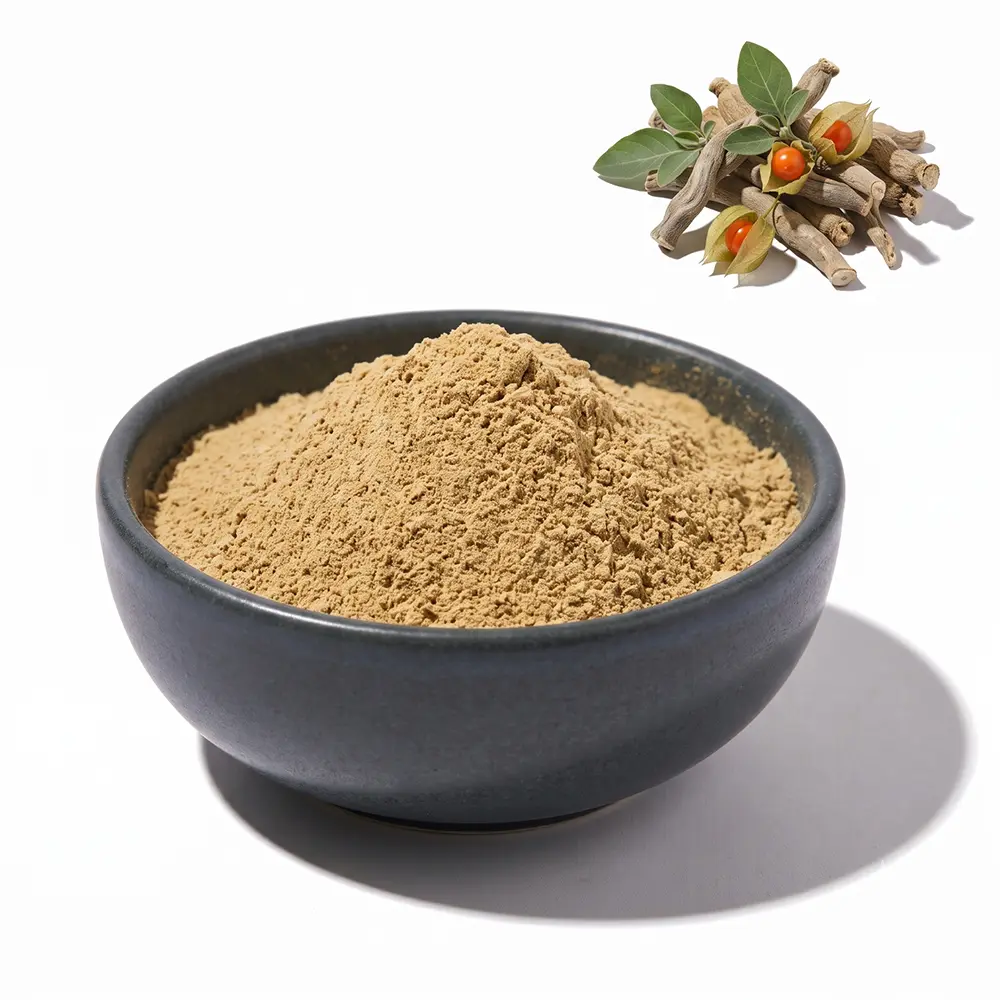
Bulk Ashwagandha Root Extract Supplier — Withanolides 2.5% / 5% / 10%, B2B Wholesale
Valeherb supplies ashwagandha root extract bulk wholesale — Withania somnifera (L.) Dunal root extract — standardized to withanolides at 2.5%, 5%, and 10%. Withanolides are a class of steroidal lactones concentrated in the root, and are the primary standardization marker for this ingredient across published clinical research and global regulatory frameworks. Ashwagandha has over 2,500 years of documented use in Ayurvedic medicine and is currently one of the most extensively clinically studied adaptogenic botanicals, with a growing published evidence base centred on stress, cortisol regulation, and sleep quality.[1]
On this page: available grades, active compound profile, research background, formulation applications, sourcing criteria, and regulatory guidance.
Available Grades
| Grade | Withanolide Content | Typical Application |
|---|---|---|
| Standard | 2.5% (HPLC) | Entry-level stress-support and wellness supplement formulations; full-spectrum positioning |
| Mid-Potency | 5% (HPLC) | Mainstream adaptogen capsules; the most common commercial specification matching many published clinical trial doses |
| High-Potency | 10% (HPLC) | Premium stress-support and sleep formulations; compact dosing formats |
Custom standardization levels and root-and-leaf combination extracts available on request. MOQ, lead time, and current pricing available on inquiry.
Active Compound Profile
| Compound | Class | Notes |
|---|---|---|
| Withanolides | Steroidal lactones — primary marker | Includes withaferin A, withanolide A, withanone, and related compounds; the standard standardization marker referenced in published clinical research[2] |
| Withanosides & Sitoindosides | Withanolide glycosides | Glycosylated withanolide derivatives; some published preclinical research attributes distinct activity to this fraction independent of aglycone withanolides |
| Alkaloids | Tropane and pyrazole-type alkaloids | Minor fraction (withanine, somniferine, and related compounds); contributes to the full-spectrum root extract profile |
Research Background
Provided as scientific context for formulators, not as claims for any Valeherb product.
Mechanism of Action
Published research has proposed multiple mechanisms for ashwagandha’s studied adaptogenic activity, including modulation of the hypothalamic-pituitary-adrenal (HPA) axis, NF-κB inhibition, Nrf2 pathway activation, and GABAergic signalling modulation — collectively proposed as contributing to the anti-inflammatory, antioxidant, and anxiolytic activity documented across preclinical and clinical research.[2]
Cortisol and Stress Research
Della Porta et al. (2023, Nutrients) conducted a systematic review of clinical trials evaluating Withania somnifera supplementation and cortisol levels in stressed human subjects. Of 4,788 identified articles, 9 studies met selection criteria, with doses ranging 125–600 mg daily over 30–112 days. The review found consistent evidence of cortisol reduction across the majority of included studies, though study designs, formulations, and populations varied considerably.[1] A separate 2024 systematic review and meta-analysis of 9 randomized controlled trials (n=558) found statistically significant improvements in Perceived Stress Scale scores, Hamilton Anxiety Scale scores, and serum cortisol levels compared to placebo, with mild to moderate adverse events reported in four of the included studies.[3] These are published clinical trial findings described here as research context.
Formulation Applications
- Stress-support and adaptogen supplement capsules: 5% grade at 300–600 mg per serving, within the dose range studied in published clinical trials. Pairs with L-theanine, magnesium, and rhodiola in multi-mechanism stress-support formulas
- Sleep-support formulations: 5% or 10% grade in evening-positioned formulas, based on published clinical research on sleep quality outcomes
- Sports and recovery formulations: Standardized extract in post-exercise recovery blends, based on published research on physical performance parameters
- Functional food and beverage: 2.5% grade for broader-spectrum wellness positioning in functional beverage and gummy formats
Sourcing Criteria
| Criterion | What to Require |
|---|---|
| Species & Plant Part | Withania somnifera (L.) Dunal root confirmed on COA — distinguish root-only from root-and-leaf combination extracts, which have a different compound profile |
| Withanolide Content | HPLC-verified withanolide content per batch — confirm assay method distinguishes individually quantified withanolides from broader colorimetric totals |
| Withaferin A Content | For applications sensitive to withaferin A specifically, request individual quantification — root extracts typically contain substantially lower withaferin A than leaf-containing material |
| Third-Party COA | Withanolide content (HPLC), heavy metals (USP <232>), pesticide residues, microbial limits (USP <2021>), moisture — per production batch from accredited laboratory |
Regulatory Guidance
- US (DSHEA): Stress-support and relaxation structure/function claims (e.g., “supports a healthy stress response”) are supportable with published research — each requires marketer self-substantiation and the required FDA disclaimer. Disease treatment claims require drug approval and are not supported by current DSHEA positioning
- EU: Not currently on the EU authorized health claims register. Regulatory status varies by member state — confirm current requirements with regulatory counsel before finalizing EU-market product claims
- India (Ayurvedic): Ashwagandha has established Ayurvedic Pharmacopoeia status; confirm current documentation requirements for India domestic market and export applications
- General: Given the documented hepatotoxicity and thyroid-interaction profile, Valeherb recommends that finished-product formulators include appropriate safety disclosure and confirm current regulatory guidance for their specific target market before finalizing product positioning


