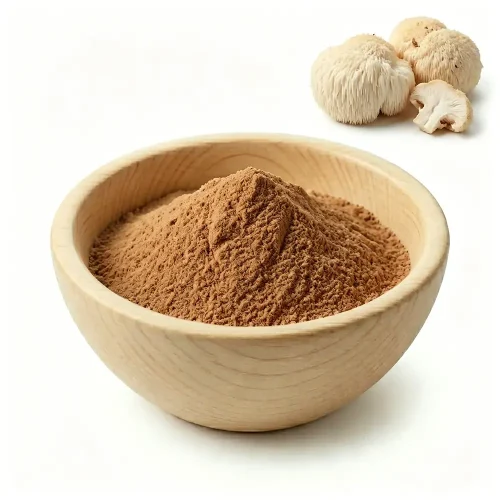
Bulk Apple Cider Vinegar Powder Supplier — Spray-Dried ACV Powder, 5% & 10% Total Acidity, B2B Wholesale
Valeherb supplies apple cider vinegar powder (ACV powder) in bulk wholesale — spray-dried from fermented apple cider vinegar, available at 5% and 10% total acidity (acetic acid equivalent). A shelf-stable, free-flowing powder that delivers the acidity and composition of liquid ACV without the handling challenges of liquid acid. Supplied as a food and supplement ingredient; no organic certification on this product.
Two Acidity Grades
The only meaningful specification difference between the two grades is total acidity. Choose based on the declared acidity your formulation requires and the dosage level in the finished product.
| ACV Powder — 5% Total Acidity | ACV Powder — 10% Total Acidity | |
|---|---|---|
| Total acidity (acetic acid eq.) | 5% w/w | 10% w/w |
| Approximate liquid ACV equivalent | ~1 g powder ≈ 1 tsp standard 5% ACV | ~0.5 g powder ≈ 1 tsp standard 5% ACV |
| Carrier | Maltodextrin (declared) | Maltodextrin (declared) |
| Appearance | Off-white, free-flowing powder | Off-white, free-flowing powder |
| Typical use | Capsules, gummies, seasoning blends at standard dose | Capsules, tablets, high-acidity powder blends; lower fill weight per serving |
| Organic | Conventional only | Conventional only |
What Is Apple Cider Vinegar Powder?
Apple cider vinegar powder is produced by a two-stage process. First, apple juice undergoes alcoholic fermentation (yeast converts sugars to ethanol), followed by acetic acid fermentation (acetic acid bacteria convert ethanol to acetic acid) — the same process that produces liquid ACV. The resulting vinegar is then spray-dried onto a carrier (maltodextrin), which encapsulates the acetic acid and converts the liquid into a stable, free-flowing powder.[1]
The powder form solves several practical problems that liquid ACV creates in formulation: it is non-corrosive to equipment and packaging, has a much longer shelf life, is easy to weigh and blend with dry ingredients, and eliminates the tooth enamel erosion risk associated with drinking undiluted liquid vinegar. The total acidity specification (expressed as acetic acid equivalent, % w/w) is the primary way to compare powder grades and calculate dose equivalence to liquid ACV.
Composition (Naturally Occurring in ACV)
The following describes the naturally occurring chemical composition of apple cider vinegar as reported in the scientific literature. These are characteristic components of the fermented source material; exact levels in the dried powder vary with the apple cultivar, fermentation method, and spray-drying conditions, and are not standardized guaranteed values.
| Naturally occurring component | Notes |
|---|---|
| Acetic acid | The dominant organic acid in ACV and the primary specification parameter. Drives the characteristic sour taste and acidic pH. Expressed as total acidity (% w/w) in the dried powder.[2] |
| Malic acid | Secondary organic acid naturally present in apple-derived vinegar; contributes to the overall acid profile alongside acetic acid.[2] |
| Chlorogenic acid | The principal polyphenol naturally present in apple cider vinegar, carried over from the apple source material through fermentation.[2] |
| Other polyphenols | Catechin, caffeic acid, and related hydroxycinnamic acids naturally present at lower levels; vary with apple cultivar and fermentation technique. |
| Carrier (maltodextrin) | Added during spray drying to enable powder formation and protect acidity during processing. Not a natural constituent of ACV — must be declared as an ingredient.[1] |
We describe these as naturally present components of ACV. We do not standardize this powder to any polyphenol level, and we make no claims about the biological activity of any constituent in finished consumer products.
ACV Powder vs Liquid ACV — Key Differences
| Liquid ACV | ACV Powder | |
|---|---|---|
| Form | Liquid (typically 5% acidity) | Free-flowing powder (5% or 10% acidity equiv.) |
| Shelf life | Months to years (unopened); degrades after opening | Longer — stable powder at low humidity |
| “With mother” | Available in unfiltered versions | Not applicable — spray drying does not preserve live cultures |
| Formulation use | Liquid applications only | Capsules, tablets, gummies, dry blends, seasonings |
| Tooth enamel risk | Yes — direct contact with undiluted acid | Reduced when encapsulated in a dose form |
| Equipment corrosion | Risk with prolonged contact | Minimal in dry form |
Applications by Category
- Capsules & tablets: the primary supplement application — delivers a measured acetic acid dose in encapsulated form without the handling challenges of liquid ACV; the 10% grade allows a smaller fill weight per serving
- Gummies & soft chews: ACV gummies are a major consumer product category; bench-test acidity level with the gelling system as acidity affects gel texture and set
- Seasoning blends & dry rubs: delivers vinegar flavour in powder seasonings, spice blends, and dry marinades where a liquid acid is impractical
- Functional beverage mixes & sticks: powder stick packs and instant-dissolve drink blends targeting the ACV-in-water consumer format
- Dietary supplement powder blends: combines readily with other powdered ingredients (turmeric, ginger, berberine, greens) in multi-ingredient supplement formulations
Click here to view the more complete formula ratio
Sourcing & QC Criteria
| Parameter | What to verify | Why it matters |
|---|---|---|
| Total acidity | 5% or 10% acetic acid equivalent, confirmed on COA by titration | Primary specification — determines dose equivalence and labelling |
| Carrier identity & level | Maltodextrin confirmed on COA; DE grade noted | Required for finished-product ingredient declaration and allergen review |
| Moisture & water activity | <5% moisture; aW <0.4 | Controls caking, shelf life, and microbial risk |
| pH in solution | Typically 2.5–3.5 when reconstituted | Confirms acidity profile; relevant for gelling-agent compatibility |
| Heavy metals | Pb, As, Cd, Hg via ICP-MS within applicable limits | Standard food/supplement compliance requirement |
| Pesticide residues | Multi-residue screen per destination market MRLs | Required for EU, US, and other regulated markets |
| Microbiological | TPC, yeast & mould, E. coli, Salmonella | Core food-safety compliance |
Regulatory Guidance
- United States (FDA): apple cider vinegar is a conventional food with a long history of use; the spray-dried powder form is used both as a food ingredient and as a dietary supplement ingredient under DSHEA. Maltodextrin carrier must be declared in the ingredient list. Finished-product health claims require substantiation under FDA and FTC rules.
- European Union: apple cider vinegar has a documented history of food use in the EU. The powder form is classified as a food ingredient or food supplement ingredient depending on its finished application. Maltodextrin must be declared per Regulation (EC) 1333/2008. Claims on finished products are subject to the EU health claims register (Regulation (EC) 1924/2006).
- China: apple cider vinegar is an established food condiment listed in China’s food raw materials catalogue. Exported product complies with applicable GB standards and is accompanied by full export documentation.
References
[1] Altay, I., Stubbe, P.R., & Mohammadifar, M.A. (2023). Effect of spray drying conditions on physicochemical and functional properties of apple cider vinegar powder. JSFA Reports, 3(6), 271–281. doi:10.1002/jsf2.130
[2] Ousaaid, D., Mechchate, H., Laaroussi, H., Hano, C., Bakour, M., El Ghouizi, A., Conte, R., Lyoussi, B., & El Arabi, I. (2022). Fruits vinegar: Quality characteristics, phytochemistry, and functionality. Molecules, 27(1), 222. doi:10.3390/molecules27010222