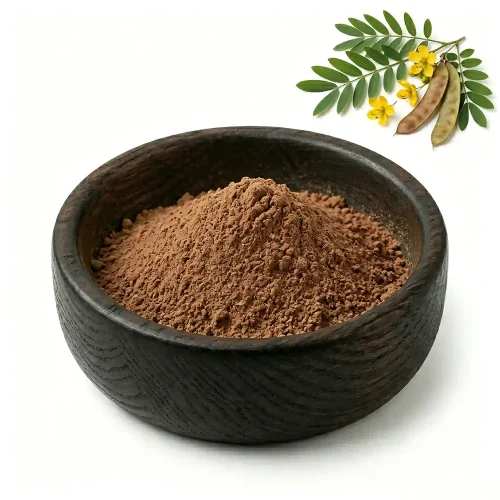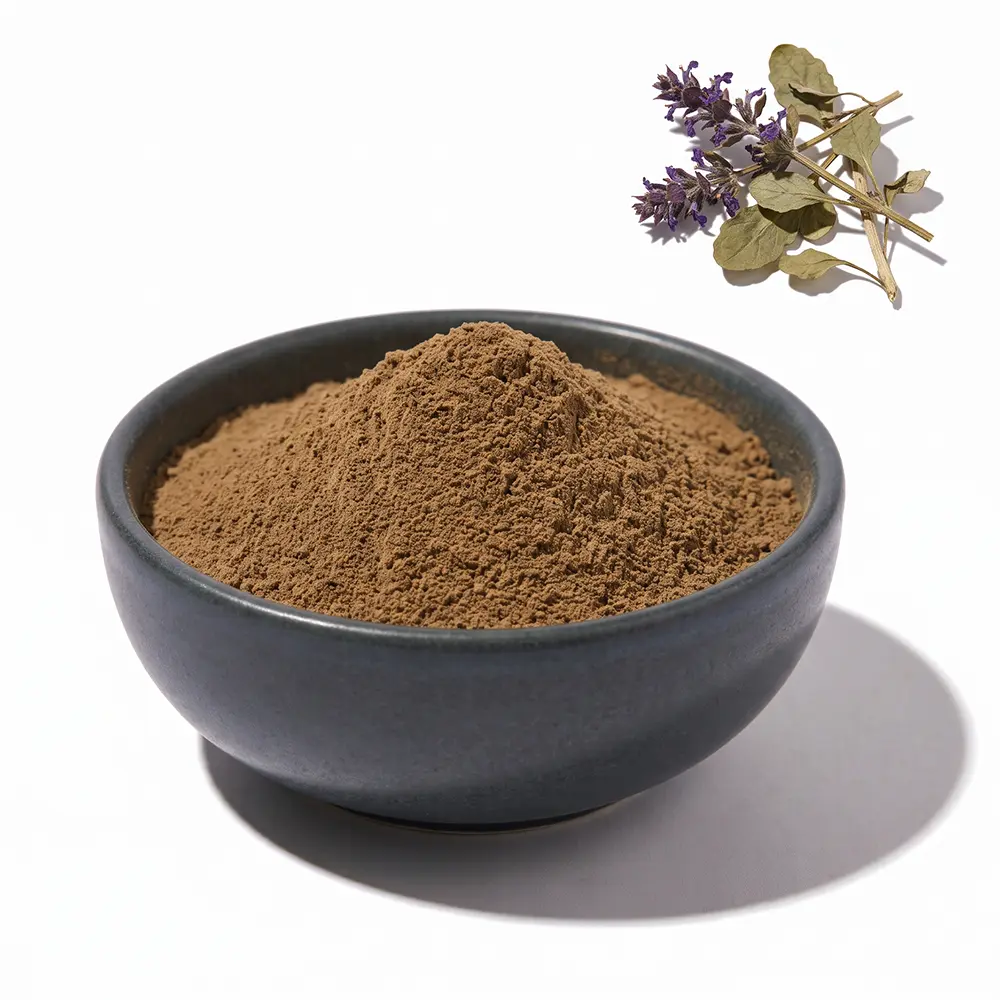
Bulk Ajuga turkestanica Extract Supplier — Turkesterone 2% & 10% HPLC, B2B Wholesale
Valeherb supplies Ajuga turkestanica extract bulk wholesale, standardized to turkesterone at 2% and 10% by HPLC, derived from the aerial parts of Ajuga turkestanica (Regel) Briq. (Lamiaceae), a plant native to the mountainous regions of Central Asia, primarily Uzbekistan. Turkesterone is one of several phytoecdysteroids — plant-produced structural analogues of insect molting hormones — concentrated in this species, alongside 20-hydroxyecdysone (ecdysterone) and cyasterone.[3] Phytoecdysteroids are structurally distinct from anabolic-androgenic steroids used in human medicine, and this ingredient is supplied as a research and formulation raw material, not as a pharmaceutical.
On this page: available grades, active compound profile, research background, formulation applications, sourcing criteria, and regulatory guidance.
Available Grades
| Grade | Turkesterone Content | Typical Application |
|---|---|---|
| Standard | 2% (HPLC) | Full-spectrum sports nutrition formulations; entry-level research applications |
| High-Potency | 10% (HPLC) | Concentrated sports nutrition and research applications; compact dosing formats |
Custom standardization levels and 20-hydroxyecdysone co-quantification available on request. MOQ, lead time, and current pricing available on inquiry.
Active Compound Profile
| Compound | Class | Notes |
|---|---|---|
| Turkesterone | Phytoecdysteroid — primary marker | The principal ecdysteroid of commercial interest in A. turkestanica; structurally related to insect molting hormones, not to anabolic-androgenic steroids[3] |
| 20-Hydroxyecdysone (Ecdysterone) | Phytoecdysteroid | Co-occurs with turkesterone; the most extensively studied phytoecdysteroid in published mammalian research[1] |
| Cyasterone | Phytoecdysteroid | Minor phytoecdysteroid present in the full-spectrum extract profile |
Research Background
Provided as scientific context for research and formulation purposes, not as claims for any Valeherb product. Phytoecdysteroid research in mammals remains at an early stage, and findings should not be interpreted as established or clinically proven effects in humans.
In Vitro and Animal Model Research
Gorelick-Feldman et al. (2008, Journal of Agricultural and Food Chemistry) developed an in vitro cellular assay of protein synthesis and found that phytoecdysteroids increased protein synthesis by up to 20% in C2C12 murine myotubes and human primary myotubes, an effect inhibited by a phosphoinositide-3-kinase inhibitor, suggesting a PI3K-mediated mechanism. In a separate in vivo component of the same body of research, ecdysteroid administration was associated with increased grip strength in young adult rats.[1] These are preclinical cell culture and young-animal findings; they have not been established in human clinical trials specific to turkesterone.
A Balanced View: Findings in Aged Animal Models
Not all preclinical findings have been positive. A study published in the International Journal of Environmental Research and Public Health (2021) administered standardized A. turkestanica extract and purified 20-hydroxyecdysone to aged (20-month-old) mice for 28 days and found no significant changes in muscle mass, fiber size, fiber type, or PI3K-Akt pathway activation compared to control — in contrast to earlier findings in young animals. The authors noted that the anabolic effects of phytoecdysteroids observed in younger animal models did not extend to aged skeletal muscle under the conditions tested.[2] This finding illustrates that preclinical results vary meaningfully by model, age, and study design, and underscores that phytoecdysteroid research in mammals is still developing rather than conclusively established.
Formulation Applications
- Sports nutrition research formulations: 2% or 10% grade in botanical-ingredient sports nutrition products, positioned on the preclinical mechanistic research base described above — not on unsubstantiated performance-enhancement or steroid-alternative claims
- Research and reference applications: Standardized extract and higher-purity grades for academic and industrial phytoecdysteroid research
- Traditional and full-spectrum formulations: Full-spectrum extract retaining the co-occurring phytoecdysteroid and phytochemical profile of the aerial plant material
Sourcing Criteria
| Criterion | What to Require |
|---|---|
| Species Confirmation | Ajuga turkestanica (Regel) Briq. confirmed on COA — distinguish from other Ajuga species (e.g., A. reptans, A. decumbens) with different phytoecdysteroid profiles |
| Turkesterone Content | HPLC-verified turkesterone content per batch, individually quantified and distinguished from total phytoecdysteroid or colorimetric figures |
| Compound vs Extract Clarity | Confirm whether the product is a standardized whole-plant extract or an isolated/purified compound — pricing, purity, and co-compound profile differ substantially between the two |
| Third-Party COA | Turkesterone content (HPLC), heavy metals (USP <232>), pesticide residues, microbial limits (USP <2021>), moisture — per production batch from accredited laboratory |
Regulatory Guidance
- US (DSHEA): Structure/function claims must be limited to what is substantiated by the published preclinical evidence base and must not imply anabolic-androgenic steroid-equivalent effects, muscle-building guarantees, or disease treatment. Self-substantiation and the required FDA disclaimer apply to any claim made
- Sports/anti-doping: Ecdysteroid compounds are subject to ongoing review by anti-doping authorities; confirm current status for any product intended for competitive athletes
- General: Given the early-stage and preclinically-dominated evidence base, Valeherb recommends conservative, research-grounded claim positioning and independent regulatory review before finalizing any finished-product marketing