
Written and reviewed by Dr. Xiaoyan Qiu · July 2026
What “Natural” and “Synthetic” Actually Mean Here
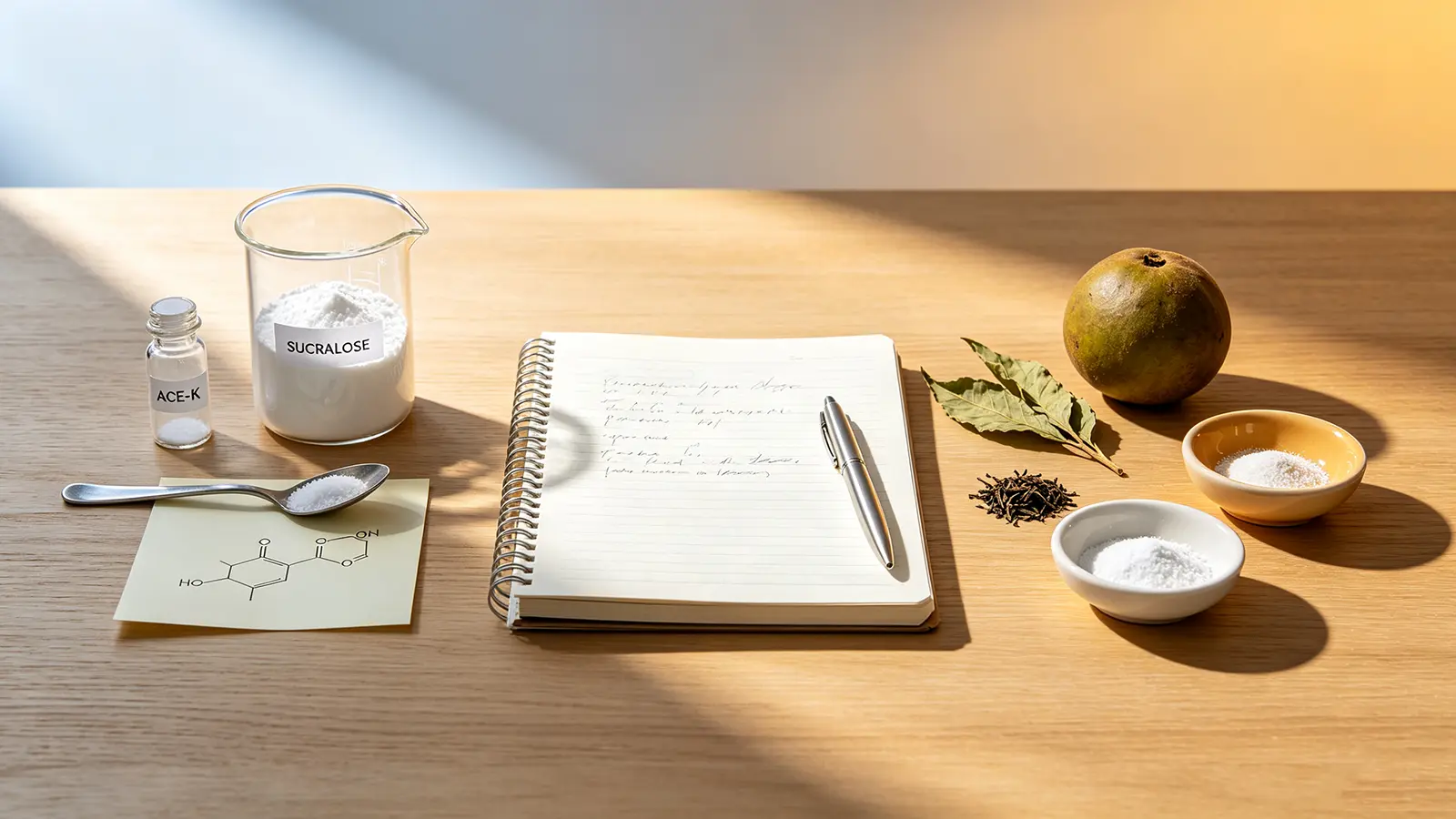
The short version: sucralose and acesulfame-K are approved, well-established, and widely used — but on the two questions that matter most for keto and gut health, monk fruit, stevia, and trilobatin currently have the more consistent research record, for reasons this article lays out in detail below. The companion guide to this article, Best Keto-Friendly Sweeteners, defines natural as coming from a plant source or from fermenting or converting a naturally occurring sugar — not from a petrochemical or fully synthetic route. Sucralose and acesulfame-K sit on the other side of that line, but not in identical ways. Sucralose starts from sucrose (ordinary table sugar) and is chemically modified by replacing three hydroxyl groups with chlorine atoms — a semi-synthetic process, since the starting material is natural but the finished molecule is not. Acesulfame-K has no natural precursor at all; it’s built from scratch through industrial organic synthesis involving acetoacetic acid derivatives and sulfamic acid.
Both are legally classified as food additives rather than natural sweeteners in every major regulatory framework, and both hold GRAS (Generally Recognized as Safe) status with the US FDA at approved intake levels, alongside acceptable daily intake limits set by international bodies including JECFA. That regulatory approval is a statement about established safety margins at typical consumption levels, not about how the ingredient is produced — a distinction worth keeping in mind as the sensory and metabolic comparisons below unfold.
It’s worth being upfront that “synthetic” is not, by itself, a safety verdict. Vitamin C, many pharmaceuticals, and a long list of food additives are synthetic and pose no established risk at approved doses. The comparisons in this article focus specifically on documented differences relevant to ketogenic diet goals and gut health — not a blanket claim that synthetic automatically means worse. None of the research discussed below overturns the general-population safety conclusions reached by the FDA and other regulators; it instead addresses a narrower question — whether either ingredient is optimal for someone specifically targeting ketosis and gut microbiome health, a question regulatory safety review was never designed to answer.
Sucralose and Acesulfame-K: How They’re Made and How Sweet They Are
Sucralose is roughly 600 times sweeter than sucrose, among the most potent sweeteners in commercial use, with zero calories and a glycemic index of zero. Its production process — selectively chlorinating three specific hydroxyl positions on the sucrose molecule while leaving the rest of the structure intact — is a multi-step industrial synthesis, not a simple extraction or fermentation. Its sweetness is clean at low concentrations but can develop a slightly metallic or lingering note at higher inclusion rates. Acesulfame-K (often labeled Ace-K or E950) is about 200 times sweeter than sucrose, also zero-calorie and zero-glycemic, but with a more noticeable bitter aftertaste on its own — which is why it is very rarely used alone. Commercial products almost always blend the two, since acesulfame-K’s rapid onset complements sucralose’s longer, cleaner finish, producing a more sugar-like temporal sweetness curve than either ingredient delivers individually. This is the same blending logic covered for natural ingredients in the monk fruit sweetener blend guide — pairing complementary sweetness profiles is standard practice across both synthetic and natural sweetener categories.
Why Sucralose and Acesulfame-K Remain Widely Used
Despite the concerns discussed later in this article, it’s worth understanding why these two ingredients still dominate a large share of the diet food and beverage market. Their extreme sweetness intensity means a manufacturer needs only a tiny fraction of a gram to sweeten an entire product, which keeps ingredient cost per unit extremely low compared to natural high-intensity sweeteners at equivalent volume. Both are also broadly heat- and pH-stable across the vast majority of standard food processing conditions — the chloropropanol concern discussed below is a specific, high-temperature edge case involving glycerol or fat, not a general instability across all cooking methods. Decades of regulatory history and consumer familiarity add further inertia: sucralose and acesulfame-K have been approved food additives since the 1990s and 1998 respectively, giving them a longer track record in mainstream commercial use than any of the natural high-intensity sweeteners covered here.
Does Sucralose Affect Insulin and Ketosis? What the Research Actually Shows
This is the most searched and most disputed question in the category, and the honest answer is that the evidence is mixed rather than settled. A 2013 randomized crossover study published in Diabetes Care found that sucralose ingestion before a glucose tolerance test increased peak insulin levels by roughly 20% compared to water in obese, insulin-sensitive adults who did not regularly use non-nutritive sweeteners.[2] The study’s authors argued this demonstrated a measurable metabolic effect; a subsequent published comment disputed the clinical significance, noting the study’s small sample size (17 participants) and a specific, narrow population, and pointed to earlier FDA safety reviews concluding sucralose has no meaningful effect on insulin or blood glucose in humans or animals.[2]
For someone strictly tracking ketosis, the practical takeaway is that sucralose’s effect on insulin is not yet a settled question — unlike monk fruit, stevia, and trilobatin, where zero insulin response is consistently reported across the available research. Individual response also varies significantly: some people report no disruption to ketone levels after using sucralose-sweetened products, while others report a measurable drop in blood or breath ketone readings within hours. Body weight, insulin sensitivity, and whether someone regularly consumes non-nutritive sweeteners all appear to influence the response, which is part of why the research findings themselves have been inconsistent across different study populations. Self-monitoring with a blood or breath ketone meter remains the most reliable way to determine how a specific product affects a specific individual, rather than relying on a single study’s findings as a universal rule.
Gut Microbiome: The Clearest Documented Difference
Of all the comparisons in this article, the gut microbiome research offers the most consistent finding. A 2025 study using bioreactor models to test five common sweeteners — sucralose, saccharin, acesulfame-K, rebaudioside A, and xylitol — found that the synthetic sweeteners sucralose and saccharin significantly reduced microbial diversity, while the non-synthetic options, rebaudioside A and xylitol, were meaningfully less disruptive.[1] Acesulfame-K produced a more complicated pattern: it increased overall diversity readings but disrupted the microbial network’s structure, which the researchers flagged as a potential concern for long-term microbiome resilience.[1] Sucralose specifically was shown to enrich Enterobacteriaceae, a bacterial family associated with gut dysfunction, while the non-synthetic sweeteners favored beneficial taxa like Lachnospiraceae.[1] The proposed mechanism is that sucralose and saccharin are poorly metabolized by human enzymes but are still accessible to certain gut bacteria, creating selective pressure that favors species able to tolerate or exploit the compound — effectively reshaping the microbial community rather than simply passing through inert. This matters beyond digestion: gut microbiome composition has been linked in a growing body of research to metabolic health, immune function, and even mood regulation, which is why a sweetener’s downstream effect on bacterial diversity is now treated as a relevant formulation consideration, not just a curiosity.
A Practical Limitation: Sucralose and High-Heat Baking
Sucralose’s chlorine-containing structure introduces a formulation-relevant limitation that doesn’t apply to any of the natural options covered in the companion guide. Research on sucralose’s thermal stability has shown that at high temperatures — particularly in the presence of glycerol or fats, and especially above roughly 120°C — the molecule can break down and release hydrogen chloride, which can then react with glycerol to form chloropropanols, a class of compounds under scrutiny for potential toxicity.[3] The temperatures used in the original research (up to 250°C) exceed typical baking conditions for most home recipes, and industry testing on finished baked goods has generally not found the same breakdown products at commercial processing temperatures. Even so, this is a documented sensitivity that monk fruit, stevia, and trilobatin do not share — all three remain chemically stable at standard baking and pasteurization temperatures. In practical terms, the risk scales with three factors: temperature, duration of heat exposure, and the presence of glycerol or fat in the same formula. A quick coffee stir or a cold beverage carries essentially no exposure; a long, high-temperature bake involving butter, oil, or glycerin-based ingredients is the scenario where the research-documented reaction pathway becomes most relevant. For formulators specifically targeting baked goods, this is one of the more concrete, mechanism-based reasons to default to a natural high-intensity sweetener rather than sucralose, independent of any broader safety debate.
Monk Fruit, Stevia, and Trilobatin: The Natural Alternative Profile
The three natural high-intensity sweeteners covered in depth in the companion comparison guide don’t carry either of the two concerns above. Monk fruit extract delivers a clean, rapid sweetness onset with no reported insulin effect and strong thermal stability across baking and pasteurization conditions. Stevia’s Reb A and Reb M grades offer a similarly clean profile once the bitterness-reducing effect of additional glucose units on the steviol backbone is accounted for — the same structural mechanism that makes Reb A taste cleaner than raw stevioside.[5] Trilobatin adds a second function beyond sweetness: documented α-glucosidase inhibitory activity, a mechanism relevant to postprandial glucose management, alongside its ability to suppress bitterness in coffee and other alkaloid-containing beverages.[4] None of the three has generated the insulin, microbiome, or thermal degradation concerns discussed above for sucralose and acesulfame-K.
Which Should You Choose?
Neither category is uniformly “better” in every respect — sucralose and acesulfame-K remain approved, extensively studied ingredients that many people use without any reported issue, and their extreme sweetness intensity and low cost make them the default choice in a large share of commercial diet products. But for someone specifically optimizing for ketosis stability, gut health, and formulation flexibility across cooking methods, the natural options currently have the more consistent research record on all three fronts. The practical decision often comes down to what matters most for a given use case: cost and shelf ubiquity favor the synthetic pair, while a cleaner metabolic and microbiome profile favors monk fruit, stevia, and trilobatin. As a rough application guide, sucralose and acesulfame-K tend to appear in mass-market diet sodas and packaged snacks where cost per unit is the dominant constraint, while premium, clean-label, and DTC keto brands have increasingly shifted toward monk fruit and stevia blends specifically because “no artificial sweeteners” has become a meaningful purchase driver for health-conscious consumers, independent of the underlying science.
A simple way to narrow it down:
- If cost per unit is the primary constraint — sucralose/acesulfame-K blends remain a functional, approved option.
- If you’re strictly tracking ketosis and want the most consistent zero-insulin-response research record — monk fruit or stevia.
- If the product involves high-heat baking with butter, oil, or glycerin — avoid sucralose specifically; monk fruit or trilobatin are heat-stable alternatives.
- If gut health is a specific priority for the end product — current evidence favors monk fruit, stevia, and trilobatin over sucralose and saccharin.
Sourcing Considerations
For product developers evaluating a switch away from synthetic sweeteners, the same sourcing standards outlined in the keto sweetener comparison guide apply — HPLC-verified certificates of analysis and confirmed Non-GMO status matter more for monk fruit and trilobatin than for stevia, given their documented risk of batch-to-batch potency variation. Specifications for all three are available on the Monk Fruit Extract, Stevia Extract, and Sweet Tea Extract product pages.
Frequently Asked Questions
Is sucralose worse for keto than natural sweeteners?
The evidence is mixed rather than conclusive. One randomized study found sucralose raised insulin levels in a specific population, while regulatory reviews have concluded it has no meaningful effect on blood sugar. Monk fruit, stevia, and trilobatin have a more consistent zero-insulin-response record across available research, which is why they’re often preferred for strict ketosis tracking.
Why are sucralose and acesulfame-K often used together?
Acesulfame-K has a rapid sweetness onset but a noticeable bitter aftertaste on its own. Sucralose has a cleaner, longer finish. Blending the two produces a sweetness curve closer to sugar than either ingredient achieves alone, which is why they appear together in most diet sodas and tabletop sweetener blends.
Does heating sucralose make it unsafe?
Research shows sucralose can degrade at high temperatures, particularly above 120°C in the presence of glycerol or fats, forming compounds called chloropropanols. The temperatures used in these studies exceed most home baking conditions, and commercial testing hasn’t found the same breakdown at typical processing temperatures, but it remains a documented sensitivity that natural alternatives like monk fruit don’t share.
Do artificial sweeteners harm gut health more than natural ones?
A 2025 laboratory study found sucralose and saccharin significantly reduced gut microbial diversity, while rebaudioside A (a stevia glycoside) and xylitol were less disruptive. Acesulfame-K showed a more mixed effect. This is one of the more direct comparisons available, though it used a lab-based model rather than a large human trial.
Is it okay to drink diet soda with sucralose every day on keto?
Occasional use is unlikely to cause a problem for most people, but “every day” is where individual variation matters most. Some people show no change in ketone levels with daily sucralose intake, while others report a measurable effect. If you’re strict about tracking ketosis, checking blood or breath ketones on a normal day versus a diet-soda day is the most reliable way to find out how your body specifically responds, rather than assuming either outcome.
References
[1] Kidangathazhe, A. et al. Synthetic vs. non-synthetic sweeteners: their differential effects on gut microbiome diversity and function. Frontiers in Microbiology, 16, 1531131 (2025). https://doi.org/10.3389/fmicb.2025.1531131
[2] Pepino, M.Y. et al. Sucralose Affects Glycemic and Hormonal Responses to an Oral Glucose Load. Diabetes Care, 36(9), 2530–2535 (2013). https://doi.org/10.2337/dc12-2221
[3] Rahn, A. & Yaylayan, V.A. Thermal degradation of sucralose and its potential in generating chloropropanols in the presence of glycerol. Food Chemistry, 118(1), 56–61 (2010). https://doi.org/10.1016/j.foodchem.2009.04.133
[4] He, M. et al. Inhibition of α-glucosidase by trilobatin and its mechanism: kinetics, interaction mechanism and molecular docking. Food & Function, 13, 857–866 (2022). https://doi.org/10.1039/D1FO03636J
[5] Singla, R. & Jaitak, V. Synthesis of rebaudioside A from stevioside and their interaction model with hTAS2R4 bitter taste receptor. Phytochemistry, 125, 106–111 (2016). https://doi.org/10.1016/j.phytochem.2016.03.004
Dr. Xiaoyan Qiu
Botanical Extract R&D Engineer, Valeherb · Associate Professor, Huaihua University
This article is for informational purposes only and has not been evaluated by the Food and Drug Administration. It is not intended to diagnose, treat, cure, or prevent any disease. Consult a qualified healthcare provider before making changes to your diet, particularly if you have an existing health condition. © 2026 Valeherb.